


Electric scooter start-up Gogoro Inc (睿能創意) yesterday said it is adding two more partners to its electric vehicle camp after securing orders from Japan’s Yamaha Motor Co to build new electric models and to share its battery swap system.
The move suggests that Gogoro is gaining an upper hand in the tussle against Kwang Yang Motor Co (光陽工業) to dominate the burgeoning electric vehicle and energy solution markets in Taiwan.
Since its inception three years ago, the Taoyuan-headquartered Gogoro has asserted that its smart battery swap system is a superior and more feasible energy solution for electric scooters than Kwang Yang’s battery charging system.
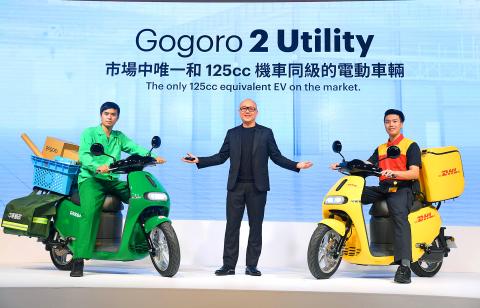
Photo: CNA
Kwang Yang is promoting its battery charging system, called the Ionex system, for the shift from gasoline-powered models to electric two-wheelers in June. The company also offers recharged batteries at pick-up points through a network that it built.
Gogoro has “not one partner, two partners, but three partners now, forming the biggest alliance in electric mobility around the world,” Gogoro founder and chief executive officer Horace Luke (陸學森) told a media briefing in Taipei yesterday.
Based on their plan with Gogoro, gasoline-powered scooter makers Aeon Motor Co (宏佳騰) and Motive Power Industry Co (摩特動力) — which sells motorcycles under the PGO brand — are to roll out their first electric models next summer and in the second half of next year respectively.
Riders of Aeon and PGO electric scooters would have access to the nationwide battery swap network built by Gogoro.
The number of GoStations is to reach 1,000 by the end of this year, making the network greater than that of gasoline stations in Taiwan, Gogoro said.
In just three years, Gogoro has seen 20 million battery swaps, or one battery swap per second, the company said.
About 240,000 smart batteries are circulating over the network, making it the world’s biggest battery swap network, according to Gogoro statistics.
Gogoro yesterday announced that it has tapped into enterprise business circles with new partner DHL, the global logistic company. Gogoro is to help build an electric scooter fleet in Taiwan for the package delivery company.
DHL aims to replace 70 percent of its vehicles with electric models by 2025 to reduce carbon emissions, the company said.
Gogoro also announced, ending months of speculation, that it would participate in a series of bids conducted by state-own Chunghwa Post Co (中華郵政), which seeks to retire its gasoline-powered scooters.
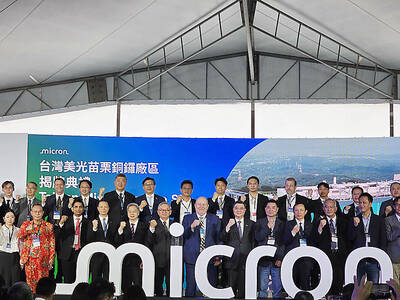
UNPRECEDENTED PACE: Micron Technology has announced plans to expand manufacturing capabilities with the acquisition of a new chip plant in Miaoli Micron Technology Inc unveiled a newly acquired chip plant in Miaoli County yesterday, as the company expands capacity to meet growing demand for advanced DRAM chips, including high-bandwidth memory chips amid the artificial intelligence boom. The plant in Miaoli County’s Tongluo Township (銅鑼), which Micron acquired from Powerchip Semiconductor Manufacturing Corp (力積電) for US$1.8 billion, is expected to make a sizeable capacity contribution to the company from fiscal 2028, the company said in a statement. It would be an extended production site of Micron’s large-scale manufacturing hub in Taichung, the company said. As the global semiconductor industry is racing to reach US$1 trillion

Singapore-based ride-hailing and delivery giant Grab Holdings Ltd has applied for regulatory approval to acquire the Taiwan operations of Germany-based Delivery Hero SE's Foodpanda in a deal valued at about US$600 million. Grab submitted the filing to the Fair Trade Commission on Friday last week, with the transaction subject to regulatory review and approval, the company said in a statement yesterday. Its independent governance structure would help foster a healthy and competitive market in Taiwan if the deal is approved, Grab said. Grab, which is listed on the NASDAQ, said in the filing that US-based Uber Technologies Inc holds about 13 percent of

Taiwan’s food delivery market could undergo a major shift if Singapore-based Grab Holdings Ltd completes its planned acquisition of Delivery Hero SE’s Foodpanda business in Taiwan, industry experts said. Grab on Monday last week announced it would acquire Foodpanda’s Taiwan operations for US$600 million. The deal is expected to be finalized in the second half of this year, with Grab aiming to complete user migration to its platform by the first half of next year. A duopoly between Uber Eats and Foodpanda dominates Taiwan’s delivery market, a structure that has remained intact since the Fair Trade Commission (FTC) blocked Uber Technologies Inc’s

Memory chip stocks extended their losses yesterday after Alphabet Inc’s Google publicized research that could allow more efficient use of the storage needed for artificial intelligence (AI) development. SK Hynix Inc and Samsung Electronics Co, South Korean leaders in the market, fell more than 6 percent and about 5 percent respectively in Seoul. In the US, Micron Technology Inc, Western Digital Corp and Sandisk Corp slid more than 2 percent in pre-market trading, after they all closed lower on Wednesday. Memory companies have been on a tear in recent months as the rapid development of AI infrastructure triggered a spike in chip


 RSS
RSS