


CSBC Corp, Taiwan (台灣國際造船) yesterday inked an agreement to form a joint venture with marine engineering company GeoSea NV — a subsidiary of Dredging, Environmental and Marine Engineering NV (DEME) — to tap into the market for offshore wind farms.
The new venture, CSBC-DEME Wind Engineering Co Ltd (台船環海風電工程公司), would oversee construction of offshore wind farms and related technology transfers to local operators.
CSBC, the nation’s only listed shipbuilder, said it would hold a greater than 50 percent stake in the venture.
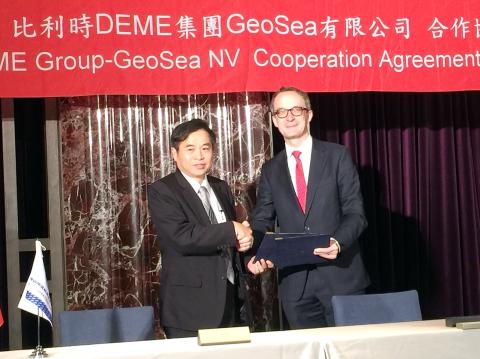
Photo: Yang Ya-min, Taipei Times
Foreign and local businesses are competing for an estimated NT$700 billion (US$23.34 billion) in offshore wind farm projects that are expected to receive approval from the Ministry of Economic Affairs after the first quarter of next year, with marine engineering making up 15 percent to 30 percent of the windfall, CSBC chairman Cheng Wen-lon (鄭文隆) said at a news conference in Taipei.
The upkeep and maintenance of offshore wind farms could bring sales opportunities of NT$23 billion each year, he added.
“We have been preparing to meet the government’s local content requirements for the offshore wind farm projects,” Cheng said, adding that CSBC has been collaborating with other international firms specializing in supporting structures.
It plans to launch its own marine engineering fleet, including a turbine installation vessel that is capable of installing turbines rated at between 8 megawatts and 9.5 megawatts, as well as two 140m barges, Cheng said, adding that other specialty construction ships would be acquired through means such as leasing.
GeoSea is a leading specialist in offshore wind farms, and CSBC is hoping to learn and facilitate technology transfers from the Belgium-headquartered firm, Cheng said.
Offshore wind farms are a vital part of CSBC’s efforts to cut its 99 percent reliance on shipbuilding, as it has been battered by low demand for new vessels due to a persistent downturn in the global cargo shipping sector, he said.
However, the company is still expected to end next year in the red, as its new offshore wind farm business will not begin to make significant earnings contributions until 2019 or 2020, JihSun Securities Investment Consulting (日盛投顧) said in a report last month.
CSBC’s losses are expected to narrow next year, JihSun analysts said, adding that constructing wind farms would come with a significant learning curve.

Cairo’s new monorail slices across the city skyline, running above the familiar chaos of blaring horns and aging buses’ exhaust fumes that mark rush hour below. The US$4.5 billion monorail, opened this month, is among Egypt’s most prominent new transport projects, part of a debt-funded infrastructure drive criticized for sapping state finances while bringing limited benefits to most of the country’s 109 million people. “It feels like you’re in a different country,” said Ramy Sayed, a restaurant manager, aboard a driverless Innovia 300 train. “No noise, no traffic, we’re not used to this.” The eastern line runs 56km from the bustling middle-class
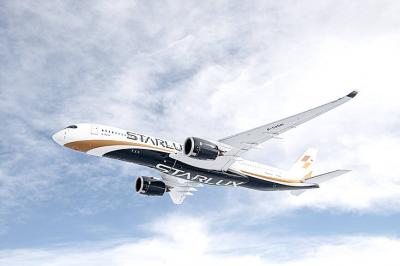
Starlux Airlines Co (星宇航空) today unveiled a long-haul network expansion plan at a shareholders’ meeting in Taipei, including direct flights to Barcelona, Spain, and Zurich, Switzerland, as well as a service connecting Taipei, Sydney and New Zealand. Starlux is to become the first Taiwanese carrier to offer non-stop services to the two European cities, while the inaugural oceanic route is expected to expand transit opportunities within the Australia-New Zealand market, Starlux said. Flight services to Chicago, Dallas, Washington and New York are under evaluation, the airline added. Prior to the shareholders’ meeting, the airline earlier this year announced that it would be

Taiwanese prosecutors suspect that three people successfully smuggled at least one shipment of Nvidia Corp artificial intelligence (AI) chips to China after first exporting them to Japan, people familiar with the matter said. The trio was detained last week by the Keelung District Prosecutors’ Office for allegedly falsifying documents related to exports of Super Micro Computer Inc servers containing advanced Nvidia chips, which the US has barred from sale to China without a license from Washington. The move marked Taiwan’s first public crackdown on AI chip diversion after years of pressure from the US to take a more active role in curtailing
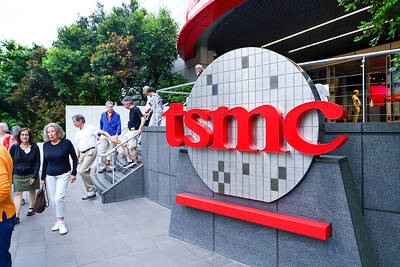
Taiwan Semiconductor Manufacturing Co (TSMC, 台積電) employee bonuses are likely to grow more than 30 percent this year, in line with the past few years as the company’s profits continue to set new records, an anonymous source cited TSMC chairman C.C. Wei (魏哲家) as saying yesterday. TSMC, the world’s largest contract chipmaker, is committed to taking care of its workers, the source said, citing Wei’s meeting with employees yesterday morning. Wei also expressed gratitude to employees for their contribution to the company’s improving bottom line, the source added. Since 2023, TSMC’s employee bonuses have grown at an annual rate of


 RSS
RSS