


Neo Solar Power Corp (新日光能源) yesterday said it has secured a deal to build and operate the nation’s biggest super-high-voltage ground-mount solar power plant in Changhua County.
The deal came after the solar cell maker said in August that it had invested in a US solar power plant, Clean Focus Yield Ltd, which is to build a rooftop solar power system with annual capacity of 225 megawatts (MW).
The US plant is forecast to earn US$33 million in revenue a year after it starts operation.
The ground-mount solar farm in Changhua will have an annual capacity of 40MW, Neo Solar said in a statement.
Upon completion, it is expected to generate 52 million units of power, equal to the annual electricity consumption of 14,300 households, the company’s statement said.
The first phase of construction is due to be completed in the second quarter of next year, with 15MW of solar panel output to be fed to the Taiwan Power Co’s (台電) grid, the statement said.
The Changhua operation will be the nation’s first large-scale super-high-voltage ground-mount solar power plant built on idle and barren farmland.
Neo Solar said it is in discussions with the government about the second phase of construction.
Neo Solar’s subsidiary General Energy Solutions Inc (永旺能源) and Yong Yao Energy Co Ltd (永堯能源) are to be in charge of the construction of the farm and its operation respectively.
Yong Yao operates as a so-called “Special Purpose Vehicle” for implementation and operation of the solar power project.
Neo Solar said the Chuanghua plan has already been bankrolled by Taishin International Bank (台新銀行) and DBS Bank Taiwan (星展銀行), but did not say how much in loans it has obtained.

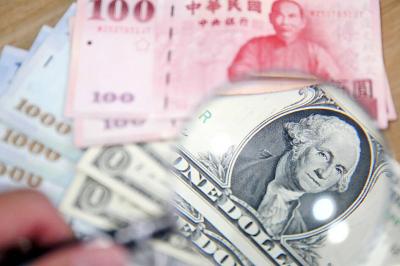
The US dollar was trading at NT$29.7 at 10am today on the Taipei Foreign Exchange, as the New Taiwan dollar gained NT$1.364 from the previous close last week. The NT dollar continued to rise today, after surging 3.07 percent on Friday. After opening at NT$30.91, the NT dollar gained more than NT$1 in just 15 minutes, briefly passing the NT$30 mark. Before the US Department of the Treasury's semi-annual currency report came out, expectations that the NT dollar would keep rising were already building. The NT dollar on Friday closed at NT$31.064, up by NT$0.953 — a 3.07 percent single-day gain. Today,

‘SHORT TERM’: The local currency would likely remain strong in the near term, driven by anticipated US trade pressure, capital inflows and expectations of a US Fed rate cut The US dollar is expected to fall below NT$30 in the near term, as traders anticipate increased pressure from Washington for Taiwan to allow the New Taiwan dollar to appreciate, Cathay United Bank (國泰世華銀行) chief economist Lin Chi-chao (林啟超) said. Following a sharp drop in the greenback against the NT dollar on Friday, Lin told the Central News Agency that the local currency is likely to remain strong in the short term, driven in part by market psychology surrounding anticipated US policy pressure. On Friday, the US dollar fell NT$0.953, or 3.07 percent, closing at NT$31.064 — its lowest level since Jan.
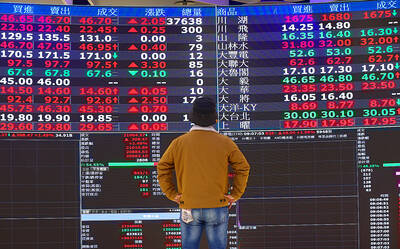
The New Taiwan dollar and Taiwanese stocks surged on signs that trade tensions between the world’s top two economies might start easing and as US tech earnings boosted the outlook of the nation’s semiconductor exports. The NT dollar strengthened as much as 3.8 percent versus the US dollar to 30.815, the biggest intraday gain since January 2011, closing at NT$31.064. The benchmark TAIEX jumped 2.73 percent to outperform the region’s equity gauges. Outlook for global trade improved after China said it is assessing possible trade talks with the US, providing a boost for the nation’s currency and shares. As the NT dollar

The Financial Supervisory Commission (FSC) yesterday met with some of the nation’s largest insurance companies as a skyrocketing New Taiwan dollar piles pressure on their hundreds of billions of dollars in US bond investments. The commission has asked some life insurance firms, among the biggest Asian holders of US debt, to discuss how the rapidly strengthening NT dollar has impacted their operations, people familiar with the matter said. The meeting took place as the NT dollar jumped as much as 5 percent yesterday, its biggest intraday gain in more than three decades. The local currency surged as exporters rushed to


 RSS
RSS