


ChipMOS Technologies Inc (南茂), the world’s No. 2 LCD driver IC packaging and testing service provider, yesterday said that first-quarter net profit surged to a record NT$2.38 billion (U$78.8 million), thanks to robust demand for driver ICs used in flat-panel TVs and an asset disposal gain.
The figure, which beat the company’s forecast of NT$2.27 billion, represented a more than six-fold increase from NT$348.4 million in the same period last year.
Earnings per share climbed to NT$2.77 last quarter, compared with NT$0.4 a year earlier and NT$0.72 in the previous quarter.

Photo: Hung Yu-fang, Taipei Times
Last quarter’s bottom line was lifted by an asset disposal gain of NT$2 billion from selling a 52 percent stake in its Chinese driver IC manufacturing subsidiary, ChipMOS Technologies (Shanghai) Ltd (上海宏茂), to a consortium of investors led by China’s Tsinghua Unigroup Ltd (清華紫光).
A solid core operating performance also helped offset a foreign-exchange loss of NT$388 million last quarter, the company said.
“Strong demand for large-sized LCD panels boosted our driver IC packaging business, allowing it to buck a seasonally weak first quarter,” ChipMOS chairman S.J. Cheng (鄭世杰) told investors in a teleconference.
Positive signals from customers indicate that the growth momentum will extend into the current quarter and possibly beyond, fueled by demand for niche DRAM and NOR Flash memorychips, Cheng said.
“We have seen significant growth recently, which will last for the next few quarters,” Cheng said.
The company should also benefit from rising penetration of ultra-high-definition, or 4K2K, TV panels, as well as increasing adoption of OLED panels, 3D sensors and touch sensors for phones, he said.
“We believe the second half of this year will be a better period than the first half, as customers launch new products and expand their market shares,” Cheng said.
Cheng did not provide an estimate for revenue this quarter, but said it should be higher than last quarter’s NT$4.56 billion.
Factory utilization should also be higher than last quarter’s 76 percent, he said.
ChipMOS plans to spend NT$5 billion on capital expenditure this year to boost its driver IC packaging service capacity.

SECOND-RATE: Models distilled from US products do not perform the same as the original and undo measures that ensure the systems are neutral, the US’ cable said The US Department of State has ordered a global push to bring attention to what it said are widespread efforts by Chinese companies, including artificial intelligence (AI) start-up DeepSeek (深度求索), to steal intellectual property from US AI labs, according to a diplomatic cable. The cable, dated Friday and sent to diplomatic and consular posts around the world, instructs diplomatic staff to speak to their foreign counterparts about “concerns over adversaries’ extraction and distillation of US AI models.” Distillation is the process of training smaller AI models using output from larger, more expensive ones to lower the costs of training a powerful new
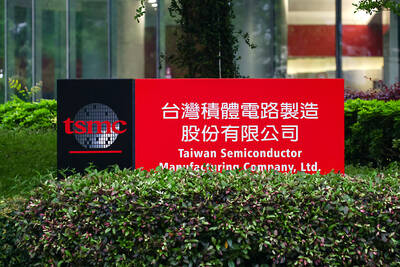
Shares of Taiwan Semiconductor Manufacturing Co (TSMC, 台積電) have repeatedly hit new highs, but an equity analyst said the stock’s valuation remains within a reasonable range and any pullback would likely be technical. The contract chipmaker’s historical price-to-earnings (P/E) ratio has ranged between 20 and 30, Cathay Futures Consultant Co (國泰證期) analyst Tsai Ming-han (蔡明翰) told Central News Agency. With market consensus projecting that TSMC would post earnings per share of about NT$100 (US$3.17) this year, supported by strong global demand for artificial intelligence (AI) applications, and the stock currently trading at a P/E ratio of below 25, Tsai said the valuation
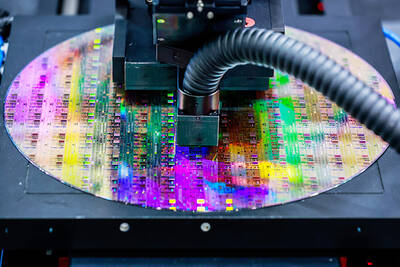
The artificial intelligence (AI) boom has triggered a seismic reshuffling of global equity markets, with Taiwan and South Korea muscling past European nations one by one. With its stock market now valued at nearly US$4.3 trillion, Taiwan surpassed the UK, Europe’s biggest market, earlier this month, data compiled by Bloomberg showed. South Korea is about US$140 billion away from doing the same. The tech-heavy Asian markets have shot past Germany and France in the past seven months. The shift is largely down to massive gains in shares of three companies that provide essential hardware for AI: Taiwan Semiconductor Manufacturing Co (TSMC, 台積電),
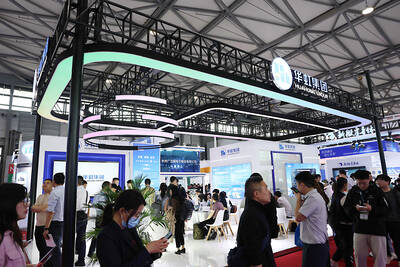
The US Department of Commerce last week ordered multiple chip equipment companies to halt shipments of certain tools to China’s second-largest chipmaker, Hua Hong Semiconductor Ltd (華虹半導體), its latest action to slow the country’s development of advanced chips, two people familiar with the matter said. The department sent letters to at least a handful of companies informing them of restrictions on tools and other materials destined for two Hua Hong facilities US officials believe make China’s most sophisticated chips, the people said. Top US chip equipment companies Lam Research Corp, Applied Materials Inc and KLA Corp, each of which has significant


 RSS
RSS