


Yulon Motor Co (裕隆汽車) saw its consolidated net profit plunge 23 percent annually to NT$2.07 billion (US$64.8 million) in the first three quarters of this year due to weak car sales in China.
Consolidated sales slid 8 percent to NT$82.4 billion from the same period last year, the firm said.
The company distributes its own-brand Luxgen (納智捷) cars in the Chinese market via its subsidiary Dongfeng Yulon Motor Co (東風裕隆), a joint venture between Yulon and China’s No. 4 automaker, Dongfeng Automobile Co (東風汽車).
“Dongfeng Yulon faces harsh competition in the Chinese market,” Yulon president Yao Chen-hsiang (姚振祥) told an investors’ conference in Taipei yesterday.
The company needs to improve its brand awareness to fend off competition from well-known global brands, he said.
Chinese customers prefer sports utility vehicles (SUV), while Dongfeng Yulon mainly supplies sedans in China, he said.
Dongfeng Yulon is forecast to sell 42,000 Luxgen vehicles in China this year, indicating a 30.5 percent decline from last year’s 60,400 units.
In comparison, overall sales in China this year are expected to increase 13.8 percent to 28 million units, according to a report by Yulon.
Yulon is planning to launch its first SUV model in the second half of next year in Taiwan and China, a move that is expected to stimulate the company’s sales for the coming year.
The company would also upgrade some versions of its sedans in a bid to increase its market share in China.
The automaker aims to increase sales in China by 19.52 percent to 50,200 vehicles next year.
It also plans to improve its operational efficiency in China by eliminating some local dealers.
Dongfeng Yulon is selling cars at 500 dealerships across China, Yao told investors.
OPTIMISTIC
Despite the decline in sales and profits, Yao said that the company expects sales in the Chinese market to pick up next year.
Asked whether the company has a strategy to address the growing popularity of energy-efficient vehicles in China, Yao said Yulon is developing its own electric cars, without providing any details about a possible launch date.
Meanwhile, Yulon said its land development project in New Taipei City’s Xindian District (新店) will break ground in the second quarter of next year.
The residential and commercial project is to be completed in the fourth quarter of 2020.
Yulon shares were unchanged at NT$26.3 yesterday, while the benchmark TAIEX rose 1.02 percent.
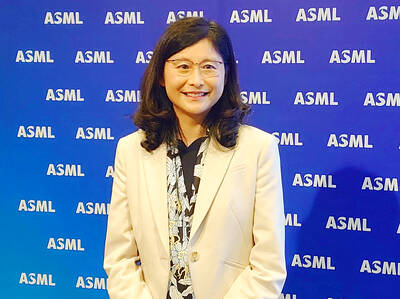
Netherlands-based semiconductor equipment supplier ASML Holding NV yesterday said that it is planning to hire an additional 1,000 people in Taiwan this year in response to growing demand from clients. ASML had previously planned to recruit 600 people this year, but that the plan has been adjusted upward, ASML vice president and ASML Taiwan general manager Grace Wang (汪佳慧) told reporters. ASML has a workforce of more than 4,500 in Taiwan, accounting for about 10 percent of its global total, Wang said. This year’s recruitment campaign would focus on adding people in the customer support, manufacturing and supply chain domains to assist ASML
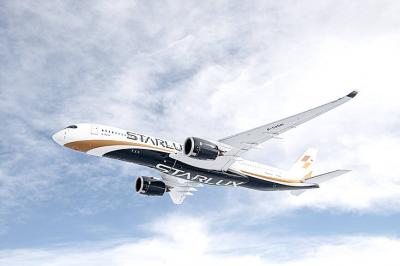
Starlux Airlines Co (星宇航空) today unveiled a long-haul network expansion plan at a shareholders’ meeting in Taipei, including direct flights to Barcelona, Spain, and Zurich, Switzerland, as well as a service connecting Taipei, Sydney and New Zealand. Starlux is to become the first Taiwanese carrier to offer non-stop services to the two European cities, while the inaugural oceanic route is expected to expand transit opportunities within the Australia-New Zealand market, Starlux said. Flight services to Chicago, Dallas, Washington and New York are under evaluation, the airline added. Prior to the shareholders’ meeting, the airline earlier this year announced that it would be
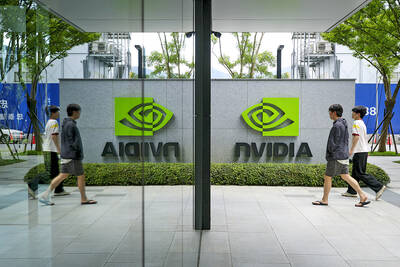
UNDER MICROSCOPE: Taiwan detained three people who allegedly conspired to buy servers in Taiwan and export them using fraudulent documentation, prosecutors said Nvidia Corp chief executive officer Jensen Huang (黃仁勳) on Saturday urged Super Micro Computer Inc to tighten up on compliance after Taiwan detained three people this week for allegedly making fraudulent declarations about artificial intelligence (AI) servers made by its US partner. The development marked the nation’s first crackdown on semiconductor smuggling, which grew after the US slapped restrictions on exports of high-end chips such as Nvidia AI accelerators to China. Nvidia is “rigorous” in explaining regulations to all of its partners, Huang told reporters after arriving in Taipei. “Ultimately Super Micro has to run their own company,” he said in response to
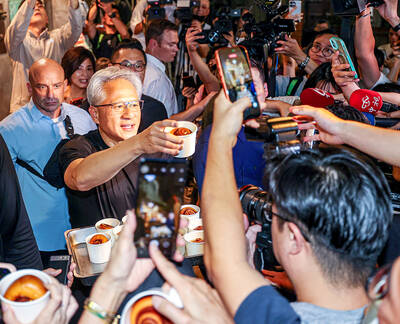
Nvidia Corp yesterday announced that CEO Jensen Huang (黃仁勳) would attend an employee meeting in Taipei tomorrow to celebrate the launch of the company’s Taiwan headquarters project. Huang would attend a gathering at the site of Nvidia’s planned headquarters in Beitou Shilin Technology Park (北投士林科技園區), the company said in a statement. After arriving in Taiwan on Saturday last week, Huang told reporters that he plans to meet with Quanta Computer Inc (廣達) chairman Barry Lam (林百里) and Taiwan Semiconductor Manufacturing Co (TSMC, 台積電) chairman C.C. Wei (魏哲家), and would attend the groundbreaking ceremony for Nvidia’s Taiwan headquarters tomorrow. Nvidia has not yet applied


 RSS
RSS