


The wildly popular Pokemon Go phenomenon is expected to catalyze demand for a number of Taiwanese suppliers, despite lingering concerns about the augmented-reality (AR) game’s ability to sustain players’ interest, Yuanta Securities Investment Consulting Co (元大投顧) said.
Taiwanese suppliers of mobile phone lenses, cloud computing applications, servers, heat dissipation modules, fast-charge ICs, battery packs and even convenience store chains are projected to benefit from “Pokenomics,” Yuanta analysts said in a recent note.
Largan Precision Co (大立光), a camera lens supplier for smartphones and tablets, is expected to benefit from rising demand, as its products are required for AR applications, along with solid-state image sensors and other optoelectronic modules, Yuanta said.
ASPEED Technology Inc (信驊), which makes chips used in servers supporting cloud computing technology, is likely to benefit from growing demand for cloud computing capacity that powers AR games running on mobile devices.
In May, the company acquired Broadcom Corp’s Emulex Pilot operation for US$30 million.
The acquisition of the US-based remote server management chip designer could bolster ASPEED’s market share, Yuanta said.
In addition, Realtek Semiconductor Corp (瑞昱) is expected to see its non-PC revenue rise from its involvement in broadband and router supply chains.
As server load is expected to rise to accommodate the influx of players, increasing demand is expected for server heat dissipation module suppliers such as Chaun-Choung Technology Corp (超眾).
Chaun-Choung has expanded into the smartphone heat dissipation market, which contributed about 8 percent of total sales in the first half of this year following contracts awarded by South Korean handset brands, Yuanta said.
The brokerage added that heat pipes are rapidly becoming a mainstream solution for smartphones.
Players of AR games will inevitably deplete their smartphone batteries during long gaming sessions with wireless broadband and GPS activated, leading to rising demand for external battery packs, particularly makers of fast-charge ICs for external battery packs, such as Silergy Corp (矽力杰) and On-Bright Electronics Inc (昂寶), Yuanta said.
As Pokemon Go forces players outdoors, they are likely to frequent convenience stores, such as President Chain Store Corp’s (統一超商) 7-Eleven chain, Yuanta said, adding that consumption might improve as stores implement tie-in campaigns with the game to attract more players.
However, Yuanta said that Google and Apple Inc’s mobile app store platforms would take the lion’s share of the Pokenomics windfall, as they each receive a 30 percent cut from Pokemon Go’s in-game revenue, followed by Pokemon Go developer Niantic Inc and Nintendo Co Ltd, Yuanta said.
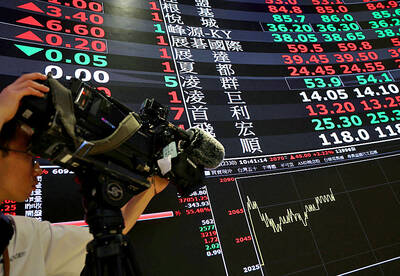
After several years flying high as Asia’s best Nvidia Corp proxy, Taiwan Semiconductor Manufacturing Co (TSMC, 台積電) is increasingly vying with other artificial intelligence (AI) stocks for investor attention. Stock traders are chasing a wider array of beneficiaries as mainstream usage of AI creates demand for hardware beyond the most-advanced chips TSMC makes for Nvidia. Subthemes from the deepening memory crunch to advances in robotics are also luring bids. At the same time, investment caps on single stocks are pushing funds to diversify, while retail investors long familiar with TSMC through its US depositary receipts are being offered a broader set of
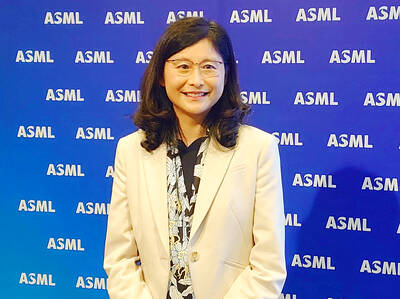
Netherlands-based semiconductor equipment supplier ASML Holding NV yesterday said that it is planning to hire an additional 1,000 people in Taiwan this year in response to growing demand from clients. ASML had previously planned to recruit 600 people this year, but that the plan has been adjusted upward, ASML vice president and ASML Taiwan general manager Grace Wang (汪佳慧) told reporters. ASML has a workforce of more than 4,500 in Taiwan, accounting for about 10 percent of its global total, Wang said. This year’s recruitment campaign would focus on adding people in the customer support, manufacturing and supply chain domains to assist ASML

UNDER MICROSCOPE: Taiwan detained three people who allegedly conspired to buy servers in Taiwan and export them using fraudulent documentation, prosecutors said Nvidia Corp chief executive officer Jensen Huang (黃仁勳) on Saturday urged Super Micro Computer Inc to tighten up on compliance after Taiwan detained three people this week for allegedly making fraudulent declarations about artificial intelligence (AI) servers made by its US partner. The development marked the nation’s first crackdown on semiconductor smuggling, which grew after the US slapped restrictions on exports of high-end chips such as Nvidia AI accelerators to China. Nvidia is “rigorous” in explaining regulations to all of its partners, Huang told reporters after arriving in Taipei. “Ultimately Super Micro has to run their own company,” he said in response to

Nvidia Corp yesterday announced that CEO Jensen Huang (黃仁勳) would attend an employee meeting in Taipei tomorrow to celebrate the launch of the company’s Taiwan headquarters project. Huang would attend a gathering at the site of Nvidia’s planned headquarters in Beitou Shilin Technology Park (北投士林科技園區), the company said in a statement. After arriving in Taiwan on Saturday last week, Huang told reporters that he plans to meet with Quanta Computer Inc (廣達) chairman Barry Lam (林百里) and Taiwan Semiconductor Manufacturing Co (TSMC, 台積電) chairman C.C. Wei (魏哲家), and would attend the groundbreaking ceremony for Nvidia’s Taiwan headquarters tomorrow. Nvidia has not yet applied


 RSS
RSS