


Amgen Inc yesterday launched a Taiwanese affiliate to oversee the marketing of three new drugs that the US-based biotechnology giant has reacquired from GlaxoSmithKline PLC.
The company in December last year reacquired rights to three of its medicines from GlaxoSmithKline in 48 markets and the new affiliate, Amgen Taiwan (台灣安進藥品), has submitted marketing authorization transfer applications to the Food and Drug Administration.
The three drugs are comprised of two types of denosumab injections, Prolia and Xgeva, and Vectibix, an monoclonal antibody injection.
“At the time, the arrangement with GlaxoSmithKline made sense for both parties. However, once Amgen has established a foothold in Asia, the company is aiming to increase its global presence significantly,” Amgen Asia regional corporate communications director Mary Klem said.
Klem said that in addition to marketing, Amgen Taiwan is among the company’s five fully-fledged affiliates in Asia.
Amgen Taiwan’s priorities are to continue investing in clinical trials and promote its parent company’s products in the local market, bringing additional treatments for cardiovascular diseases, as well as oncology and biosimilar medicines, to the local market, Klem said.
GlaxoSmithKline held selected regional rights to the three products since 2010 and generated approximately US$111 million in combined sales from those licenses in 2014, Amgen data showed.
In the five-year period leading up to the launch of its Taiwanese affiliate, Amgen has invested about NT$120 million (US$3.68 million) in clinical trials in Taiwan, Amgen Taiwan general manager Kelvin Chen (陳光冠) said.
Although Chen did not rule out the possibility of local contractors manufacturing Amgen’s products, he said that option is not likely as the US-based company has ample capacity overseas.
“Several studies have taken place in Taiwan and more than 10 studies are ongoing, with more than 200 patients enrolled in clinical trials,” Chen said.
Amgen Taiwan has about 50 employees, Chen said.
Amgen Taiwan has also retained Lin Fu-kuen (林福坤) as a consultant. Lin played an instrumental role in isolating and then cloning erythropoietin, the principal hormone regulating red blood cell production.
Lin’s discoveries led to the commercialization of Amgen’s Epogen, which is used to treat a lower than normal number of red blood cells caused by chronic kidney disease in patients on dialysis.
Prolia is a treatment for osteoporosis for postmenopausal women at a high risk of bone fractures who are intolerant of other forms of osteoporosis therapy.
Xgeva prevents skeletal-related events in patients with bone metastases from solid tumors, such as radiation of the bones, pathologic fractures and spinal cord compression.
Vectibix is used in combination with chemotherapy as a first-line treatment of metastatic colorectal cancer.

Taiwanese firms have increased investment in the Philippines in recent years as Manila’s ties with Washington deepen and global supply chains continue to shift away from China, an expert at the Chung-Hua Institution for Economic Research (CIER, 中華經濟研究院) said yesterday. The Philippines had not been among Taiwanese investors’ top choices in Southeast Asia, CIER Taiwan ASEAN Studies Center director Kristy Hsu (徐遵慈) said at a seminar in Taipei. However, Taiwan’s investment in the country has grown significantly since the COVID-19 pandemic, reaching US $257 million last year, a high in recent years, she said. Although Taiwan’s total investment in the Philippines still lags

Intel Corp regards Taiwan Semiconductor Manufacturing Co (TSMC, 台積電) as a longstanding partner, as the US chipmaker would continue outsourcing production of advanced chips to TSMC, Intel chief executive officer Lip-Bu Tan (陳立武) said yesterday. “I don’t look at people as competitors. I look at the collaboration... Nvidia is also, you know, a good friend,” Tan told a news conference following his keynote speech at the Computex trade show in Taipei. “It’s a very trusted partnership for us... We are a big, top customer for them, and we’re going to continue doing that,” he said, referring to TSMC, the world’s largest foundry

Artificial intelligence (AI) agents would supplant smartphones as the center of people’s digital lives, fundamentally reshaping personal devices and driving a major computing upgrade cycle, Qualcomm Inc CEO Cristiano Amon said yesterday. In his keynote speech for this year’s Computex trade show in Taipei, Amon said that the rise of "agentic AI" — AI systems capable of reasoning, planning and carrying out tasks autonomously — would transform how people interact with technology across phones, PCs, vehicles and wearable devices. Describing the technology as the next major evolution in computing, Amon said that "2026 is the year of agents.” For decades, smartphones have sat
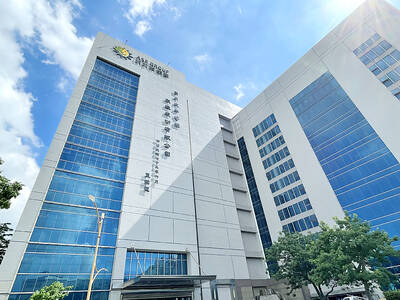
The average pay to employees by ASE Technology Holding Co (日月光投控) was the highest among the companies listed on the local main board last year, while contract chipmaker Taiwan Semiconductor Manufacturing Co (TSMC, 台積電) ranked seventh, the Taiwan Stock Exchange (TWSE) said on Monday. Data compiled by the exchange showed ASE Technology, the world’s largest chip packaging and testing services provider, paid its employees an average of NT$6.28 million (US$199,746) last year, up 40 percent from a year earlier. TSMC, the world’s largest contract chipmaker and the most profitable company in Taiwan, paid its employees NT$4.09 million on average, up


 RSS
RSS