


The laundering of US$81 million stolen from Bangladesh’s reserves through the Philippines could threaten the wider financial sector and put the country’s credit rating at risk, the lawmaker heading the government investigation of the case said.
“If you push the consequences, the Philippines could become blacklisted as a money-laundering haven, our credit ratings could go down and the cost of doing business could go up,” Philippine Senator Teofisto Guingona, who previously led government investigations on corruption that led to the indictment of lawmakers, said in an interview on Thursday. “If we don’t handle this properly, it will affect us all.”
The government is probing how money stolen from Bangladesh’s central bank was withdrawn from accounts set up at Rizal Commercial Banking Corp and cashed out at casinos after passing through a local money changer, Philrem Service Corp.

Photo: Reuters
The case has prompted central banks around the world to examine cybersecurity measures, and triggered the resignation of Bangladesh’s central bank governor.
Authorities have blocked most of the illicit transfers and US$20 million sent to Sri Lanka was returned, but almost all of the US$81 million withdrawn in the Philippines remains missing.
“There’s risk associated with this, and therefore we need to address that,” Bangko Sentral ng Pilipinas Governor Amando Tetangco told reporters in Manila yesterday. “We have to show that action has been taken.”
Rizal Bank is the nation’s eighth-largest lender with assets of 410.4 billion Philippine pesos (US$8.9 billion) as of September last year, according to central bank data. It is the sixth-largest in terms of capital.
Maia Santos Deguito, the manager of the Rizal Bank branch from which the US$81 million was withdrawn, has said she had approval from senior bank executives for the transfers.
Guingona said separately that at least two other senior executives of the bank may have been involved, without naming them. Deguito was the only branch manager in a network of 471 outlets who “committed serious violations of the bank’s systems, processes and controls,” the lender said in a statement.
“Rizal Bank failed as an institution,” Guingona said. “It’s either the branch or the headquarters that failed, but the point is, the bank failed. It could have been a system failure, human error or there was a conspiracy.”
The case is an isolated one and has nothing to do with the bank’s strength and stability, Rizal Bank said in the statement.
“RCBC follows global best practices but even the most stringent rules and restrictions are only as good as the people who must follow them,” Guingona said.
The bank’s internal investigation continues, Maria Celia Estavillo, Rizal Bank’s head of legal and regulatory affairs, said in a statement late on Thursday.
“Definitely we will sanction anybody found to be culpable within the bank,” Estavillo said.
Rizal Bank shares fell 0.8 percent at the close of trading in Manila on Friday, having dropped as much as 2.5 percent earlier. The Philippine benchmark stock index rose 1.3 percent.
The credit rating for the Philippines was raised to investment grade by Fitch Ratings and Standard & Poor’s in 2013.
It is now rated “BBB” by Standard & Poor’s and “Baa2” by Moody’s Investors Service, two levels above junk.
Fitch Ratings has the country at “BBB-,” one level above junk.

Meta Platforms Inc offered US$100 million bonuses to OpenAI employees in an unsuccessful bid to poach the ChatGPT maker’s talent and strengthen its own generative artificial intelligence (AI) teams, OpenAI CEO Sam Altman has said. Facebook’s parent company — a competitor of OpenAI — also offered “giant” annual salaries exceeding US$100 million to OpenAI staffers, Altman said in an interview on the Uncapped with Jack Altman podcast released on Tuesday. “It is crazy,” Sam Altman told his brother Jack in the interview. “I’m really happy that at least so far none of our best people have decided to take them

BYPASSING CHINA TARIFFS: In the first five months of this year, Foxconn sent US$4.4bn of iPhones to the US from India, compared with US$3.7bn in the whole of last year Nearly all the iPhones exported by Foxconn Technology Group (富士康科技集團) from India went to the US between March and last month, customs data showed, far above last year’s average of 50 percent and a clear sign of Apple Inc’s efforts to bypass high US tariffs imposed on China. The numbers, being reported by Reuters for the first time, show that Apple has realigned its India exports to almost exclusively serve the US market, when previously the devices were more widely distributed to nations including the Netherlands and the Czech Republic. During March to last month, Foxconn, known as Hon Hai Precision Industry
PLANS: MSI is also planning to upgrade its service center in the Netherlands Micro-Star International Co (MSI, 微星) yesterday said it plans to set up a server assembly line at its Poland service center this year at the earliest. The computer and peripherals manufacturer expects that the new server assembly line would shorten transportation times in shipments to European countries, a company spokesperson told the Taipei Times by telephone. MSI manufactures motherboards, graphics cards, notebook computers, servers, optical storage devices and communication devices. The company operates plants in Taiwan and China, and runs a global network of service centers. The company is also considering upgrading its service center in the Netherlands into a
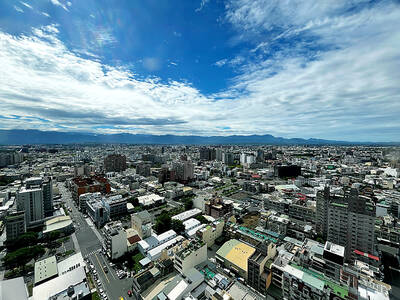
Taiwan’s property market is entering a freeze, with mortgage activity across the nation’s six largest cities plummeting in the first quarter, H&B Realty Co (住商不動產) said yesterday, citing mounting pressure on housing demand amid tighter lending rules and regulatory curbs. Mortgage applications in Taipei, New Taipei City, Taoyuan, Taichung, Tainan and Kaohsiung totaled 28,078 from January to March, a sharp 36.3 percent decline from 44,082 in the same period last year, the nation’s largest real-estate brokerage by franchise said, citing data from the Joint Credit Information Center (JCIC, 聯徵中心). “The simultaneous decline across all six cities reflects just how drastically the market


 RSS
RSS