


Amazon.com Inc will give new fathers paid parental leave and extend paid maternity leave for mothers, as the online retailer seeks to enhance its benefits as a way to attract and retain talent.
Women who have a child can now take up to 20 weeks of paid leave, up from eight weeks. New parents can take six weeks of paid parental leave.
The Seattle-based company previously did not offer paternity leave. The new benefits apply to all births or adoptions on or after Sunday, according to a memo distributed to employees on Monday.
Amazon declined to comment on the new parental leave policy.
Amazon’s changes come three months after video-streaming service Netflix Inc in August offered up to one year of paid leave to new parents in the first 12 months after a child’s birth or adoption.
At Facebook Inc, mothers and fathers get four months paid leave plus US$4,000 in “baby cash,” while at Google Inc employees are entitled to 18 weeks of parental leave. Microsoft Corp in August said it would offer 12 weeks of paid leave for all new parents.
Technology companies offer generous benefits compared with other industries because of competition for top talent.
Issues of gender equality and family balance have also become hot topics in the industry. Only 12 percent of US private-sector employees have access to any paid family leave through their jobs, according to the US Department of Labor.
The US is the only nation in the developed world that does not mandate maternity leave with pay.
Amazon’s expanded parental benefits also follow increased scrutiny over the company’s treatment of workers after a scathing New York Times report in August portrayed the online retailer as a pressure cooker where worker hardships are ignored and backstabbing is encouraged.
Amazon founder and chief executive officer Jeff Bezos rejected the article and Jay Carney, Amazon’s senior vice president for global corporate affairs, responded last month with a blog post that refuted some of the newspaper’s claims.

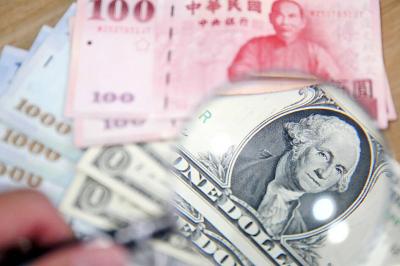
The US dollar was trading at NT$29.7 at 10am today on the Taipei Foreign Exchange, as the New Taiwan dollar gained NT$1.364 from the previous close last week. The NT dollar continued to rise today, after surging 3.07 percent on Friday. After opening at NT$30.91, the NT dollar gained more than NT$1 in just 15 minutes, briefly passing the NT$30 mark. Before the US Department of the Treasury's semi-annual currency report came out, expectations that the NT dollar would keep rising were already building. The NT dollar on Friday closed at NT$31.064, up by NT$0.953 — a 3.07 percent single-day gain. Today,
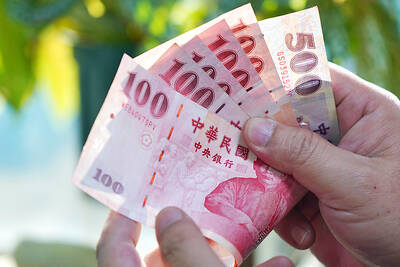
‘SHORT TERM’: The local currency would likely remain strong in the near term, driven by anticipated US trade pressure, capital inflows and expectations of a US Fed rate cut The US dollar is expected to fall below NT$30 in the near term, as traders anticipate increased pressure from Washington for Taiwan to allow the New Taiwan dollar to appreciate, Cathay United Bank (國泰世華銀行) chief economist Lin Chi-chao (林啟超) said. Following a sharp drop in the greenback against the NT dollar on Friday, Lin told the Central News Agency that the local currency is likely to remain strong in the short term, driven in part by market psychology surrounding anticipated US policy pressure. On Friday, the US dollar fell NT$0.953, or 3.07 percent, closing at NT$31.064 — its lowest level since Jan.
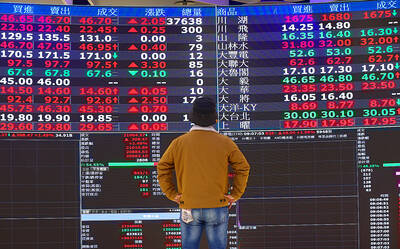
The New Taiwan dollar and Taiwanese stocks surged on signs that trade tensions between the world’s top two economies might start easing and as US tech earnings boosted the outlook of the nation’s semiconductor exports. The NT dollar strengthened as much as 3.8 percent versus the US dollar to 30.815, the biggest intraday gain since January 2011, closing at NT$31.064. The benchmark TAIEX jumped 2.73 percent to outperform the region’s equity gauges. Outlook for global trade improved after China said it is assessing possible trade talks with the US, providing a boost for the nation’s currency and shares. As the NT dollar
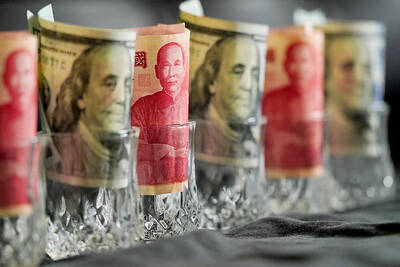
PRESSURE EXPECTED: The appreciation of the NT dollar reflected expectations that Washington would press Taiwan to boost its currency against the US dollar, dealers said Taiwan’s export-oriented semiconductor and auto part manufacturers are expecting their margins to be affected by large foreign exchange losses as the New Taiwan dollar continued to appreciate sharply against the US dollar yesterday. Among major semiconductor manufacturers, ASE Technology Holding Co (日月光), the world’s largest integrated circuit (IC) packaging and testing services provider, said that whenever the NT dollar rises NT$1 against the greenback, its gross margin is cut by about 1.5 percent. The NT dollar traded as strong as NT$29.59 per US dollar before trimming gains to close NT$0.919, or 2.96 percent, higher at NT$30.145 yesterday in Taipei trading


 RSS
RSS