


President Transnet Corp (統一速達), a home delivery service provider mainly owned by President Chain Store Corp (統一超商), expects its revenue this year to exceed NT$10 billion (US$324.35 million) on the back of its strategy to improve business flow, a company official said yesterday.
That would represent double-digit growth from the firm’s NT$9 billion in revenue last year.
“We hope the company’s sales performance can reach the NT$10 billion milestone in its 15th year of operation,” President Transnet director of marketing Brian Jen (任經文) told a media briefing.

Photo: Yang Ya-min, Taipei Times
Jen said that, following years of development in logistics and cash flow services, President Transnet is to focus on improving business flow, which would be its major revenue driver this year.
The company’s 4,000 sales representative and drivers are key to its strategy by promoting the sales of daily commodities — such as toilet paper and bottled water, as well as gift boxes during special holidays — to regular customers in person, Jen added.
President Transnet aims for the new business model to generate NT$300 million in sales per year, with the market trend seeing sales double in the next three years, Jen said.
Jen said the service would focus housewives who have no time to purchase daily goods in stores, elderly people who do not use the Internet for e-commerce and people living in relatively remote areas.
With the improvement in service quality, these customers might develop a return rate of between 30 and 50 percent, with each sales representative potentially attracting between six and 10 new customers per month, he added.
President Transnet is also to invest between NT$20 million and NT$30 million in training sales representatives, with the company continuing to develop more appropriate products.
President Transnet, which saw its net profit last year grow by double digits to NT$341.82 million, has been one of the most profitable reinvestments for President Chain in past years, contributing NT$239 million in net income to its parent company for the whole of last year.
The company currently holds an about 30 percent share of parcel shipment market, as Chunghwa Post Co Ltd (中華郵政) still leads the market.

Taichung reported the steepest fall in completed home prices among the six special municipalities in the first quarter of this year, data compiled by Taiwan Realty Co (台灣房屋) showed yesterday. From January through last month, the average transaction price for completed homes in Taichung fell 8 percent from a year earlier to NT$299,000 (US$9,483) per ping (3.3m²), said Taiwan Realty, which compiled the data based on the government’s price registration platform. The decline could be attributed to many home buyers choosing relatively affordable used homes to live in themselves, instead of newly built homes in the city’s prime property market, Taiwan Realty
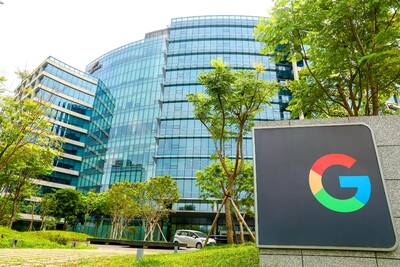
The government yesterday approved applications by Alphabet Inc’s Google to invest NT$27.08 billion (US$859.98 million) in Taiwan, the Ministry of Economic Affairs said in a statement. The Department of Investment Review approved two investments proposed by Google, with much of the funds to be used for data processing and electronic information supply services, as well as inventory procurement businesses in the semiconductor field, the ministry said. It marks the second consecutive year that Google has applied to increase its investment in Taiwan. Google plans to infuse NT$25.34 billion into Charter Investments Ltd (特許投資顧問) through its Singapore-based subsidiary Fructan Holdings Singapore Pte Ltd, and

Micron Technology Inc is a driving force pushing the US Congress to pass legislation that would put new export restrictions on equipment its Chinese competitors use to make their chips, according to people familiar with the matter. A US House of Representatives panel yesterday was to vote on the “MATCH Act,” a bill designed to close gaps in restrictions on chipmaking equipment. It would also pressure foreign companies that sell equipment to Chinese chipmaking facilities to align with export curbs on US companies like Lam Research Corp and Applied Materials Inc. The bill targets facilities operated by China’s ChangXin Memory Technologies Inc

Singapore-based ride-hailing and delivery giant Grab Holdings’ planned acquisition of Foodpanda’s Taiwan operations has yet to enter the formal review stage, as regulators await supplementary documents, the Fair Trade Commission (FTC) said yesterday. Acting FTC Chairman Chen Chih-min (陳志民) told the legislature’s Economics Committee that although Grab submitted its application on March 27, the case has not been officially accepted because required materials remain incomplete. Once the filing is finalized, the FTC would launch a formal probe into the deal, focusing on issues such as cross-shareholding and potential restrictions on market competition, Chen told lawmakers. Grab last month announced that it would acquire


 RSS
RSS