


Liberty Global PLC’s Belgian unit agreed to buy Royal KPN NV’s local mobile phone business for 1.33 billion euros (US$1.43 billion) in cash as billionaire John Malone expands his European cable and telecommunications empire.
Telenet Group Holding NV, majority-owned by Malone’s Liberty Global, gains the Base network as it seeks to challenge larger Belgacom SA and Mobistar SA.
Telenet, which yesterday said it plans to finance the takeover with 1 billion euros of new debt in addition to existing cash, currently rents capacity from Mobistar.

Photo: Bloomberg
The deal lets Liberty Global build a Belgian business with 2.4 billion euros in sales, while also targeting savings of 150 million euros in the country.
Malone has expanded through purchases across Europe and London-based Liberty Global now owns cable and telephone operations stretching from Hungary to the UK. The company has also added TV content and production to drive growth.
The price values Base at eight times the unit’s estimated earnings before interest, taxes, depreciation and amortization for this year, the companies said.
KPN shares increased 2.7 percent to 3.25 euros at 9:44am in Amsterdam, as Telenet rose 4.2 percent to 54.67 euros in Brussels. Liberty Global lost 1.3 percent in New York on Friday.
The purchase gives Telenet about 3.3 million mobile subscribers, bringing the total to more than 4 million. That compares with more than 5 million for each Belgacom and Mobistar, which is majority-owned by Orange SA.
KPN chief executive officer Eelco Blok’s efforts to sell Base in 2012 were halted, because the bids were too low. With a sale of Base, The Hague-based KPN would have operations only in its home market of the Netherlands, since the carrier completed the sale of its German unit E-Plus to Telefonica Deutschland Holding AG last year.
Billionaire Carlos Slim’s America Movil SAB is the biggest investor in KPN, with a 21.4 percent stake. KPN holds a 20.5 percent stake in Telefonica Deutschland as a result of the sale, and Blok has said that he is open to sell if the right opportunity arises.
Base has said it is focused on increasing the share of customers with monthly contracts and their data usage in Belgium, where consumption remains relatively low. KPN said this month several parties had expressed interest in buying Base.
“The price is not too bad, I would have expected a little bit less,” Theodoor Gilissen Bankiers NV analyst Tom Muller said by telephone. “Now you have to wait and see how the consolidation in Europe is going to play out.”

Merida Industry Co (美利達) has seen signs of recovery in the US and European markets this year, as customers are gradually depleting their inventories, the bicycle maker told shareholders yesterday. Given robust growth in new orders at its Taiwanese factory, coupled with its subsidiaries’ improving performance, Merida said it remains confident about the bicycle market’s prospects and expects steady growth in its core business this year. CAUTION ON CHINA However, the company must handle the Chinese market with great caution, as sales of road bikes there have declined significantly, affecting its revenue and profitability, Merida said in a statement, adding that it would
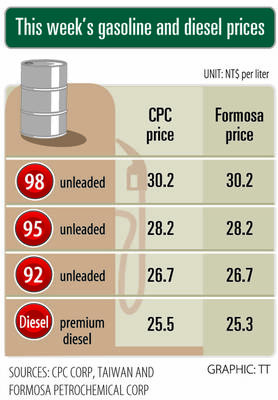
i Gasoline and diesel prices at fuel stations are this week to rise NT$0.1 per liter, as tensions in the Middle East pushed crude oil prices higher last week, CPC Corp, Taiwan (台灣中油) and Formosa Petrochemical Corp (台塑石化) said yesterday. International crude oil prices last week rose for the third consecutive week due to an escalating conflict between Israel and Iran, as the market is concerned that the situation in the Middle East might affect crude oil supply, CPC and Formosa said in separate statements. Front-month Brent crude oil futures — the international oil benchmark — rose 3.75 percent to settle at US$77.01
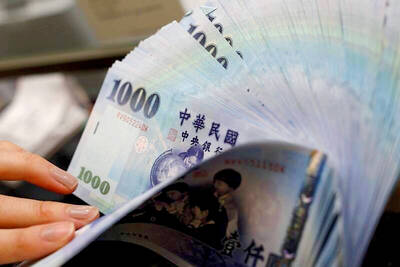
RISING: Strong exports, and life insurance companies’ efforts to manage currency risks indicates the NT dollar would eventually pass the 29 level, an expert said The New Taiwan dollar yesterday rallied to its strongest in three years amid inflows to the nation’s stock market and broad-based weakness in the US dollar. Exporter sales of the US currency and a repatriation of funds from local asset managers also played a role, said two traders, who asked not to be identified as they were not authorized to speak publicly. State-owned banks were seen buying the greenback yesterday, but only at a moderate scale, the traders said. The local currency gained 0.77 percent, outperforming almost all of its Asian peers, to close at NT$29.165 per US dollar in Taipei trading yesterday. The

RECORD LOW: Global firms’ increased inventories, tariff disputes not yet impacting Taiwan and new graduates not yet entering the market contributed to the decrease Taiwan’s unemployment rate last month dropped to 3.3 percent, the lowest for the month in 25 years, as strong exports and resilient domestic demand boosted hiring across various sectors, the Directorate-General of Budget, Accounting and Statistics (DGBAS) said yesterday. After seasonal adjustments, the jobless rate eased to 3.34 percent, the best performance in 24 years, suggesting a stable labor market, although a mild increase is expected with the graduation season from this month through August, the statistics agency said. “Potential shocks from tariff disputes between the US and China have yet to affect Taiwan’s job market,” Census Department Deputy Director Tan Wen-ling


 RSS
RSS