


The Ministry of Economic Affairs plans to boost its solar energy production target to 500 megawatts (MW) in a continuing bid to whip up diversification of the nation’s energy sources to confront the rising risk of power shortages, energy officials said on Saturday.
The Bureau of Energy announced the plan during a running event on Saturday to underscore its resolve to promote sources of renewable energy.
“The bureau is studying plans to raise solar power installation targets from 270MW to 500MW this year with a view to growing installed capacity and aiding the industry,” Bureau of Energy Deputy Director-General Jennifer Wu (吳玉珍) said before the event.
The target adjustment would mark another effort by the government to diversify energy sources and cut carbon emissions in a bid to make Taiwan a better place to live and more environmentally sustainable, Wu said.
The nation’s renewable energy installations totaled 407MW in capacity as of the end of January, with annual electricity generation at 123 megawatt hours (MWH), Wu said, adding that the installations would help cut carbon dioxide emissions by 6.41 million tonnes a year.
Nevertheless, renewable energy sources by themselves are unable to meet the demand for electricity in the foreseeable future, the bureau said in a statement last week.
The bureau is working on a long-term development plan to cut the nation’s dependence on energy imports, the statement said.
Toward that goal, policymakers have raised the target for total installed capacity of renewable energy sources to 13,750MW in 2030, from the 10,858MW projected in 2010, an upgrade of 26.6 percent, the bureau said.
“The goal appears likely to materialize five years ahead of schedule, based on the progress so far,” the statement said.
The Renewable Energy Development Act (再生能源發展條例) of 2009 provides a legal foundation for feed-in tariffs and other incentives for solar, onshore wind, offshore wind, biomass and hydropower installations.
The government plans to increase solar capacity to 4,500MW by 2020 and enable 7.5 million residents to use solar energy by 2030.

Cairo’s new monorail slices across the city skyline, running above the familiar chaos of blaring horns and aging buses’ exhaust fumes that mark rush hour below. The US$4.5 billion monorail, opened this month, is among Egypt’s most prominent new transport projects, part of a debt-funded infrastructure drive criticized for sapping state finances while bringing limited benefits to most of the country’s 109 million people. “It feels like you’re in a different country,” said Ramy Sayed, a restaurant manager, aboard a driverless Innovia 300 train. “No noise, no traffic, we’re not used to this.” The eastern line runs 56km from the bustling middle-class

Starlux Airlines Co (星宇航空) today unveiled a long-haul network expansion plan at a shareholders’ meeting in Taipei, including direct flights to Barcelona, Spain, and Zurich, Switzerland, as well as a service connecting Taipei, Sydney and New Zealand. Starlux is to become the first Taiwanese carrier to offer non-stop services to the two European cities, while the inaugural oceanic route is expected to expand transit opportunities within the Australia-New Zealand market, Starlux said. Flight services to Chicago, Dallas, Washington and New York are under evaluation, the airline added. Prior to the shareholders’ meeting, the airline earlier this year announced that it would be

Taiwanese prosecutors suspect that three people successfully smuggled at least one shipment of Nvidia Corp artificial intelligence (AI) chips to China after first exporting them to Japan, people familiar with the matter said. The trio was detained last week by the Keelung District Prosecutors’ Office for allegedly falsifying documents related to exports of Super Micro Computer Inc servers containing advanced Nvidia chips, which the US has barred from sale to China without a license from Washington. The move marked Taiwan’s first public crackdown on AI chip diversion after years of pressure from the US to take a more active role in curtailing
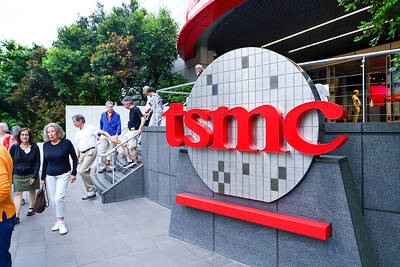
Taiwan Semiconductor Manufacturing Co (TSMC, 台積電) employee bonuses are likely to grow more than 30 percent this year, in line with the past few years as the company’s profits continue to set new records, an anonymous source cited TSMC chairman C.C. Wei (魏哲家) as saying yesterday. TSMC, the world’s largest contract chipmaker, is committed to taking care of its workers, the source said, citing Wei’s meeting with employees yesterday morning. Wei also expressed gratitude to employees for their contribution to the company’s improving bottom line, the source added. Since 2023, TSMC’s employee bonuses have grown at an annual rate of


 RSS
RSS