


Japan’s Mitsui Fudosan Group plans to launch its first mall in Taiwan by the end of September in collaboration with Farglory Group (遠雄集團), with the venture targeting sales of NT$6 billion (US$190.26 million) in its first year of operation.
The two groups have established a joint venture — Sanxin Outlet Co Ltd (三新奧特萊斯) — to run the mall, with Mitsui Fudosan holding a 70 percent stake and Farglory owning the other 30 percent.
The mall is to be set up in a commercial area in New Taipei City’s Linkou District (林口), where Mitsui Fudosan won a 50-year lease in 2013 and plans to invest about NT$6 billion. The investment is expected to create at least 2,000 jobs.
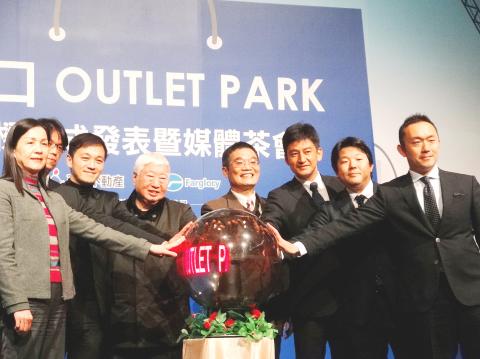
Photo: CNA
“We expect the mall to open for business by the end of the third quarter and generate NT$6 billion in annual sales in the first year of operation,” Sanxin Outlet general manager Wadayama Ryuichi told a press conference after a beam-raising ceremony last month.
The mall will be able to accommodate 220 tenants, with 60 percent expected to be international luxury brands and 10 percent Japanese brands, Ryuichi said.
To raise customer traffic, 20 percent of Sanxin Outlet’s tenants will be food and beverage vendors, he said.
The mall will also have a supermarket, movie theaters and a bookstore, he added.
Ryuichi said about 85 percent of the tenancies have been leased, with the planned mall expected to offer discounts of between 30 percent and 70 percent on various apparel, accessories and lifestyle products.
Facing competition from Gloria Outlets (華泰名品城), another planned outlet center in Taoyuan led by the Gloria Hotel Group (華泰大飯店集團), which is to launch operations of its first phase in August, Ryuichi said the location and the earlier timing of its full opening would be an advantage for Sanxin Outlet.
In addition, Mitsui has experience operating 12 malls in Japan, Ryuichi added.
By cooperating with Farglory Group, which owns Farglory Land Development Co (遠雄建設), Mitsui Fudosan might launch more land development plans in Taiwan in the near future, he said.

Taiwanese firms have increased investment in the Philippines in recent years as Manila’s ties with Washington deepen and global supply chains continue to shift away from China, an expert at the Chung-Hua Institution for Economic Research (CIER, 中華經濟研究院) said yesterday. The Philippines had not been among Taiwanese investors’ top choices in Southeast Asia, CIER Taiwan ASEAN Studies Center director Kristy Hsu (徐遵慈) said at a seminar in Taipei. However, Taiwan’s investment in the country has grown significantly since the COVID-19 pandemic, reaching US $257 million last year, a high in recent years, she said. Although Taiwan’s total investment in the Philippines still lags
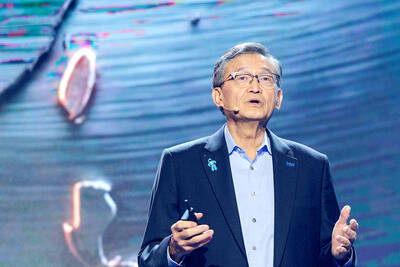
Intel Corp regards Taiwan Semiconductor Manufacturing Co (TSMC, 台積電) as a longstanding partner, as the US chipmaker would continue outsourcing production of advanced chips to TSMC, Intel chief executive officer Lip-Bu Tan (陳立武) said yesterday. “I don’t look at people as competitors. I look at the collaboration... Nvidia is also, you know, a good friend,” Tan told a news conference following his keynote speech at the Computex trade show in Taipei. “It’s a very trusted partnership for us... We are a big, top customer for them, and we’re going to continue doing that,” he said, referring to TSMC, the world’s largest foundry

Artificial intelligence (AI) agents would supplant smartphones as the center of people’s digital lives, fundamentally reshaping personal devices and driving a major computing upgrade cycle, Qualcomm Inc CEO Cristiano Amon said yesterday. In his keynote speech for this year’s Computex trade show in Taipei, Amon said that the rise of "agentic AI" — AI systems capable of reasoning, planning and carrying out tasks autonomously — would transform how people interact with technology across phones, PCs, vehicles and wearable devices. Describing the technology as the next major evolution in computing, Amon said that "2026 is the year of agents.” For decades, smartphones have sat

Hon Hai Precision Industry Co (鴻海精密) yesterday said it would work with US chipmaker Intel Corp to jointly develop and deploy next-generation artificial intelligence (AI) infrastructure and intelligent computing platforms in a move to capture booming demand for AI computing systems. Hon Hai, also known as Foxconn Technology Group (富士康), said in a statement that the partnership would combine its global manufacturing scale, system integration expertise and AI data center deployment capabilities with Intel’s strengths in processor architecture, silicon technologies and software ecosystem. The companies said they plan to work on equipment used in AI data centers, including server racks powered by


 RSS
RSS