


The Chinese government is pushing domestic banks to remove high-end servers made by International Business Machines Corp (IBM) and replace them with a local brand, according to people familiar with the matter, in an escalation of the dispute with the US over spying claims.
Government agencies, including the People’s Bank of China and the Chinese Ministry of Finance, are reviewing whether Chinese commercial banks’ reliance on IBM servers compromises the country’s financial security, said the four people, who asked not to be identified because the review has not been made public.
The review fits a broader pattern of retaliation after US prosecutors indicted five Chinese military officers for allegedly hacking into the computers of US companies and stealing secrets.
Last week, China’s government said it will vet technology companies operating in the country, while the Financial Times reported on Sunday that China ordered state-owned companies to cut ties with US consulting firms.
Harriet Ip, a Singapore-based spokeswoman for IBM, referred questions to IBM in the US.
Jeffrey Cross, a Somers, New York- based spokesman, did not immediately respond to an e-mail seeking comment outside US business hours.
“Security trumps everything,” said Duncan Clark, chairman of BDA China Ltd, a Beijing-based consultant to technology companies. “China doesn’t need the US companies in the way it did for the last few decades.”
The results of the government review will be submitted to a working group on Internet security led by Chinese President Xi Jinping (習近平), two of the people said.
Spokesmen for Bank of China Ltd (中國銀行), China Construction Bank Corp (中國建設銀行) and Industrial & Commercial Bank of China Ltd (ICBC, 中國工商銀行) declined to comment.
Three phone calls to Agricultural Bank of China Ltd’s (中國農業銀行) Beijing press office were not returned.
US technology sales in China have come under increasing threat following US whistle-blower Edward Snowden’s revelations in June last year of a US National Security Agency spying program.
Forrester Research Inc estimates purchases of information-technology products in China will rise 11 percent this year to US$125 billion, meaning other US technology companies, including Microsoft Corp, face threats to their business.
Microsoft said this month that it was “surprised” to learn that the China Central Government Procurement Center has excluded its Windows 8 operating system from a government purchase of energy-efficient computers.
Xinhua news agency called it “a move to ensure computer security.”
China is the world’s largest market for personal computers.
“China’s government is in a strong position given Snowden’s disclosures,” Clark said. “If you give them an excuse, they will aggressively promote domestic brands.”
The directive would be a further blow to IBM’s business in China, where sales fell 20 percent in the first quarter.
In a conference call last month, IBM chief financial officer Martin Schroeter said the challenges were cyclical, “and we still see good opportunity over the long term” in China.
IBM announced in January it would sell its low-end server business to Beijing-based Lenovo Group Ltd (聯想) for US$2.3 billion. That transaction faces regulatory scrutiny including a US national security review.
In addition to concern about Armonk, New York-based IBM’s equipment as a security threat, China’s government also believes IBM servers are more expensive in China than in other regions, the people said.
China Postal Savings Bank Co (中國郵政儲蓄銀行) is using servers made by Jinan-based Inspur Group Ltd (浪潮集團) as part of a trial program that began in March last year, the people said. The government plans to expand that trial to other banks, they said.
Shares of contract chipmaker Taiwan Semiconductor Manufacturing Co (TSMC, 台積電) came under pressure yesterday after a report that Apple Inc is looking to shift some orders from the Taiwanese company to Intel Corp. TSMC shares fell NT$55, or 2.4 percent, to close at NT$2,235 on the local main board, Taiwan Stock Exchange data showed. Despite the losses, TSMC is expected to continue to benefit from sound fundamentals, as it maintains a lead over its peers in high-end process development, analysts said. “The selling was a knee-jerk reaction to an Intel-Apple report over the weekend,” Mega International Investment Services Corp (兆豐國際投顧) analyst Alex Huang
Taiwan Semiconductor Manufacturing Co (TSMC, 台積電) is expected to remain Apple Inc’s primary chip manufacturing partner despite reports that Apple could shift some orders to Intel Corp, industry experts said yesterday. The comments came after The Wall Street Journal reported on Friday that Apple and Intel had reached a preliminary agreement following more than a year of negotiations for Intel to manufacture some chips for Apple devices. Taiwan Institute of Economic Research (台灣經濟研究院) economist Arisa Liu (劉佩真) said TSMC’s advanced packaging technologies, including integrated fan-out and chip-on-wafer-on-substrate, remain critical to the performance of Apple’s A-series and M-series chips. She said Intel and Samsung
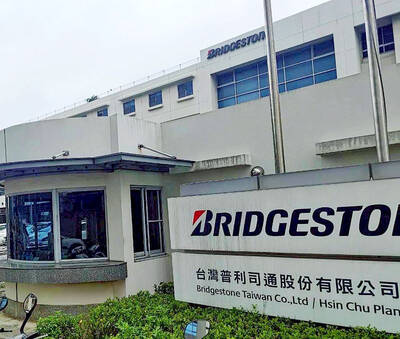
TRANSITION: With the closure, the company would reorganize its Taiwanese unit to a sales and service-focused model, Bridgestone said Bridgestone Corp yesterday announced it would cease manufacturing operations at its tire plant in Hsinchu County’s Hukou Township (湖口), affecting more than 500 workers. Bridgestone Taiwan Co (台灣普利司通) said in a statement that the decision was based on the Tokyo-based tire maker’s adjustments to its global operational strategy and long-term market development considerations. The Taiwanese unit would be reorganized as part of the closure, effective yesterday, and all related production activities would be concluded, the statement said. Under the plan, Bridgestone would continue to deepen its presence in the Taiwanese market, while transitioning to a sales and service-focused business model, it added. The Hsinchu
Taiwan Semiconductor Manufacturing Co (TSMC, 台積電) has approved a capital budget of US$31.28 billion for production expansion to meet long-term development needs during the artificial intelligence (AI) boom. The company’s board meeting yesterday approved the capital appropriation plan for purposes such as the installation of advanced technology capacity and fab construction, the world’s largest contract chipmaker said in a statement. At an earnings conference last month, TSMC forecast that its capital expenditure for this year would be at the higher end of the US$52 billion to US$56 billion range it forecast in January in response to robust demand for 5G, AI and


 RSS
RSS