


Dutch food and cosmetics giant Unilever Plc yesterday said it has bought a majority stake in Chinese water-purification company Qinyuan Group Co Ltd (沁園), in its biggest Chinese investment in a decade.
“We are delighted to be making this strategic investment — a majority stake in Qinyuan — our biggest acquisition in China for more than 10 years,” Unilever chief executive Paul Polman said in a statement.
Rotterdam-based Unilever, which last year reported a net profit of 4.84 billion euros (US$6.71 billion), declined to put an amount on the deal or disclose the size of its stake.
Qinyuan last year made sales of almost 140 million euros in China’s rapidly expanding water-purification market, which has grown more than 20 percent a year over the last three years, Unilever said.
“This deal will more than double the size of our water-purification business and will bring together complementary technology ... all under the Unilever umbrella,” Polman said.
Founded in 1930, Unilever employs about 174,000 people worldwide and has some of the world’s best-known brands like Knorr, Omo, Lipton and Magnum ice cream in its portfolio.
Qinyuan is a high-tech company that makes water purifiers, drinking-water equipment and water-treatment membranes. The firm has about 2,500 employees and was founded in 1998.
Meanwhile, Polman got a £431,775 (US$722,200) top-up to his bonus payment last year, in large part for his work leading the company’s sustainability plan.
After collecting a bonus of £1.15 million, or 95 percent of his target, Polman got an additional 37.5 percent for progress on the company’s sustainable-living plan, according to Unilever’s annual report.
The plan, known as the USLP, includes targets for reducing greenhouse gas emissions, water use and waste.
Unilever chief financial officer Jean-Marc Huet got a 10 percent addition to his bonus, taking the total to £746,130.
Polman’s total compensation for last year was 7.96 million euros, up 4.2 percent over 2012, the annual report showed. That includes 1.86 million euros in bonuses.

Cairo’s new monorail slices across the city skyline, running above the familiar chaos of blaring horns and aging buses’ exhaust fumes that mark rush hour below. The US$4.5 billion monorail, opened this month, is among Egypt’s most prominent new transport projects, part of a debt-funded infrastructure drive criticized for sapping state finances while bringing limited benefits to most of the country’s 109 million people. “It feels like you’re in a different country,” said Ramy Sayed, a restaurant manager, aboard a driverless Innovia 300 train. “No noise, no traffic, we’re not used to this.” The eastern line runs 56km from the bustling middle-class
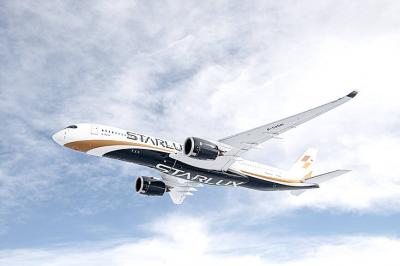
Starlux Airlines Co (星宇航空) today unveiled a long-haul network expansion plan at a shareholders’ meeting in Taipei, including direct flights to Barcelona, Spain, and Zurich, Switzerland, as well as a service connecting Taipei, Sydney and New Zealand. Starlux is to become the first Taiwanese carrier to offer non-stop services to the two European cities, while the inaugural oceanic route is expected to expand transit opportunities within the Australia-New Zealand market, Starlux said. Flight services to Chicago, Dallas, Washington and New York are under evaluation, the airline added. Prior to the shareholders’ meeting, the airline earlier this year announced that it would be

Taiwanese firms have increased investment in the Philippines in recent years as Manila’s ties with Washington deepen and global supply chains continue to shift away from China, an expert at the Chung-Hua Institution for Economic Research (CIER, 中華經濟研究院) said yesterday. The Philippines had not been among Taiwanese investors’ top choices in Southeast Asia, CIER Taiwan ASEAN Studies Center director Kristy Hsu (徐遵慈) said at a seminar in Taipei. However, Taiwan’s investment in the country has grown significantly since the COVID-19 pandemic, reaching US $257 million last year, a high in recent years, she said. Although Taiwan’s total investment in the Philippines still lags
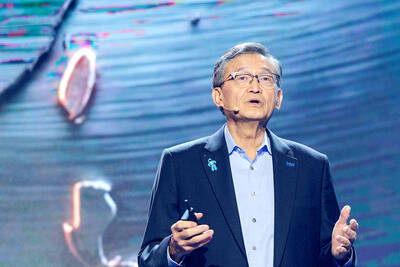
Intel Corp regards Taiwan Semiconductor Manufacturing Co (TSMC, 台積電) as a longstanding partner, as the US chipmaker would continue outsourcing production of advanced chips to TSMC, Intel chief executive officer Lip-Bu Tan (陳立武) said yesterday. “I don’t look at people as competitors. I look at the collaboration... Nvidia is also, you know, a good friend,” Tan told a news conference following his keynote speech at the Computex trade show in Taipei. “It’s a very trusted partnership for us... We are a big, top customer for them, and we’re going to continue doing that,” he said, referring to TSMC, the world’s largest foundry


 RSS
RSS