


The Supreme Court of South Korea yesterday upheld a four-year jail sentence for the chairman of the country’s third-largest conglomerate, the SK Group, for embezzlement.
Chey Tae-won, 54, was convicted of diverting 46.5 billion won (US$43.5 million) from two affiliates in 2008 and funneling the money into a firm for investments in stock futures and options.
The custodial sentence was seen as sending a message in a country where convicted business tycoons have often been given suspended prison terms in recognition of their contribution to South Korea’s economy. Chey has been in prison since January last year, when a lower court handed down the four-year jail term. The sentence had already been upheld once on appeal before the Supreme Court confirmation.
There was no immediate comment from the conglomerate, which operates in industries from energy to telecommunications and includes top mobile carrier SK Telecom.
It was not Chey’s first conviction. In 2003, he was sentenced to three years in prison for his role in a US$1.3 billion accounting fraud.
He was released after just seven months and, in 2008, granted a full presidential pardon, wiping his record clean. It is not unusual for senior executives with criminal convictions to remain in charge of South Korea’s family-dominated conglomerates.
South Korea’s Supreme Court also upheld a 40-month jail sentence for Chey’s younger brother and group vice chairman Chey Jae-won.
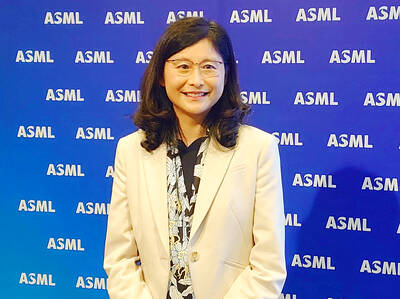
Netherlands-based semiconductor equipment supplier ASML Holding NV yesterday said that it is planning to hire an additional 1,000 people in Taiwan this year in response to growing demand from clients. ASML had previously planned to recruit 600 people this year, but that the plan has been adjusted upward, ASML vice president and ASML Taiwan general manager Grace Wang (汪佳慧) told reporters. ASML has a workforce of more than 4,500 in Taiwan, accounting for about 10 percent of its global total, Wang said. This year’s recruitment campaign would focus on adding people in the customer support, manufacturing and supply chain domains to assist ASML
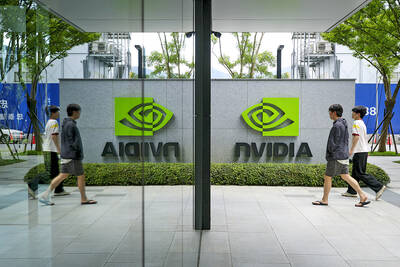
UNDER MICROSCOPE: Taiwan detained three people who allegedly conspired to buy servers in Taiwan and export them using fraudulent documentation, prosecutors said Nvidia Corp chief executive officer Jensen Huang (黃仁勳) on Saturday urged Super Micro Computer Inc to tighten up on compliance after Taiwan detained three people this week for allegedly making fraudulent declarations about artificial intelligence (AI) servers made by its US partner. The development marked the nation’s first crackdown on semiconductor smuggling, which grew after the US slapped restrictions on exports of high-end chips such as Nvidia AI accelerators to China. Nvidia is “rigorous” in explaining regulations to all of its partners, Huang told reporters after arriving in Taipei. “Ultimately Super Micro has to run their own company,” he said in response to

Nvidia Corp yesterday announced that CEO Jensen Huang (黃仁勳) would attend an employee meeting in Taipei tomorrow to celebrate the launch of the company’s Taiwan headquarters project. Huang would attend a gathering at the site of Nvidia’s planned headquarters in Beitou Shilin Technology Park (北投士林科技園區), the company said in a statement. After arriving in Taiwan on Saturday last week, Huang told reporters that he plans to meet with Quanta Computer Inc (廣達) chairman Barry Lam (林百里) and Taiwan Semiconductor Manufacturing Co (TSMC, 台積電) chairman C.C. Wei (魏哲家), and would attend the groundbreaking ceremony for Nvidia’s Taiwan headquarters tomorrow. Nvidia has not yet applied
Huawei Technologies Co (華為) said it has come up with a new pathway to shorten its gap with industry leader Taiwan Semiconductor Manufacturing Co (TSMC, 台積電), potentially achieving a breakthrough in making advanced semiconductors without cutting-edge equipment. Right now there is about a five-year gap between what TSMC is capable of and what Huawei, together with its manufacturing partner Semiconductor Manufacturing International Corp (中芯), can produce. Huawei is to start making 1.4-nanometer chips by 2031 with its own “LogicFolding” technology, Huawei semiconductor chief He Tingbo (何庭波) said in a rare public appearance during a chip conference yesterday, while TSMC has


 RSS
RSS