


Microsoft Corp said it sold more than 1 million Xbox One video game consoles in less than a day after the new machine went on sale in 13 countries.
The tally surpassed first-day sales for the predecessor Xbox 360 and set a record for Microsoft, the Redmond, Washington-based company said on Friday in a statement. The Xbox One went on sale in Australia, Austria, Brazil, Canada, France, Germany, Ireland, Italy, Mexico, New Zealand, Spain, the UK and US after the company cut eight countries from the initial sales list, citing production issues.
Sony Corp said on Nov. 17 that it sold more than 1 million PlayStation 4 consoles in North America in the first day of release, topping initial sales for the PlayStation 3 in 2006. The PlayStation 4 goes on sale on Friday in 30 countries in Europe and Latin America, followed by Japan on Feb. 22.

Photo: Reuters
The two companies are competing for the attention of gamers and trying to revive a console market that shrank 32 percent to US$13.3 billion from 2008 to 2012, according to market researcher NPD Group. Both are offering machines with upgraded graphics and more entertainment tie-ins. The Xbox One sells for US$499, while the PlayStation 4 is offered for US$399.
Microsoft, which has been pitching the Xbox One’s motion-sensing Kinect camera as a controller for all forms of living room entertainment, has focused its message on applications and exclusive content, including the games Ryse: Son of Rome and Dead Rising 3, and an upcoming live-action TV show from Steven Spielberg.
Microsoft rose 0.5 percent to US$37.57 on Friday in New York and has gained 41 percent this year. Sony’s American depositary receipts fell 1.9 percent to US$18.30.
GameStop Corp, the largest specialty retailer of video games, said this week that 2.3 million customers are on its waiting list for new players from Sony and Microsoft.
After replenishing initial inventories, Sony and Microsoft each are expected to sell about 3 million consoles worldwide by the end of the year, according to projections by Michael Olson, an analyst at Piper Jaffray Cos. in Minneapolis.
US sales of both physical and digitally delivered games grew 17 percent in the three months ended in September, the industry’s biggest gain since the second quarter of 2011, NPD reported on Thursday.
“We expect that the launches of Microsoft’s Xbox One and Sony PS4 will continue to fuel consumer excitement and spending for games heading into the holiday season,” NPD said in a statement.
Xbox fans lined up at consumer electronics shops to be among the first to get their hands on Microsoft’s beefed-up console that extends beyond gaming to online films, music, social networking and more.
“It’s a big upgrade, a big change,” said 23-year-old Jonathan Guerrero, who staked out a spot at the front of the line at a Best Buy electronics shop in Northern California 13 hours before the consoles went on sale a minute into Friday. “You are jumping from okay to super great.”
Hassan Ali, 34, said he queued to get an Xbox One because he has an ideal television for the rich graphics it pumps out. He described his set as a 3D, high-definition, smart television with a 65-inch screen.
“It’s kind of amazing that you can look at the game and it looks like real life,” said Ali, who spoke of loving video games since his first Sega device in 1985.
Shares of contract chipmaker Taiwan Semiconductor Manufacturing Co (TSMC, 台積電) came under pressure yesterday after a report that Apple Inc is looking to shift some orders from the Taiwanese company to Intel Corp. TSMC shares fell NT$55, or 2.4 percent, to close at NT$2,235 on the local main board, Taiwan Stock Exchange data showed. Despite the losses, TSMC is expected to continue to benefit from sound fundamentals, as it maintains a lead over its peers in high-end process development, analysts said. “The selling was a knee-jerk reaction to an Intel-Apple report over the weekend,” Mega International Investment Services Corp (兆豐國際投顧) analyst Alex Huang
Taiwan Semiconductor Manufacturing Co (TSMC, 台積電) is expected to remain Apple Inc’s primary chip manufacturing partner despite reports that Apple could shift some orders to Intel Corp, industry experts said yesterday. The comments came after The Wall Street Journal reported on Friday that Apple and Intel had reached a preliminary agreement following more than a year of negotiations for Intel to manufacture some chips for Apple devices. Taiwan Institute of Economic Research (台灣經濟研究院) economist Arisa Liu (劉佩真) said TSMC’s advanced packaging technologies, including integrated fan-out and chip-on-wafer-on-substrate, remain critical to the performance of Apple’s A-series and M-series chips. She said Intel and Samsung
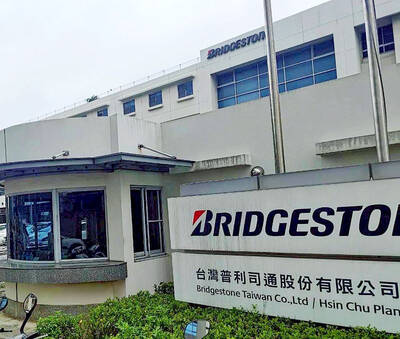
TRANSITION: With the closure, the company would reorganize its Taiwanese unit to a sales and service-focused model, Bridgestone said Bridgestone Corp yesterday announced it would cease manufacturing operations at its tire plant in Hsinchu County’s Hukou Township (湖口), affecting more than 500 workers. Bridgestone Taiwan Co (台灣普利司通) said in a statement that the decision was based on the Tokyo-based tire maker’s adjustments to its global operational strategy and long-term market development considerations. The Taiwanese unit would be reorganized as part of the closure, effective yesterday, and all related production activities would be concluded, the statement said. Under the plan, Bridgestone would continue to deepen its presence in the Taiwanese market, while transitioning to a sales and service-focused business model, it added. The Hsinchu
Taiwan Semiconductor Manufacturing Co (TSMC, 台積電) has approved a capital budget of US$31.28 billion for production expansion to meet long-term development needs during the artificial intelligence (AI) boom. The company’s board meeting yesterday approved the capital appropriation plan for purposes such as the installation of advanced technology capacity and fab construction, the world’s largest contract chipmaker said in a statement. At an earnings conference last month, TSMC forecast that its capital expenditure for this year would be at the higher end of the US$52 billion to US$56 billion range it forecast in January in response to robust demand for 5G, AI and


 RSS
RSS