


The proliferation of embedded DisplayPort (eDP) technology in Apple Inc’s new products is expected to benefit Parade Technologies Ltd (譜瑞) the most among the US company’s supply chain firms, KGI Securities Co (凱基證券) said in a research note.
The eDP technology is being increasingly used in notebook PCs, tablets and all-in-one desktop PCs to enable graphics processors to better interface with display panels.
The technology also helps save system power and extend battery life, and therefore allows it to gain a larger market share from the previous standard for embedded panel inputs, low-voltage differential signaling technology.
In a note released on Friday last week, KGI analyst Kuo Ming-chi (郭明錤) said Apple’s product lineup for next year — the redesigned 12-inch MacBook, the 9.7-inch iPad 6 with higher pixel, iPad Mini 3 and the lower-cost iMac — is likely to focus on the eDP technology.
“The eDP will remain a key component in the company’s products next year,” Kuo wrote in the note, forecasting shipments of eDP to increase by an annual 92 percent to 69 million units from this year.
Neihu District (內湖), Taipei-based Parade Technologies is a fabless semiconductor company that specializes in the design and sale of high-speed signal transmission interface solutions. It is also the world’s leading supplier of eDP for mobile devices.
“We think Parade will defend its status as Apple’s sole eDP provider going into 2014, making it one of the top stories in the Apple supply chain,” Kuo wrote.
Last week, the company reported a 14-month high revenue of NT$504.29 million (US$17.1 million) for last month, up 36.18 percent month-on-month and 21.37 percent year-on-year.
During the three months ending on Sept. 30, cumulative revenue totaled NT$1.17 billion, up 44.4 percent from the previous three months, company data showed.
As the company’s third-quarter revenue achieved the high end of its guidance, Fubon Securities Co (富邦證券) maintained its sequential sales growth forecast of 31.8 percent to NT$1.54 billion with earnings per share of NT$6.08 for this quarter, analyst Shen Hua-jian (沈華堅) said in a separate note last week.
Yuanta Securities Co (元大證券) analyst Steve Huang (黃柏璁) said that Parade could see revenue grow by up to 35 percent this quarter, because of its production ramp-up of iPad Mini 2 display chips and the increasing eDP penetration in non-Apple notebooks running on Intel’s Haswell processor.

Meta Platforms Inc offered US$100 million bonuses to OpenAI employees in an unsuccessful bid to poach the ChatGPT maker’s talent and strengthen its own generative artificial intelligence (AI) teams, OpenAI CEO Sam Altman has said. Facebook’s parent company — a competitor of OpenAI — also offered “giant” annual salaries exceeding US$100 million to OpenAI staffers, Altman said in an interview on the Uncapped with Jack Altman podcast released on Tuesday. “It is crazy,” Sam Altman told his brother Jack in the interview. “I’m really happy that at least so far none of our best people have decided to take them

BYPASSING CHINA TARIFFS: In the first five months of this year, Foxconn sent US$4.4bn of iPhones to the US from India, compared with US$3.7bn in the whole of last year Nearly all the iPhones exported by Foxconn Technology Group (富士康科技集團) from India went to the US between March and last month, customs data showed, far above last year’s average of 50 percent and a clear sign of Apple Inc’s efforts to bypass high US tariffs imposed on China. The numbers, being reported by Reuters for the first time, show that Apple has realigned its India exports to almost exclusively serve the US market, when previously the devices were more widely distributed to nations including the Netherlands and the Czech Republic. During March to last month, Foxconn, known as Hon Hai Precision Industry
PLANS: MSI is also planning to upgrade its service center in the Netherlands Micro-Star International Co (MSI, 微星) yesterday said it plans to set up a server assembly line at its Poland service center this year at the earliest. The computer and peripherals manufacturer expects that the new server assembly line would shorten transportation times in shipments to European countries, a company spokesperson told the Taipei Times by telephone. MSI manufactures motherboards, graphics cards, notebook computers, servers, optical storage devices and communication devices. The company operates plants in Taiwan and China, and runs a global network of service centers. The company is also considering upgrading its service center in the Netherlands into a
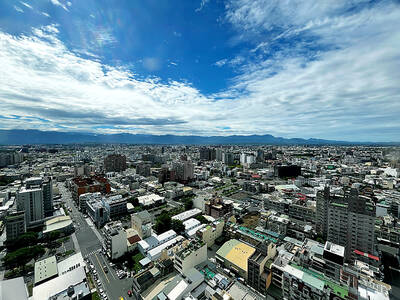
Taiwan’s property market is entering a freeze, with mortgage activity across the nation’s six largest cities plummeting in the first quarter, H&B Realty Co (住商不動產) said yesterday, citing mounting pressure on housing demand amid tighter lending rules and regulatory curbs. Mortgage applications in Taipei, New Taipei City, Taoyuan, Taichung, Tainan and Kaohsiung totaled 28,078 from January to March, a sharp 36.3 percent decline from 44,082 in the same period last year, the nation’s largest real-estate brokerage by franchise said, citing data from the Joint Credit Information Center (JCIC, 聯徵中心). “The simultaneous decline across all six cities reflects just how drastically the market


 RSS
RSS