


G-Tech Optoelectronics Corp’s (正達) recent announcement of a new fund-raising scheme is likely to support its near-term capital spending and pave the way for the production by the firm of Apple Inc’s iTV, Yuanta Securities Corp (元大證券) said in a client note.
Steve Huang (黃柏璁), a researcher at Yuanta Securities, said G-Tech’s announcement on Wednesday that it is issuing no more than 129.5 million new shares came as the company also applied for regulatory approval to issue NT$1.5 billion (US$50.4 million) in convertible bonds in November.
In June, shareholders also agreed the Miaoli County-based maker of cover and coating glass for touch panels could issue a maximum of 50 million new shares.
“Given the significant amount of cash required, we believe these fund-raising proposals are likely to support highly capital intensive projects which G-Tech has never done before, such as iTV,” Huang wrote in the note after G-Tech’s announcement.
The company currently supplies cover glass products for the iPad and the iPad Mini, as well as anti-reflection (AR) coating glass for the iMac.
However, Huang said it is too early to be so sure of the potential earnings contribution of the iTV, urging investors to wait for more signs of a solid and complete component supply chain for the new gadget, which combines the features of an iPad tablet with those of a television and is likely to be launched next year, with initial shipments forecast to be 5 million units a year, or 2 to 3 percent of the global TV market.
“The iTV business requires [many] processes, including fund-raising schemes and land purchases,” Huang wrote. “Capacity constriction [including 16 more AR coating lines] will not likely be finalized until the second half of 2014, before potential earnings contribution can be seen in the first half of 2015.”
During the first half of the year, G-Tech reported a net loss of NT$188.63 million, or a loss per share of NT$1.28, due to lower factory utilization rates, a weak cover glass yield rate and inventory writedowns.
Yuanta forecast the company’s sales this quarter would be flat or decline by up to 5 percent from last quarter’s NT$2.61 billion, with a loss per share of NT$0.4 compared with a loss per share of NT$1.59 last quarter.
G-Tech shares fell 0.32 percent to NT$62.3 on Wednesday after the company said earlier in the day in separate filings to the Taiwan Stock Exchange that its board had approved plans to issue as many as 129.5 million new shares, including 100 million shares in a rights issue or as global depositary receipts, and 29.5 million shares in a private placement.
Huang forecast the company’s fund-raising proposals, if fully executed, could create new funds of between NT$9 billion and NT$10 billion, with a potential share capital dilution of up to 60 percent.
G-Tech had NT$3.63 billion in cash and cash equivalents as of the end of June, total assets of NT$18.5 billion and total liabilities of NT$8.6 billion, according to its balance sheet.
The company has a heavy capital spending plan of NT$4 billion this year.
G-Tech president Alex Jiang (江嘉彬) said the company might defer some of this year’s spending to next year, such as that earmarked for 3D forming glass production, possibly pushing up next year’s spending to NT$6 billion, the Chinese-language Liberty Times (the Taipei Times’ sister newspaper) reported on Thursday.
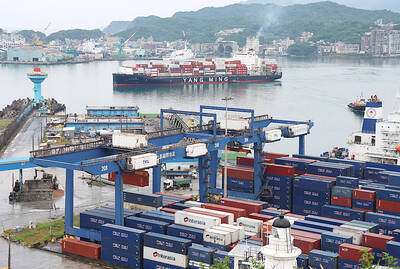
Taiwan’s exports soared 56 percent year-on-year to an all-time high of US$64.05 billion last month, propelled by surging global demand for artificial intelligence (AI), high-performance computing and cloud service infrastructure, the Ministry of Finance said yesterday. Department of Statistics Director-General Beatrice Tsai (蔡美娜) called the figure an unexpected upside surprise, citing a wave of technology orders from overseas customers alongside the usual year-end shopping season for technology products. Growth is likely to remain strong this month, she said, projecting a 40 percent to 45 percent expansion on an annual basis. The outperformance could prompt the Directorate-General of Budget, Accounting and
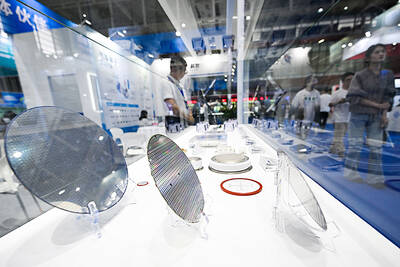
Two Chinese chipmakers are attracting strong retail investor demand, buoyed by industry peer Moore Threads Technology Co’s (摩爾線程) stellar debut. The retail portion of MetaX Integrated Circuits (Shanghai) Co’s (上海沐曦) upcoming initial public offering (IPO) was 2,986 times oversubscribed on Friday, according to a filing. Meanwhile, Beijing Onmicro Electronics Co (北京昂瑞微), which makes radio frequency chips, was 2,899 times oversubscribed on Friday, its filing showed. The bids coincided with Moore Threads’ trading debut, which surged 425 percent on Friday after raising 8 billion yuan (US$1.13 billion) on bets that the company could emerge as a viable local competitor to Nvidia
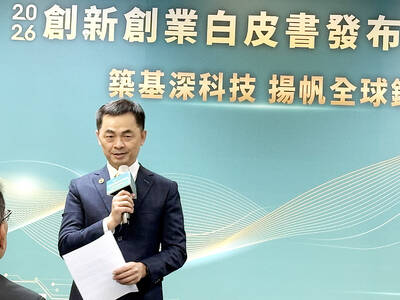
BARRIERS: Gudeng’s chairman said it was unlikely that the US could replicate Taiwan’s science parks in Arizona, given its strict immigration policies and cultural differences Gudeng Precision Industrial Co (家登), which supplies wafer pods to the world’s major semiconductor firms, yesterday said it is in no rush to set up production in the US due to high costs. The company supplies its customers through a warehouse in Arizona jointly operated by TSS Holdings Ltd (德鑫控股), a joint holding of Gudeng and 17 Taiwanese firms in the semiconductor supply chain, including specialty plastic compounds producer Nytex Composites Co (耐特) and automated material handling system supplier Symtek Automation Asia Co (迅得). While the company has long been exploring the feasibility of setting up production in the US to address

OPTION: Uber said it could provide higher pay for batch trips, if incentives for batching is not removed entirely, as the latter would force it to pass on the costs to consumers Uber Technologies Inc yesterday warned that proposed restrictions on batching orders and minimum wages could prompt a NT$20 delivery fee increase in Taiwan, as lower efficiency would drive up costs. Uber CEO Dara Khosrowshahi made the remarks yesterday during his visit to Taiwan. He is on a multileg trip to the region, which includes stops in South Korea and Japan. His visit coincided the release last month of the Ministry of Labor’s draft bill on the delivery sector, which aims to safeguard delivery workers’ rights and improve their welfare. The ministry set the minimum pay for local food delivery drivers at


 RSS
RSS