


Taiwan Cogeneration Corp (台汽電) yesterday said three of the company’s power-generation subsidiaries had settled legal disputes with state-run Taiwan Power Co (Taipower, 台電).
Taiwan Cogeneration said in a statement to the Taiwan Stock Exchange that three independent power producers (IPPs) under its purview had reach new agreements with Taipower over the terms of electricity purchase contracts.
“Star Energy Corp (星能電力), Sun Ba Power Corp (森霸電力) and Kuang Power Co (國光電力) have respectively settled their cases with Taipower today at the Taipei District Court,” Taiwan Cogeneration vice president Henry Wu (吳宏能) said in the statement.
Wu said the IPPs had reached new pacts in accordance with a draft proposal approved by Taiwan Cogeneration’s board on Nov. 22 last year.
Taiwan Cogeneration did not disclose the terms of the new contracts, nor did it say whether the fourth IPP subsidiary, Hsing Yuan Power Corp (星元電力), would follow suit soon. Taiwan Cogeneration holds a 35 percent stake in Star Energy, 32.5 percent of Sun Ba, 35 percent of Kuo Kuang and 33.67 percent of Hsing Yuan.
The company is itself a Taipower subsidiary.
The state-run utility filed lawsuits against the four IPPs in October last year after negotiations on adjusting the terms of their contracts broke down after several rounds.
Taipower’s move came after the legislature’s Economics Committee slashed NT$9.5 billion from a budget of NT$142.68 billion that the utility had allocated for purchasing electricity from businesses using cogeneration systems and from IPPs this year.
In other news, Taipower said it planned to formally apply to the Atomic Energy Council in February or March next year to fill the reactors of the yet-to-be-completed Fourth Nuclear Power Plant in Gongliao District (貢寮), New Taipei City (新北市), with uranium fuel.
Taipower may start commercial operations of the controversial power plant in 2015 at the earliest.

Taiwanese firms have increased investment in the Philippines in recent years as Manila’s ties with Washington deepen and global supply chains continue to shift away from China, an expert at the Chung-Hua Institution for Economic Research (CIER, 中華經濟研究院) said yesterday. The Philippines had not been among Taiwanese investors’ top choices in Southeast Asia, CIER Taiwan ASEAN Studies Center director Kristy Hsu (徐遵慈) said at a seminar in Taipei. However, Taiwan’s investment in the country has grown significantly since the COVID-19 pandemic, reaching US $257 million last year, a high in recent years, she said. Although Taiwan’s total investment in the Philippines still lags
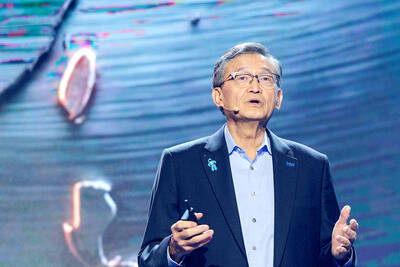
Intel Corp regards Taiwan Semiconductor Manufacturing Co (TSMC, 台積電) as a longstanding partner, as the US chipmaker would continue outsourcing production of advanced chips to TSMC, Intel chief executive officer Lip-Bu Tan (陳立武) said yesterday. “I don’t look at people as competitors. I look at the collaboration... Nvidia is also, you know, a good friend,” Tan told a news conference following his keynote speech at the Computex trade show in Taipei. “It’s a very trusted partnership for us... We are a big, top customer for them, and we’re going to continue doing that,” he said, referring to TSMC, the world’s largest foundry

Artificial intelligence (AI) agents would supplant smartphones as the center of people’s digital lives, fundamentally reshaping personal devices and driving a major computing upgrade cycle, Qualcomm Inc CEO Cristiano Amon said yesterday. In his keynote speech for this year’s Computex trade show in Taipei, Amon said that the rise of "agentic AI" — AI systems capable of reasoning, planning and carrying out tasks autonomously — would transform how people interact with technology across phones, PCs, vehicles and wearable devices. Describing the technology as the next major evolution in computing, Amon said that "2026 is the year of agents.” For decades, smartphones have sat
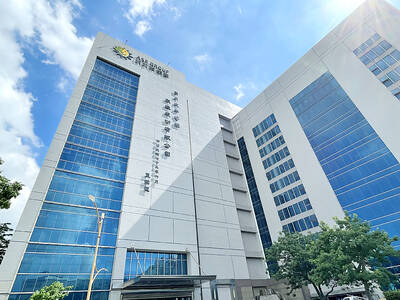
The average pay to employees by ASE Technology Holding Co (日月光投控) was the highest among the companies listed on the local main board last year, while contract chipmaker Taiwan Semiconductor Manufacturing Co (TSMC, 台積電) ranked seventh, the Taiwan Stock Exchange (TWSE) said on Monday. Data compiled by the exchange showed ASE Technology, the world’s largest chip packaging and testing services provider, paid its employees an average of NT$6.28 million (US$199,746) last year, up 40 percent from a year earlier. TSMC, the world’s largest contract chipmaker and the most profitable company in Taiwan, paid its employees NT$4.09 million on average, up


 RSS
RSS