


Microsoft bills Windows 8 as a “reimagining” of the PC market’s dominant operating system, but the company still has a lot of work to do before the makeover captures the imagination of most consumers, a recent poll by The Associated Press and GfK showed.
The phone survey of nearly 1,200 adults in the US found 52 percent had not even heard of Windows 8 leading up to Friday’s release of the redesigned software.
Among the people who knew something about the new operating system, 61 percent had little or no interest in buying a new laptop or desktop computer running on Windows 8, according to the poll. Moreover, only about a third of the people, or 35 percent, who have heard about the new system believe it will be an improvement.
The consumer ambivalence was even more pronounced when it came to Microsoft’s new tablet computer, Surface, which was built to show off Windows 8’s versatility.
Sixty-nine percent of respondents expressed little or no interest in buying a Surface, which Microsoft is hoping will siphon sales from Apple Inc’s pioneering iPad and other popular tablets such as Amazon.com Inc’s Kindle Fire and Google Inc’s Nexus 7.
The results indicate Microsoft still has work to do to create a bigger buzz about Windows 8 and help consumers understand the new operating system’s benefits, even though the company provided several previews of the software at various stages in the final 13 month leading to its release. However, the information apparently resonated mostly with industry analysts, reporters, technology blogs and gadget geeks.
Microsoft is in the early stages of an estimated US$1 billion marketing campaign that will include a siege of television commercials to promote Windows 8 to a wider audience.
That still might not be enough to sway longtime Windows users such as Mary Sweeten. She is 75, and not eager to learn the nuances of a new operating system. She is comfortable with her current desktop computer running on Windows 7.
“I am not technologically savvy like all these young kids,” said Sweeten, who lives in Camdenton, Missouri. “I like something I am used to and can get around on without too much trouble. Sometimes when you get these new [systems], you wish you could go back to the old one.”
Windows 8 represents Microsoft’s attempt to adapt to a technological shift that is empowering more people to use smartphones and tablets to surf the Web and handle other simple computing tasks.
The revamped system can be controlled by touching a device’s display screen and greets users with a mosaic of tiles featuring an array of dynamic applications instead of the old start menu and desktop tiles. In an effort to protect its still-lucrative PC franchise, Microsoft designed Windows 8 so it can still be switched into a desktop mode that relies on a keyboard and mouse for commands.
Despite the growing popularity of smartphones, Microsoft remains deeply entrenched in people’s lives. The poll found 80 percent of respondents with PCs in their homes relied on earlier versions of Windows versus only 12 percent that operate on Apple’s Mac system.
Windows is even more widely used in offices, but 90 percent of companies relying on the operating system are expected to hold off on switching to the new operating system through 2014, according to a study by the research firm Gartner Inc.
Jim Beske, 43, of West Fargo, North Dakota, won’t be waiting long to install Windows 8 on the home computer he bought a year ago. He already has seen how Windows 8 works in his job as a network engineer, and he considers it to be a nice improvement.
“They have made it much simpler,’’ Beske said. “I don’t know about the tiling so much; that’s something I think younger people will like more, but once people get in front of it, I think they will understand it.”
Windows 8 could also appeal to consumers who still don’t own a home computer. The AP-GfK survey found 22 percent of all adults fall into this category, including 30 percent with households whose incomes fall below US$50,000 annually.
Beske is among a growing group who use both Microsoft and Apple products. Besides his Windows computer, he also loves his iPad.
Most survey respondents liked both Apple and Microsoft. Fifty-nine percent said they had favorable impressions of Apple versus 58 percent for Microsoft.

Taiwanese firms have increased investment in the Philippines in recent years as Manila’s ties with Washington deepen and global supply chains continue to shift away from China, an expert at the Chung-Hua Institution for Economic Research (CIER, 中華經濟研究院) said yesterday. The Philippines had not been among Taiwanese investors’ top choices in Southeast Asia, CIER Taiwan ASEAN Studies Center director Kristy Hsu (徐遵慈) said at a seminar in Taipei. However, Taiwan’s investment in the country has grown significantly since the COVID-19 pandemic, reaching US $257 million last year, a high in recent years, she said. Although Taiwan’s total investment in the Philippines still lags

Intel Corp regards Taiwan Semiconductor Manufacturing Co (TSMC, 台積電) as a longstanding partner, as the US chipmaker would continue outsourcing production of advanced chips to TSMC, Intel chief executive officer Lip-Bu Tan (陳立武) said yesterday. “I don’t look at people as competitors. I look at the collaboration... Nvidia is also, you know, a good friend,” Tan told a news conference following his keynote speech at the Computex trade show in Taipei. “It’s a very trusted partnership for us... We are a big, top customer for them, and we’re going to continue doing that,” he said, referring to TSMC, the world’s largest foundry
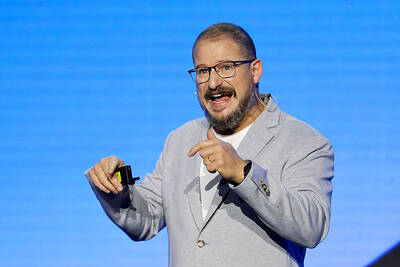
Artificial intelligence (AI) agents would supplant smartphones as the center of people’s digital lives, fundamentally reshaping personal devices and driving a major computing upgrade cycle, Qualcomm Inc CEO Cristiano Amon said yesterday. In his keynote speech for this year’s Computex trade show in Taipei, Amon said that the rise of "agentic AI" — AI systems capable of reasoning, planning and carrying out tasks autonomously — would transform how people interact with technology across phones, PCs, vehicles and wearable devices. Describing the technology as the next major evolution in computing, Amon said that "2026 is the year of agents.” For decades, smartphones have sat
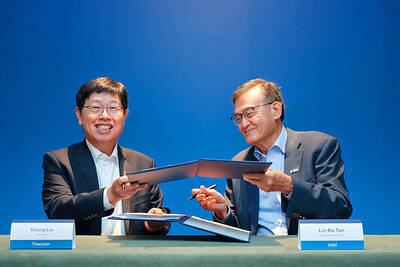
Hon Hai Precision Industry Co (鴻海精密) yesterday said it would work with US chipmaker Intel Corp to jointly develop and deploy next-generation artificial intelligence (AI) infrastructure and intelligent computing platforms in a move to capture booming demand for AI computing systems. Hon Hai, also known as Foxconn Technology Group (富士康), said in a statement that the partnership would combine its global manufacturing scale, system integration expertise and AI data center deployment capabilities with Intel’s strengths in processor architecture, silicon technologies and software ecosystem. The companies said they plan to work on equipment used in AI data centers, including server racks powered by


 RSS
RSS