


Oracle Corp CEO Larry Ellison, seeking to reverse slowing growth, unveiled a high-end server with more memory and an updated flagship database to compete against SAP AG.
Computing power and storage, applications software and Oracle’s database will also be sold as a cloud service businesses can rent instead of buying outright, Ellison said on Sunday in an address at the company’s OpenWorld conference.
Ellison is depending on new products and a shift to cloud services to boost sales at the world’s largest supplier of database software. The revamped 12c database is Oracle’s first new version for its flagship in five years.
The 12c database will let customers move their computing jobs from data centers to the Internet, Ellison said.
“You can access all of these services across the network,” he said at the conference in the Moscone Center in San Francisco. “It makes sense for Oracle to be in all three tiers of cloud services.”
The new Exadata servers — which pack computing power, storage capacity and high-speed networking into a single chassis to speed performance of Oracle’s database — can set the firm apart from competitors, co-president Mark Hurd said last week.
The company’s addition to its Exadata line of servers, called the X3, will be able to house as much as 22 terabytes of flash computer memory and four terabytes of DRAM in a single server rack to greatly speed up business reports. That is four times as much flash storage per rack than a previous version of Exadata, Ellison said.
Sales for the Redwood City, California-based company declined 2.3 percent in the fiscal first quarter ended August, dragged down by a drop in the hardware business acquired from Sun Microsystems in 2010. The revenue number missed analysts’ estimates as computer hardware sales declined for a sixth straight period.
Ellison said Oracle was “ideally positioned” to deliver many components of hardware and software — including its database, application connecting middleware and computer systems — as a cloud computing service delivered entirely through the Internet, or with some equipment sitting in customers’ data centers.
International Business Machines Corp, Microsoft Corp and VMware Inc are also vying to supply more of the platform software that can help companies move to cloud computing. SAP’s High Performance Analytical Appliance uses hardware from IBM, Hewlett-Packard Co and others to store data in computer memory for faster analysis. SAP is the top business applications maker.
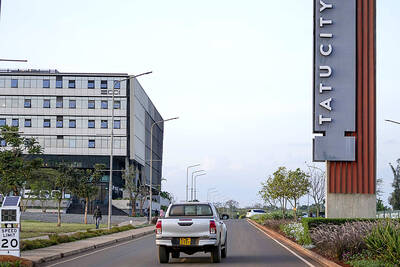
To many, Tatu City on the outskirts of Nairobi looks like a success. The first city entirely built by a private company to be operational in east Africa, with about 25,000 people living and working there, it accounts for about two-thirds of all foreign investment in Kenya. Its low-tax status has attracted more than 100 businesses including Heineken, coffee brand Dormans, and the biggest call-center and cold-chain transport firms in the region. However, to some local politicians, Tatu City has looked more like a target for extortion. A parade of governors have demanded land worth millions of dollars in exchange
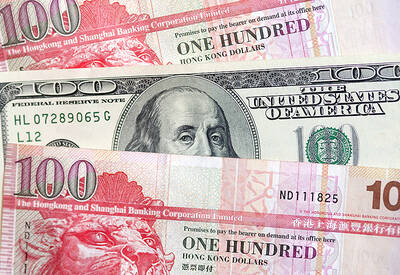
Hong Kong authorities ramped up sales of the local dollar as the greenback’s slide threatened the foreign-exchange peg. The Hong Kong Monetary Authority (HKMA) sold a record HK$60.5 billion (US$7.8 billion) of the city’s currency, according to an alert sent on its Bloomberg page yesterday in Asia, after it tested the upper end of its trading band. That added to the HK$56.1 billion of sales versus the greenback since Friday. The rapid intervention signals efforts from the city’s authorities to limit the local currency’s moves within its HK$7.75 to HK$7.85 per US dollar trading band. Heavy sales of the local dollar by
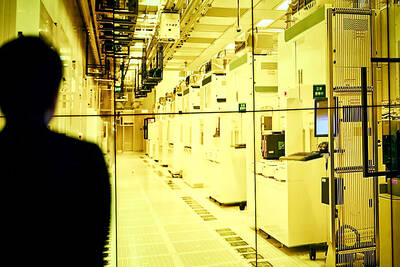
Taiwan Semiconductor Manufacturing Co’s (TSMC, 台積電) revenue jumped 48 percent last month, underscoring how electronics firms scrambled to acquire essential components before global tariffs took effect. The main chipmaker for Apple Inc and Nvidia Corp reported monthly sales of NT$349.6 billion (US$11.6 billion). That compares with the average analysts’ estimate for a 38 percent rise in second-quarter revenue. US President Donald Trump’s trade war is prompting economists to retool GDP forecasts worldwide, casting doubt over the outlook for everything from iPhone demand to computing and datacenter construction. However, TSMC — a barometer for global tech spending given its central role in the

An Indonesian animated movie is smashing regional box office records and could be set for wider success as it prepares to open beyond the Southeast Asian archipelago’s silver screens. Jumbo — a film based on the adventures of main character, Don, a large orphaned Indonesian boy facing bullying at school — last month became the highest-grossing Southeast Asian animated film, raking in more than US$8 million. Released at the end of March to coincide with the Eid holidays after the Islamic fasting month of Ramadan, the movie has hit 8 million ticket sales, the third-highest in Indonesian cinema history, Film


 RSS
RSS