


French President Francois Hollande on Thursday called for the eurozone to adopt bold new mechanisms to insulate member states and their banks from market turmoil, such as a joint fund to pay down debt, putting him on a collision course with Berlin.
After a meeting with Italian Prime Minister Mario Monti in Rome, Hollande said he would urge EU leaders at a summit at the end of the month to adopt a series of measures to strengthen economic growth and financial stability in the eurozone and deepen economic integration.
Hollande said he had submitted details of his proposals to European Council President Herman Van Rompuy.
Photo: Reuters
“We need imagination and creativity to find new financial instruments,” Hollande told a joint news conference with Monti.
“To deepen financial union, there are many options such as a financial transactions tax and joint debt issuance, including euro bonds, euro bills or a debt redemption fund,” he said.
The French leader, who took office last month calling for a change of direction in Europe away from German-inspired austerity, urged closer cooperation between member states on financial regulation to break the link between struggling eurozone states and their weakened banking systems.
He called for the bloc’s European Stability Mechanism, a permanent rescue fund that is due to start operation next month, to be given a banking license to allow it to borrow money from the European Central Bank to bolster its firepower.
Hollande’s bold proposals appeared to place him at odds with German Chancellor Angela Merkel, who on Thursday rebuffed pressure for Europe’s largest economy to underwrite debt or guarantee bank deposits in the eurozone, despite soaring borrowing costs in Italy and Spain.
Hollande has long advocated a growth pact for Europe including a financial transactions tax and joint bonds to finance infrastructure projects, more lending by the European Investment Bank (EIB) and more effective use of structural funds.
Hollande is due to present his a position at a four-way meeting with Monti, Merkel and Spanish Prime Minister Mariano Rajoy on Friday next week — a week ahead of the summit — and is hoping to make progress towards a consensus.
“The aim of June 22 is to have a four-way contribution and an agreement between at least two parties on a joint position. A four-way agreement would be fantastic,” a French source said.
France believes at least 100 billion euros, preferably more, are needed in structural funds, project bonds and new capital for the EIB, the source said.
The source also said there was no deadlock between Germany and France on the issue of mutualized debt in the form of euro bonds, which France wants to be implemented in the next few years.
Monti, whose government has found itself in the market’s sights despite undertaking reforms, voiced support for Hollande’s growth agenda and said bolder steps toward integration were required in Europe.
“We both agreed that the progressive improvements made to eurozone governance are not enough to shield the euro from market turbulence,” he told the news conference.
“We discussed some proposals for common bonds and we were very much in agreement on the need to increase investments that are productive for the economy — from the private sector, from the public sector and from private-public partnerships,” he said.
Three days ahead of Greece’s elections, Monti said that both he and Hollande wanted the country to remain in the eurozone.
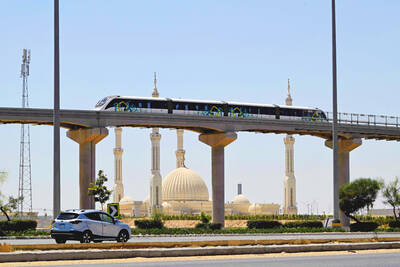
Cairo’s new monorail slices across the city skyline, running above the familiar chaos of blaring horns and aging buses’ exhaust fumes that mark rush hour below. The US$4.5 billion monorail, opened this month, is among Egypt’s most prominent new transport projects, part of a debt-funded infrastructure drive criticized for sapping state finances while bringing limited benefits to most of the country’s 109 million people. “It feels like you’re in a different country,” said Ramy Sayed, a restaurant manager, aboard a driverless Innovia 300 train. “No noise, no traffic, we’re not used to this.” The eastern line runs 56km from the bustling middle-class

Taiwanese firms have increased investment in the Philippines in recent years as Manila’s ties with Washington deepen and global supply chains continue to shift away from China, an expert at the Chung-Hua Institution for Economic Research (CIER, 中華經濟研究院) said yesterday. The Philippines had not been among Taiwanese investors’ top choices in Southeast Asia, CIER Taiwan ASEAN Studies Center director Kristy Hsu (徐遵慈) said at a seminar in Taipei. However, Taiwan’s investment in the country has grown significantly since the COVID-19 pandemic, reaching US $257 million last year, a high in recent years, she said. Although Taiwan’s total investment in the Philippines still lags
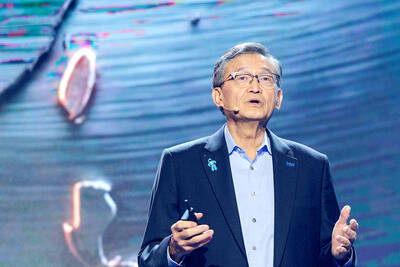
Intel Corp regards Taiwan Semiconductor Manufacturing Co (TSMC, 台積電) as a longstanding partner, as the US chipmaker would continue outsourcing production of advanced chips to TSMC, Intel chief executive officer Lip-Bu Tan (陳立武) said yesterday. “I don’t look at people as competitors. I look at the collaboration... Nvidia is also, you know, a good friend,” Tan told a news conference following his keynote speech at the Computex trade show in Taipei. “It’s a very trusted partnership for us... We are a big, top customer for them, and we’re going to continue doing that,” he said, referring to TSMC, the world’s largest foundry
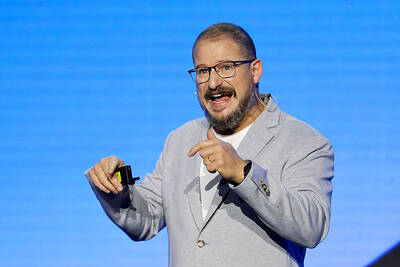
Artificial intelligence (AI) agents would supplant smartphones as the center of people’s digital lives, fundamentally reshaping personal devices and driving a major computing upgrade cycle, Qualcomm Inc CEO Cristiano Amon said yesterday. In his keynote speech for this year’s Computex trade show in Taipei, Amon said that the rise of "agentic AI" — AI systems capable of reasoning, planning and carrying out tasks autonomously — would transform how people interact with technology across phones, PCs, vehicles and wearable devices. Describing the technology as the next major evolution in computing, Amon said that "2026 is the year of agents.” For decades, smartphones have sat


 RSS
RSS