


Shares of Greatek Electronics Inc (超豐電子), a small consumer integrated circuit (IC) testing and packaging firm, closed up by the 7 percent daily limit after its bigger rival, Powertech Technology Inc (力成科技), yesterday began a tender offer to acquire the firm at a cost of up to NT$7.14 billion (US$235.1 million).
Powertech’s purchase price of NT$25.28 per Greatek share represented a 26.4 percent premium on Greatek’s closing price of NT$20 on Thursday.
Greatek closed at NT$21.4 on the Taiwan Stock Exchange yesterday, while shares of Powertech, the nation’s biggest chip packager, fell 1.5 percent to NT$65.6, their lowest level since Nov. 25.
Hsinchu-based Powertech announced on Thursday that it planned to acquire a total of between 166.06 million and 282.3 million common shares of Greatek, between 30 percent and 51 percent of its issued shares, at NT$25.28 per share to help diversify its business and increase its profitability, according to an exchange filing.
Powertech is expected to own a controlling stake in Miaoli-based Greatek following the tender offer, which began yesterday and will continue through Feb. 3.
The company would halt the tender offer if it could not obtain a minimum 30 percent stake in Greatek, Powertech deputy spokesman Evan Tseng (曾炫章) said in the filing.
Greatek spokesman Chen Sheng (陳笙) confirmed the 30 percent threshold in a separate filing yesterday.
Powertech had earlier said it hoped to increase revenues of its logic IC back-end business and lower those of its volatile DRAM business because of industry gluts and falling prices.
Credit Suisse said the Greatek deal would allow Powertech to adjust its business mix to 60 percent DRAM, 20 percent NAND flash and 20 percent logic IC, from its current mix of 73 percent DRAM, 24 percent NAND flash and 2 percent logic IC.
“Assuming 51 percent ownership [in Greatek], Powertech would have had [a] NT$0.56 accretion to 2011 earnings,” investment bank Credit Suisse said yesterday in a client note.
As a consumer IC back-end player focusing on low-price and low pin-count packages, Greatek has developed a niche under its low-volume-high-diversity business model which allows it to compete with industry heavyweights such as Advanced Semiconductor Engineering Inc (日月光半導體), Siliconware Precision Industries Co (矽品) and Powertech.
However, Credit Suisse warned the deal could cause a drag on Powertech’s future growth because Greatek’s customer base are producers of lower-end networking and PC products, and it has limited exposure to the higher growth mobile field.
Moreover, ongoing inventory and output adjustments at its customers, particularly Elpida Memory Inc of Japan, because of slowing PC sales would continue to form headwinds in the short term, the note said.

SECOND-RATE: Models distilled from US products do not perform the same as the original and undo measures that ensure the systems are neutral, the US’ cable said The US Department of State has ordered a global push to bring attention to what it said are widespread efforts by Chinese companies, including artificial intelligence (AI) start-up DeepSeek (深度求索), to steal intellectual property from US AI labs, according to a diplomatic cable. The cable, dated Friday and sent to diplomatic and consular posts around the world, instructs diplomatic staff to speak to their foreign counterparts about “concerns over adversaries’ extraction and distillation of US AI models.” Distillation is the process of training smaller AI models using output from larger, more expensive ones to lower the costs of training a powerful new
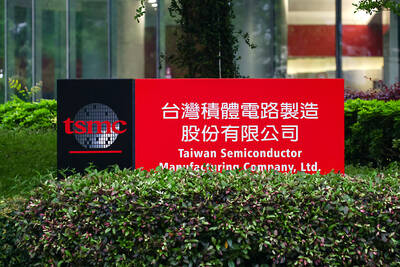
Shares of Taiwan Semiconductor Manufacturing Co (TSMC, 台積電) have repeatedly hit new highs, but an equity analyst said the stock’s valuation remains within a reasonable range and any pullback would likely be technical. The contract chipmaker’s historical price-to-earnings (P/E) ratio has ranged between 20 and 30, Cathay Futures Consultant Co (國泰證期) analyst Tsai Ming-han (蔡明翰) told Central News Agency. With market consensus projecting that TSMC would post earnings per share of about NT$100 (US$3.17) this year, supported by strong global demand for artificial intelligence (AI) applications, and the stock currently trading at a P/E ratio of below 25, Tsai said the valuation
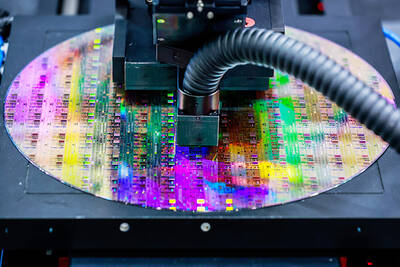
The artificial intelligence (AI) boom has triggered a seismic reshuffling of global equity markets, with Taiwan and South Korea muscling past European nations one by one. With its stock market now valued at nearly US$4.3 trillion, Taiwan surpassed the UK, Europe’s biggest market, earlier this month, data compiled by Bloomberg showed. South Korea is about US$140 billion away from doing the same. The tech-heavy Asian markets have shot past Germany and France in the past seven months. The shift is largely down to massive gains in shares of three companies that provide essential hardware for AI: Taiwan Semiconductor Manufacturing Co (TSMC, 台積電),
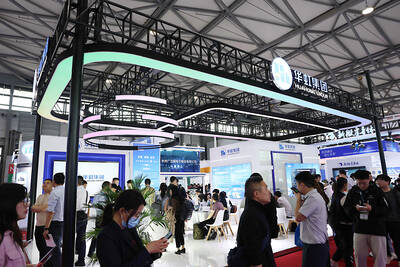
The US Department of Commerce last week ordered multiple chip equipment companies to halt shipments of certain tools to China’s second-largest chipmaker, Hua Hong Semiconductor Ltd (華虹半導體), its latest action to slow the country’s development of advanced chips, two people familiar with the matter said. The department sent letters to at least a handful of companies informing them of restrictions on tools and other materials destined for two Hua Hong facilities US officials believe make China’s most sophisticated chips, the people said. Top US chip equipment companies Lam Research Corp, Applied Materials Inc and KLA Corp, each of which has significant


 RSS
RSS