


Chimei Innolux Corp (奇美電子), the nation’s biggest LCD panel maker, yesterday said Chimei Innolux chairman Frank Liao (廖錦祥) has resigned from his post because of health problems.
Liao’s resignation comes at a time when the company’s plan to borrow NT$40 billion (US$1.33 billion) from banks has stalled as bank executives became more cautious about lending because of the industry’s bleak prospects.
“This issue is very straightforward. Liao’s health is not good,” Chimei Innolux spokesman Eddie Chen (陳彥松) said by telephone yesterday.
Liao also resigned from his director position on the company’s eight-member board.
Chimei Innolux vice chairman Tuan Hsing-chien (段行建) also yesterday resigned from the position, but kept his position as Chimei Innolux’s chief executive officer.
“The board will nominate a new chairman probably next week at the earliest after Chimei Corp (奇美實業) comes up with its nomination,” Chen said.
Local plastics producer Chimei and Hon Hai Technology Group (鴻海科技集團) are the major stakeholders of Chimei Innolux after Innolux Display Corp (群創光電), an LCD arm of Hon Hai, acquired Chimei Optoelectronics Corp (奇美電子) last year. Chimei owns a 13 percent stake in Chimei Innolux, while Hon Hai holds about 8.96 percent, according to the firm’s Taiwan Stock Exchange filing.
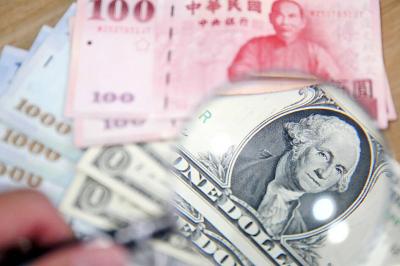
The US dollar was trading at NT$29.7 at 10am today on the Taipei Foreign Exchange, as the New Taiwan dollar gained NT$1.364 from the previous close last week. The NT dollar continued to rise today, after surging 3.07 percent on Friday. After opening at NT$30.91, the NT dollar gained more than NT$1 in just 15 minutes, briefly passing the NT$30 mark. Before the US Department of the Treasury's semi-annual currency report came out, expectations that the NT dollar would keep rising were already building. The NT dollar on Friday closed at NT$31.064, up by NT$0.953 — a 3.07 percent single-day gain. Today,
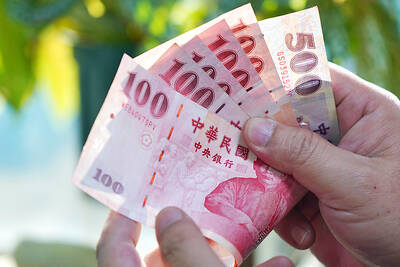
‘SHORT TERM’: The local currency would likely remain strong in the near term, driven by anticipated US trade pressure, capital inflows and expectations of a US Fed rate cut The US dollar is expected to fall below NT$30 in the near term, as traders anticipate increased pressure from Washington for Taiwan to allow the New Taiwan dollar to appreciate, Cathay United Bank (國泰世華銀行) chief economist Lin Chi-chao (林啟超) said. Following a sharp drop in the greenback against the NT dollar on Friday, Lin told the Central News Agency that the local currency is likely to remain strong in the short term, driven in part by market psychology surrounding anticipated US policy pressure. On Friday, the US dollar fell NT$0.953, or 3.07 percent, closing at NT$31.064 — its lowest level since Jan.
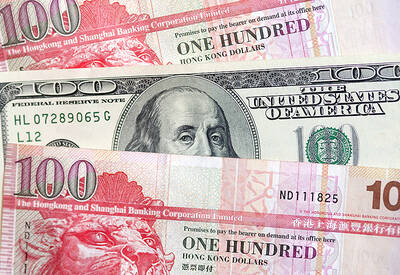
Hong Kong authorities ramped up sales of the local dollar as the greenback’s slide threatened the foreign-exchange peg. The Hong Kong Monetary Authority (HKMA) sold a record HK$60.5 billion (US$7.8 billion) of the city’s currency, according to an alert sent on its Bloomberg page yesterday in Asia, after it tested the upper end of its trading band. That added to the HK$56.1 billion of sales versus the greenback since Friday. The rapid intervention signals efforts from the city’s authorities to limit the local currency’s moves within its HK$7.75 to HK$7.85 per US dollar trading band. Heavy sales of the local dollar by

The Financial Supervisory Commission (FSC) yesterday met with some of the nation’s largest insurance companies as a skyrocketing New Taiwan dollar piles pressure on their hundreds of billions of dollars in US bond investments. The commission has asked some life insurance firms, among the biggest Asian holders of US debt, to discuss how the rapidly strengthening NT dollar has impacted their operations, people familiar with the matter said. The meeting took place as the NT dollar jumped as much as 5 percent yesterday, its biggest intraday gain in more than three decades. The local currency surged as exporters rushed to


 RSS
RSS