


Chinese telecoms equipment manufacturer Huawei Technologies (華為) on Thursday rejected a US government official’s suggestion that its rapid growth was because of Chinese government financial aid.
“It is fundamentally and utterly incorrect,” Huawei’s vice president of external affairs Bill Plummer said.
He was responding to a comment by US Export-Import Bank president Fred Hochberg on Wednesday that one reason Huawei’s “growth has been so dramatic is that it’s backed by a US$30 billion credit line from the Chinese Development Bank [CDB, 中國發展銀行].”
“This backing allows Huawei to significantly reduce its cost of capital and to offer financing to their buyers at rates and terms that are better than their competitors,” Hochberg said in a speech.
He used Huawei as an example of what he described as a changed global environment for US exporters in which China and other emerging economies are directing capital flows toward favored sectors in an attempt to grab market share.
Plummer said CDB agreed in 2004 to make available “as much as US$10 billion in export credits to potential Huawei customers, not Huawei.”
When that expired, Huawei and CDB signed a second memorandum of understanding in 2009 for US$30 billion for five more years, Plummer said.
Since 2005, Huawei customers have attempted to tap US$4.25 billion of CDB export credits to finance 35 projects around the world, Plummer said.
“Only US$2.99 billion of the US$4.25 billion was actually extended. Over the same period of time, from 2005 until now, our global sales have exceeded US$110 billion. It is a minuscule fraction of our business that has actually benefited from a customer getting credit from the China Development Bank,” Plummer said.
“The suggestion that there’s some US$30 billion credit line to Huawei that has driven our global growth is fundamentally incorrect,” Plummer said.
A spokeswoman for the US Eximbank said Hochberg had no intention of backing away from his comments.
“Chairman Hochberg stands by his assertion that a US$30 billion line of credit from the Chinese Development Bank — used as buyer financing — has undoubtedly contributed to Huawei’s growth. Financial backing of this magnitude creates options and opportunities that may not otherwise exist,” Eximbank vice president Maura Policelli said.
This is not the first time the world’s No. 2 network equipment provider has clashed with the US government.
Earlier this year, Huawei abandoned a US$2 million bid to buy the assets of US server technology company 3Leaf Technologies after the administration of US President Barack Obama raised national security concerns about the deal.
Three years ago, Huawei was forced to drop a massive investment in US telecoms company 3Com under similar pressure from US government officials.

Cairo’s new monorail slices across the city skyline, running above the familiar chaos of blaring horns and aging buses’ exhaust fumes that mark rush hour below. The US$4.5 billion monorail, opened this month, is among Egypt’s most prominent new transport projects, part of a debt-funded infrastructure drive criticized for sapping state finances while bringing limited benefits to most of the country’s 109 million people. “It feels like you’re in a different country,” said Ramy Sayed, a restaurant manager, aboard a driverless Innovia 300 train. “No noise, no traffic, we’re not used to this.” The eastern line runs 56km from the bustling middle-class
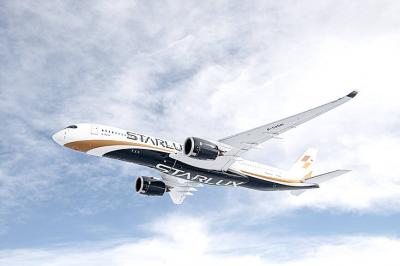
Starlux Airlines Co (星宇航空) today unveiled a long-haul network expansion plan at a shareholders’ meeting in Taipei, including direct flights to Barcelona, Spain, and Zurich, Switzerland, as well as a service connecting Taipei, Sydney and New Zealand. Starlux is to become the first Taiwanese carrier to offer non-stop services to the two European cities, while the inaugural oceanic route is expected to expand transit opportunities within the Australia-New Zealand market, Starlux said. Flight services to Chicago, Dallas, Washington and New York are under evaluation, the airline added. Prior to the shareholders’ meeting, the airline earlier this year announced that it would be

Taiwanese prosecutors suspect that three people successfully smuggled at least one shipment of Nvidia Corp artificial intelligence (AI) chips to China after first exporting them to Japan, people familiar with the matter said. The trio was detained last week by the Keelung District Prosecutors’ Office for allegedly falsifying documents related to exports of Super Micro Computer Inc servers containing advanced Nvidia chips, which the US has barred from sale to China without a license from Washington. The move marked Taiwan’s first public crackdown on AI chip diversion after years of pressure from the US to take a more active role in curtailing
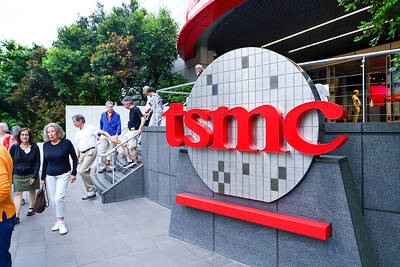
Taiwan Semiconductor Manufacturing Co (TSMC, 台積電) employee bonuses are likely to grow more than 30 percent this year, in line with the past few years as the company’s profits continue to set new records, an anonymous source cited TSMC chairman C.C. Wei (魏哲家) as saying yesterday. TSMC, the world’s largest contract chipmaker, is committed to taking care of its workers, the source said, citing Wei’s meeting with employees yesterday morning. Wei also expressed gratitude to employees for their contribution to the company’s improving bottom line, the source added. Since 2023, TSMC’s employee bonuses have grown at an annual rate of


 RSS
RSS