


AOL said on Thursday it would slash 900 jobs worldwide, or almost 20 percent of its workforce, partly to eliminate overlap that stems from its recent purchase of The Huffington Post.
About 200 of the cuts are from AOL’s content and technology departments in the US. The remaining 700 are at AOL’s offices in India, which mainly provide back-office support to the US, but AOL spokesman Graham James said 300 of those would move to other companies, which are taking over support functions.
The cuts leave AOL with 3,500 employees in the US and about 500 overseas. The total workforce is one-fifth of what the company had at its peak in 2004, when its staff numbered more than 20,000.
The company pared thousands of workers in the years leading up to its separation from Time Warner Inc in late 2009. After the companies broke up, AOL cut about 2,300 of its then-6,900 employees — or about one-third of its workforce — through layoffs and buyouts.
AOL chief executive Tim Armstrong, speaking at a conference in New York, said the company has no immediate plans for further layoffs, but he added: “In our situation we don’t have the luxury of long-term planning.”
Armstrong said AOL will hire this year and will try to have more full-time journalists in its ranks to rely less on freelancers. He said about half the employees now have content-producing roles and he wants to increase that to 70 percent.
Armstrong maintained his confidence about AOL’s prospects for a comeback.
“AOL will turn around,” he said. “No doubt about that.”
However, AOL’s revenue is contributing less and less to the overall online advertising market in the US, eMarketer Inc analyst David Hallerman said.
“If they’re going to succeed, they’re going to be succeeding as a smaller company,” he said. “Therefore their success won’t be as big.”
Although Hallerman said he sees promise in the company’s efforts to establish itself as a local content provider, he said the ads that run on these sites bring in less revenue than those on its more popular Web sites.
That means AOL will have to make that up by drawing a lot of traffic.
Clayton Moran, an analyst with The Benchmark Co, said that the changes made since Armstrong took control are sensible and probably the best route the company could take.
However, he said the changes “haven’t shown a lot of financial progress. It’s taking time for the changes to have an impact.”
Shares of contract chipmaker Taiwan Semiconductor Manufacturing Co (TSMC, 台積電) came under pressure yesterday after a report that Apple Inc is looking to shift some orders from the Taiwanese company to Intel Corp. TSMC shares fell NT$55, or 2.4 percent, to close at NT$2,235 on the local main board, Taiwan Stock Exchange data showed. Despite the losses, TSMC is expected to continue to benefit from sound fundamentals, as it maintains a lead over its peers in high-end process development, analysts said. “The selling was a knee-jerk reaction to an Intel-Apple report over the weekend,” Mega International Investment Services Corp (兆豐國際投顧) analyst Alex Huang
Taiwan Semiconductor Manufacturing Co (TSMC, 台積電) is expected to remain Apple Inc’s primary chip manufacturing partner despite reports that Apple could shift some orders to Intel Corp, industry experts said yesterday. The comments came after The Wall Street Journal reported on Friday that Apple and Intel had reached a preliminary agreement following more than a year of negotiations for Intel to manufacture some chips for Apple devices. Taiwan Institute of Economic Research (台灣經濟研究院) economist Arisa Liu (劉佩真) said TSMC’s advanced packaging technologies, including integrated fan-out and chip-on-wafer-on-substrate, remain critical to the performance of Apple’s A-series and M-series chips. She said Intel and Samsung
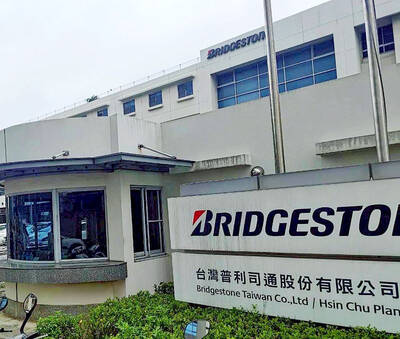
TRANSITION: With the closure, the company would reorganize its Taiwanese unit to a sales and service-focused model, Bridgestone said Bridgestone Corp yesterday announced it would cease manufacturing operations at its tire plant in Hsinchu County’s Hukou Township (湖口), affecting more than 500 workers. Bridgestone Taiwan Co (台灣普利司通) said in a statement that the decision was based on the Tokyo-based tire maker’s adjustments to its global operational strategy and long-term market development considerations. The Taiwanese unit would be reorganized as part of the closure, effective yesterday, and all related production activities would be concluded, the statement said. Under the plan, Bridgestone would continue to deepen its presence in the Taiwanese market, while transitioning to a sales and service-focused business model, it added. The Hsinchu
Taiwan Semiconductor Manufacturing Co (TSMC, 台積電) has approved a capital budget of US$31.28 billion for production expansion to meet long-term development needs during the artificial intelligence (AI) boom. The company’s board meeting yesterday approved the capital appropriation plan for purposes such as the installation of advanced technology capacity and fab construction, the world’s largest contract chipmaker said in a statement. At an earnings conference last month, TSMC forecast that its capital expenditure for this year would be at the higher end of the US$52 billion to US$56 billion range it forecast in January in response to robust demand for 5G, AI and


 RSS
RSS