


Joseph Lau (劉鑾雄), Hong Kong’s fifth-richest man, yesterday bought a pair of imperial cloisonne enamel double crane censers for HK$129.5 million (US$16.7 million) at Christie’s International auction in the city. The crane censers, which were expected to sell for more than HK$120 million, are from the Fonthill House collection of Alfred Morrison, a 19th-century English collector of Chinese art, according to Christie’s.
The purchase adds to other art collected by Lau, who controls Chinese Estate Holdings Ltd (華人置業集團). The property magnate, valued at US$6 billion by Forbes Asia in February, paid US$17.4 million for Mao, one of Andy Warhol’s portraits of the late Chinese leader Mao Zedong (毛澤東) in November 2006, a record at that time.
The crane censers may have been commissioned by Qing Dynasty Emperor Qianlong (乾隆帝) while he was still a prince as a birthday gift for his father, according to a press release by London-based Christie’s.
Christie’s had estimated its weeklong sale of wine, art, antiques, watches and jewelry at the Hong Kong Convention and Exhibition Centre would total more than HK$1.7 billion. A Sotheby’s sale in October raised HK$3.09 billion, beating its previous record in the city in April by more than 50 percent. The two are a benchmark of demand for luxury items in Asia.
On Tuesday, Christie’s sold HK$669 million of classical and modern Chinese paintings, 91 percent more than a year earlier and more than double the company’s estimate of HK$260 million.
“There are some quality paintings being auctioned,” said Ye Maozhong (葉茂中), 43, owner of a Beijing-based advertising company, who bought four Xu Beihong (徐悲鴻, 1895-1953) paintings for about HK$30 million.
“The prices are reasonable and I am happy — I did what I came here to do,” said Ye, wearing a red and black sweater, black jeans and thick-rimmed glasses.
The Song of the Pipa Player by Fu Baoshi (傅抱石, 1904-1965) sparked one of several intense bidding battles in a Tuesday afternoon session that was won by an unidentified Chinese buyer, soaring past the HK$40 million high bestimate. Chinese buyers bought 19 of the top 20 lots, including three ink paintings by Zhang Daqian (張大千, 1899-1983) that fetched a combined HK$123 million.


Taiwanese firms have increased investment in the Philippines in recent years as Manila’s ties with Washington deepen and global supply chains continue to shift away from China, an expert at the Chung-Hua Institution for Economic Research (CIER, 中華經濟研究院) said yesterday. The Philippines had not been among Taiwanese investors’ top choices in Southeast Asia, CIER Taiwan ASEAN Studies Center director Kristy Hsu (徐遵慈) said at a seminar in Taipei. However, Taiwan’s investment in the country has grown significantly since the COVID-19 pandemic, reaching US $257 million last year, a high in recent years, she said. Although Taiwan’s total investment in the Philippines still lags
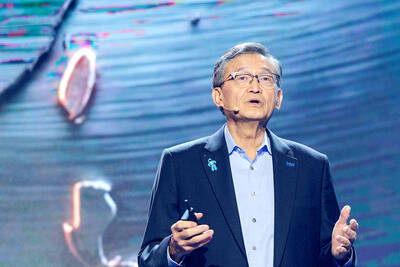
Intel Corp regards Taiwan Semiconductor Manufacturing Co (TSMC, 台積電) as a longstanding partner, as the US chipmaker would continue outsourcing production of advanced chips to TSMC, Intel chief executive officer Lip-Bu Tan (陳立武) said yesterday. “I don’t look at people as competitors. I look at the collaboration... Nvidia is also, you know, a good friend,” Tan told a news conference following his keynote speech at the Computex trade show in Taipei. “It’s a very trusted partnership for us... We are a big, top customer for them, and we’re going to continue doing that,” he said, referring to TSMC, the world’s largest foundry

Hon Hai Precision Industry Co (鴻海精密) yesterday said it would work with US chipmaker Intel Corp to jointly develop and deploy next-generation artificial intelligence (AI) infrastructure and intelligent computing platforms in a move to capture booming demand for AI computing systems. Hon Hai, also known as Foxconn Technology Group (富士康), said in a statement that the partnership would combine its global manufacturing scale, system integration expertise and AI data center deployment capabilities with Intel’s strengths in processor architecture, silicon technologies and software ecosystem. The companies said they plan to work on equipment used in AI data centers, including server racks powered by

Artificial intelligence (AI) agents would supplant smartphones as the center of people’s digital lives, fundamentally reshaping personal devices and driving a major computing upgrade cycle, Qualcomm Inc CEO Cristiano Amon said yesterday. In his keynote speech for this year’s Computex trade show in Taipei, Amon said that the rise of "agentic AI" — AI systems capable of reasoning, planning and carrying out tasks autonomously — would transform how people interact with technology across phones, PCs, vehicles and wearable devices. Describing the technology as the next major evolution in computing, Amon said that "2026 is the year of agents.” For decades, smartphones have sat


 RSS
RSS