


Australia’s Resourcehouse said yesterday it had secured a deal worth US$60 billion to supply coal to Chinese power stations over a 20-year period, calling it Australia’s largest-ever export contract.
Company chairman Clive Palmer said that coal mined in Queensland state from a major new project would be sold to China Power International Development Ltd (中國電力國際發展公司), a unit of China Power Investment Corp (CPI, 中電集團).
“This deal with CPI is Australia’s biggest-ever export contract,” Palmer said in a statement.
Executive director Phil McNamara, who helped broker the deal, said the contract with CPI was to supply 30 million tonnes annually over 20 years, with an approximate value of US$3 billion per year.
The announcement comes ahead of an expected IPO in Hong Kong next month that is thought likely to raise up to US$3 billion for Resourcehouse.
The coal will come from a new US$8 billion mining project in central Queensland, under development by Resourcehouse subsidiary China First Pty Ltd, which will establish a second major thermal coal mining region in Australia, alongside the Hunter Valley in New South Wales state.
China Power International Development Chairwoman Li Xiaolin (李小琳) welcomed the deal, saying its power plants mainly supplied electricity to the eastern, central and northern China grids
“The project is opening up a massive new coal resource and the CPI Group of companies are pleased to be involved in the project,” she said.
The China First project will be located in the Galilee Basin region near Alpha, west of the town of Emerald, and will include four underground mines, two surface mines, plus associated handling and processing facilities.
It will be linked to a coal terminal on the Queensland coast at Abbot Point by a new 490km railway line.
The company says the project, which is awaiting final approval by the Queensland government, will create 6,000 jobs during construction and 1,500 when operational.
Resourcehouse said it had also awarded a US$8.013 billion contract to Metallurgical Corporation of China Ltd (MCC, 中國冶金科工公司) to build the mine and associated export infrastructure.
Resourcehouse’s board of directors includes Suntech Power Holdings Co Ltd (尚德太陽能電力公司) chairman Shi Zhengrong (施正榮) and former Australian foreign minister Alexander Downer.
Li is the daughter of former Chinese premier Li Peng (李鵬).
China, the world’s top coal producer and consumer, became a net importer of coal last year, after more than tripling its coal imports to feed faster-than-expected recovery in demand that was compounded by a harsh winter.

SECOND-RATE: Models distilled from US products do not perform the same as the original and undo measures that ensure the systems are neutral, the US’ cable said The US Department of State has ordered a global push to bring attention to what it said are widespread efforts by Chinese companies, including artificial intelligence (AI) start-up DeepSeek (深度求索), to steal intellectual property from US AI labs, according to a diplomatic cable. The cable, dated Friday and sent to diplomatic and consular posts around the world, instructs diplomatic staff to speak to their foreign counterparts about “concerns over adversaries’ extraction and distillation of US AI models.” Distillation is the process of training smaller AI models using output from larger, more expensive ones to lower the costs of training a powerful new
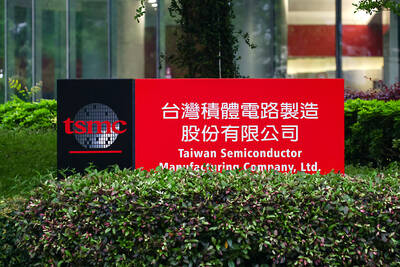
Shares of Taiwan Semiconductor Manufacturing Co (TSMC, 台積電) have repeatedly hit new highs, but an equity analyst said the stock’s valuation remains within a reasonable range and any pullback would likely be technical. The contract chipmaker’s historical price-to-earnings (P/E) ratio has ranged between 20 and 30, Cathay Futures Consultant Co (國泰證期) analyst Tsai Ming-han (蔡明翰) told Central News Agency. With market consensus projecting that TSMC would post earnings per share of about NT$100 (US$3.17) this year, supported by strong global demand for artificial intelligence (AI) applications, and the stock currently trading at a P/E ratio of below 25, Tsai said the valuation
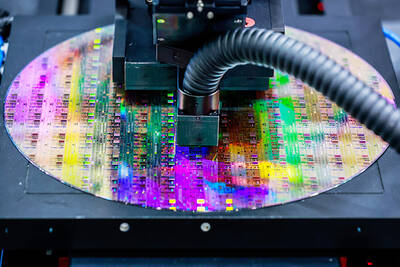
The artificial intelligence (AI) boom has triggered a seismic reshuffling of global equity markets, with Taiwan and South Korea muscling past European nations one by one. With its stock market now valued at nearly US$4.3 trillion, Taiwan surpassed the UK, Europe’s biggest market, earlier this month, data compiled by Bloomberg showed. South Korea is about US$140 billion away from doing the same. The tech-heavy Asian markets have shot past Germany and France in the past seven months. The shift is largely down to massive gains in shares of three companies that provide essential hardware for AI: Taiwan Semiconductor Manufacturing Co (TSMC, 台積電),
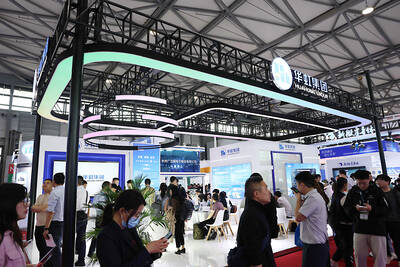
The US Department of Commerce last week ordered multiple chip equipment companies to halt shipments of certain tools to China’s second-largest chipmaker, Hua Hong Semiconductor Ltd (華虹半導體), its latest action to slow the country’s development of advanced chips, two people familiar with the matter said. The department sent letters to at least a handful of companies informing them of restrictions on tools and other materials destined for two Hua Hong facilities US officials believe make China’s most sophisticated chips, the people said. Top US chip equipment companies Lam Research Corp, Applied Materials Inc and KLA Corp, each of which has significant


 RSS
RSS