


TAIEX follows Wall Street down
Share prices closed 0.99 percent lower yesterday as investors followed a retreat on Wall Street overnight, dealers said.
The TAIEX fell 77.01 points to 7,682.97 on turnover of NT$132.89 billion (US$4.11 billion).
Losers led gainers 1,872 to 791 with 209 stocks unchanged.
The market opened 0.24 percent lower in reaction to the Wall Street decline and the losses extended until the end of the session as falling US high-tech shares put pressure on their local counterparts, dealers said.
“A dive on the tech-heavy NASDAQ renewed concerns over the outlook of the global high-tech sector,” Taiwan International Securities Corp (金鼎證券) analyst Michael Chiang said. “It was no surprise that such worries weighed on the local bourse which is dominated by the bellwether electronic sector. I suspect foreign institutional investors were net sellers today.”
TSMC rejects rumors
Taiwan Semiconductor Manufacturing Co (TSMC, 台積電), the world’s largest contract chip maker, reiterated yesterday that it has no intention of participating in the operations of its Chinese rival Semiconductor Manufacturing International Corp (SMIC, 中芯國際) or obtain seats on its board.
The company said in a stock exchange filing that it was responding to continual media speculation that it wanted to intervene in SMIC’s operation after the two reached an intellectual property lawsuit settlement last week, which allowed TSMC to receive a nearly 10-percent stake in the Shanghai-based chipmaker.
Chinatrust buys bonds
Chinatrust Financial Holding Co’s (中信金控) banking unit bought NT$1.8 billion (US$56 million) of Taiwan Power Co (Taipower, 台電) corporate bonds in three tranches, according to filings to the Taiwan Stock Exchange yesterday.
State-run Taipower has a twAAA debt rating, the highest from Taiwan Ratings Corp (中華信評), a Standard & Poor’s venture.
Taipei 101 mulls project
Taipei 101, the world’s tallest completed building, may use rainwater in its toilets as part of a NT$60 million (US$1.9 million) project to cut electricity and water consumption by 10 percent.
Taipei Financial Center Corp (台北金融大樓公司), owner of the skyscraper, will make changes in piping, lighting, computer software and other facilities to reduce costs and attract tenants, Cathy Yang (楊文琪), an assistant vice president, said in an interview on Thursday. The 508m building’s electricity bill is NT$200 million a year, she said.
The NT$60 million project, to be completed by the end of next year, may include piping to transport rainwater into toilets, she said. The plan will help Taipei 101 save at least NT$20 million a year, Yang said.
Siemens AG, which installed the building’s energy-monitoring system, is an adviser on the project, she said.
NT dollar loses ground
The New Taiwan dollar lost ground against the US dollar on the Taipei Foreign Exchange yesterday, declining NT$0.060 to close at NT$32.350.
Meanwhile, the central bank said yesterday that the NT dollar has strengthened against the South Korean won, adding that the two economies compete with one another for exports.
The NT dollar has gained 24 percent since the end of 2007 versus the won and is up 48 percent since 1986, the central bank said in an e-mailed statement. Central bank Governor Perng Fai-nan (彭淮南) said on Thursday that policy makers will step in if irregular factors cause excessive currency volatility.
Shares of contract chipmaker Taiwan Semiconductor Manufacturing Co (TSMC, 台積電) came under pressure yesterday after a report that Apple Inc is looking to shift some orders from the Taiwanese company to Intel Corp. TSMC shares fell NT$55, or 2.4 percent, to close at NT$2,235 on the local main board, Taiwan Stock Exchange data showed. Despite the losses, TSMC is expected to continue to benefit from sound fundamentals, as it maintains a lead over its peers in high-end process development, analysts said. “The selling was a knee-jerk reaction to an Intel-Apple report over the weekend,” Mega International Investment Services Corp (兆豐國際投顧) analyst Alex Huang
Taiwan Semiconductor Manufacturing Co (TSMC, 台積電) is expected to remain Apple Inc’s primary chip manufacturing partner despite reports that Apple could shift some orders to Intel Corp, industry experts said yesterday. The comments came after The Wall Street Journal reported on Friday that Apple and Intel had reached a preliminary agreement following more than a year of negotiations for Intel to manufacture some chips for Apple devices. Taiwan Institute of Economic Research (台灣經濟研究院) economist Arisa Liu (劉佩真) said TSMC’s advanced packaging technologies, including integrated fan-out and chip-on-wafer-on-substrate, remain critical to the performance of Apple’s A-series and M-series chips. She said Intel and Samsung
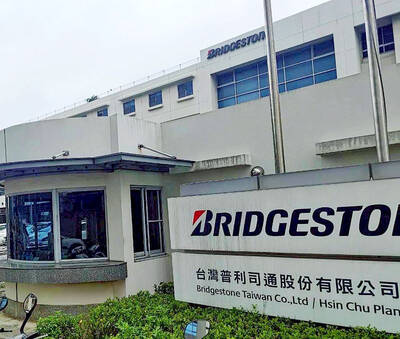
TRANSITION: With the closure, the company would reorganize its Taiwanese unit to a sales and service-focused model, Bridgestone said Bridgestone Corp yesterday announced it would cease manufacturing operations at its tire plant in Hsinchu County’s Hukou Township (湖口), affecting more than 500 workers. Bridgestone Taiwan Co (台灣普利司通) said in a statement that the decision was based on the Tokyo-based tire maker’s adjustments to its global operational strategy and long-term market development considerations. The Taiwanese unit would be reorganized as part of the closure, effective yesterday, and all related production activities would be concluded, the statement said. Under the plan, Bridgestone would continue to deepen its presence in the Taiwanese market, while transitioning to a sales and service-focused business model, it added. The Hsinchu
Taiwan Semiconductor Manufacturing Co (TSMC, 台積電) has approved a capital budget of US$31.28 billion for production expansion to meet long-term development needs during the artificial intelligence (AI) boom. The company’s board meeting yesterday approved the capital appropriation plan for purposes such as the installation of advanced technology capacity and fab construction, the world’s largest contract chipmaker said in a statement. At an earnings conference last month, TSMC forecast that its capital expenditure for this year would be at the higher end of the US$52 billion to US$56 billion range it forecast in January in response to robust demand for 5G, AI and


 RSS
RSS