


Defying conventional wisdom that China trails Taiwan in marketing savvy, Lee Kai-fu (李開復), founder of Innovation Works (創新工場) and former head of Google China, said yesterday that China had gained an edge in mobile Internet marketing that could be useful to both sides of the Taiwan Strait.
Innovation Works represents a venture fund that provides coaching for early stage startups in cloud computing, mobile computing and e-commerce.
Speaking on trends in mobile Internet, Lee said if the two sides could combine their strength, great opportunities could be generated that will allow them to enhance their competitiveness and expand global markets.
Although most people think Taiwan has more marketing experience and China’s strength is production, Lee stressed that the model in the future should be the reverse, with Taiwan’s strength in manufacturing combining with China’s experience in the mobile Internet market.
EXPERIENCE
He said that China had gained substantial experience through investment that companies have poured into developing online applications for China’s huge market of Internet users.
Lee, 48, left Google China earlier this year. He was hired by Google in July 2005 from Microsoft Corp.
Born in Taiwan and raised in Tennessee, Lee has now raised about US$115 million for his Innovation Works fund, which counts Hon Hai Group (鴻海集團) chairman Terry Gou (郭台銘), YouTube co-founder Steve Chen (陳士駿) and Lenovo Group Ltd (聯想) chairman Liu Chuanzhi (柳傳志) among its investors.
Lee was speaking at the 7th Annual Global Chinese Business Leaders Forum, hosted by the Taiwan-based publication Global Views Monthly. The theme of this year’s forum was “Taiwan opportunities, China possibilities.”
During the forum, Lee exchanged views with Gou and Peter Liu (劉宇環), founder and chairman of WI Harper Group (中經合集團), on startup companies.
Gou said he had known Lee for 18 years and was willing to invest in Lee’s fund because of high expectations for future development of e-commerce business.
He also said that Innovation Works could launch a Taiwan branch soon, which Lee did not deny.
The former Google China head said he had received about 40,000 applications since the day he started Innovation Works.
He said that he planned to select 40 out of that number in the preliminary stage and introduce five new startups by the end. The venture fund is targeted to invest in 50 startups in 10 years, he added.
CONTRIBUTION
Appearing at the same conference, Vice Premier Eric Chu (朱立倫) praised the significant contribution that information and communication technology (ICT) companies had made to Taiwan’s economy and argued that Taiwan should develop six key emerging industries with its solid ICT base.
The six emerging industries — tourism, health care, biotechnology, green energy, cultural and creative industries and high-end agriculture — are expected to generate a production value of NT$1 trillion (US$30.7 billion) and 610,000 jobs by 2012, Chu said.

Taiwanese firms have increased investment in the Philippines in recent years as Manila’s ties with Washington deepen and global supply chains continue to shift away from China, an expert at the Chung-Hua Institution for Economic Research (CIER, 中華經濟研究院) said yesterday. The Philippines had not been among Taiwanese investors’ top choices in Southeast Asia, CIER Taiwan ASEAN Studies Center director Kristy Hsu (徐遵慈) said at a seminar in Taipei. However, Taiwan’s investment in the country has grown significantly since the COVID-19 pandemic, reaching US $257 million last year, a high in recent years, she said. Although Taiwan’s total investment in the Philippines still lags
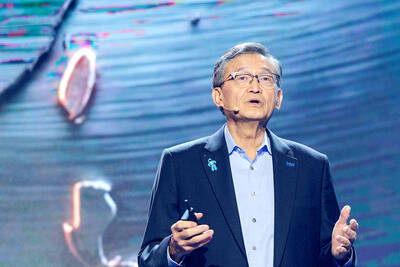
Intel Corp regards Taiwan Semiconductor Manufacturing Co (TSMC, 台積電) as a longstanding partner, as the US chipmaker would continue outsourcing production of advanced chips to TSMC, Intel chief executive officer Lip-Bu Tan (陳立武) said yesterday. “I don’t look at people as competitors. I look at the collaboration... Nvidia is also, you know, a good friend,” Tan told a news conference following his keynote speech at the Computex trade show in Taipei. “It’s a very trusted partnership for us... We are a big, top customer for them, and we’re going to continue doing that,” he said, referring to TSMC, the world’s largest foundry
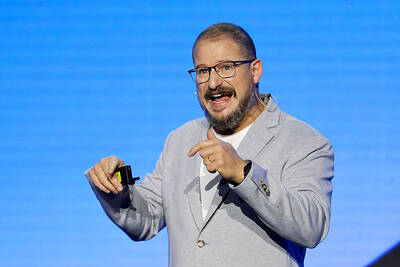
Artificial intelligence (AI) agents would supplant smartphones as the center of people’s digital lives, fundamentally reshaping personal devices and driving a major computing upgrade cycle, Qualcomm Inc CEO Cristiano Amon said yesterday. In his keynote speech for this year’s Computex trade show in Taipei, Amon said that the rise of "agentic AI" — AI systems capable of reasoning, planning and carrying out tasks autonomously — would transform how people interact with technology across phones, PCs, vehicles and wearable devices. Describing the technology as the next major evolution in computing, Amon said that "2026 is the year of agents.” For decades, smartphones have sat
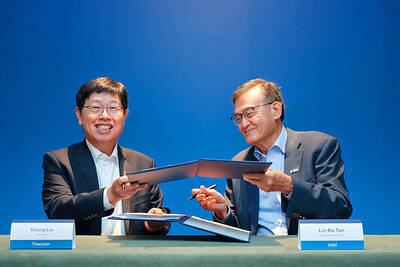
Hon Hai Precision Industry Co (鴻海精密) yesterday said it would work with US chipmaker Intel Corp to jointly develop and deploy next-generation artificial intelligence (AI) infrastructure and intelligent computing platforms in a move to capture booming demand for AI computing systems. Hon Hai, also known as Foxconn Technology Group (富士康), said in a statement that the partnership would combine its global manufacturing scale, system integration expertise and AI data center deployment capabilities with Intel’s strengths in processor architecture, silicon technologies and software ecosystem. The companies said they plan to work on equipment used in AI data centers, including server racks powered by


 RSS
RSS