


Chi Mei Optoelectronics Corp (奇美電子), the nation's No. 2 maker of liquid-crystal displays (LCD), yesterday said fourth quarter losses were at a record high because of shrinking demand amid the economic downturn and large inventory write-offs after LCD prices collapsed.
In the final quarter of last year, net losses were NT$31.41 billion (US$923.1 billion) after a NT$12.21 billion inventory write-off, compared to net losses of NT$4.19 billion in the third quarter and earnings of NT$20.07 billion in the fourth quarter a year earlier.
Chi Mei said demand and orders froze last quarter as the grim economy hurt electronics demand, bringing down both its average selling price and gross margin to a record low of US$109 per unit and a margin of minus 30 percent.
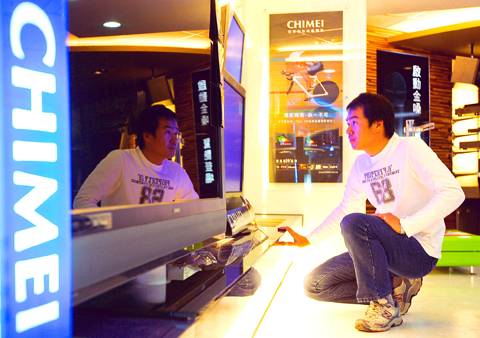
PHOTO: BLOOMBERG
But, the worst period seems to be over as Chi Mei said recent rush orders, mostly from Chinese TV makers, may help boost shipments of PC and TV LCD panels by 5 percent to 10 percent this quarter from 11 million units last quarter.
The forecast is in stark contrast to that of bigger rival AU Optronics Corp (友達光電), which expected its PC and TV panel shipments to decrease by a 15 percent to 20 percent quarterly rate.
"We are feeling that [demand] is climbing up slowly from the bottom. It is like a ray of hope glimmering in the deep darkness," Chi Mei president Ho Jau-yang (何昭陽) told a teleconference yesterday.
Reflecting inventory buildup demand, factory utilization rates may rebound to around 45 percent this quarter, from 35 percent to 40 percent in the fourth quarter of last year, Chi Mei said.
"I am surprised at the forecast about shipment growth," said Jeff Pu (蒲得宇), a flat panel industry analyst with Yuanta Securities (元大證券). "That may reflect strong stock replenishment demand from the company's Chinese customers, who are preparing for demand from China's distant areas later this year."
Helped by Beijing's new economic stimulus package, Chi Mei said Chinese customers may account for a larger share, or 25 percent to 35 percent, of its total revenue this year, from 15 percent to 20 percent last year.
Average selling price for PC and TV panels may slide by 5 percent to 25 percent quarter-on-quarter primarily because of rising shipments in smaller-sized, or lower-priced panels, such as those used in netbooks, the panel maker said.
Short of clear signs for a solid recovery, Chi Mei said retaining cash was a priority. It planned to curtail capital spending to NT$30 billion this year, which was about one-third of the NT$105.4 billion the company budgeted for last year.
The company would suspend mass production of a new next-generation, or 8.5G, plant, which Chi Mei had planned to use to make 50-inch TV screens.
Meanwhile, AU Optronics will continue to invest in a new 8.5G plant, which is scheduled to start operations in the third quarter of this year.
Citing the panel maker's conservative strategy in migrating to next-generation plants, Pu said: ※Chi Mei may lag behind competitors in making more cost-efficient 46-inch TV panels during the next upturn, probably in 2010.§
Pu gave a "sell" rating on Chi Mei, while maintaining a "buy" rating for AU Optronics, saying that the latter was better at broadening its customer base in the TV sector and managing inventory.
Separately, PC panel maker HannStar Display Corp (翰宇彩晶 yesterday said fourth-quarter losses widened to NT$7.85 billion after a NT$2.2 billion inventory write-off, from losses of NT$1.36 billion in the third quarter and net profits of NT$9.14 billion in the fourth quarter of 2007.
As demand may remain sluggish, despite short-term rush orders, HannStar planned to cut capital spending to NT$500 million this year from NT$1.7 billion last year.
PC panel shipments may drop by 15 percent to 20 percent this quarter from last quarter after factory usage fell to 37 percent from 52 percent last quarter, it said.

Cairo’s new monorail slices across the city skyline, running above the familiar chaos of blaring horns and aging buses’ exhaust fumes that mark rush hour below. The US$4.5 billion monorail, opened this month, is among Egypt’s most prominent new transport projects, part of a debt-funded infrastructure drive criticized for sapping state finances while bringing limited benefits to most of the country’s 109 million people. “It feels like you’re in a different country,” said Ramy Sayed, a restaurant manager, aboard a driverless Innovia 300 train. “No noise, no traffic, we’re not used to this.” The eastern line runs 56km from the bustling middle-class
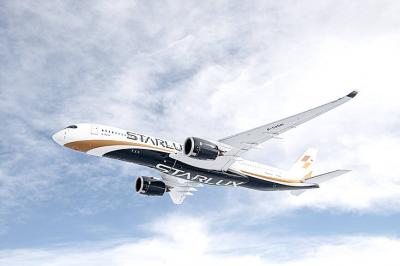
Starlux Airlines Co (星宇航空) today unveiled a long-haul network expansion plan at a shareholders’ meeting in Taipei, including direct flights to Barcelona, Spain, and Zurich, Switzerland, as well as a service connecting Taipei, Sydney and New Zealand. Starlux is to become the first Taiwanese carrier to offer non-stop services to the two European cities, while the inaugural oceanic route is expected to expand transit opportunities within the Australia-New Zealand market, Starlux said. Flight services to Chicago, Dallas, Washington and New York are under evaluation, the airline added. Prior to the shareholders’ meeting, the airline earlier this year announced that it would be

Taiwanese firms have increased investment in the Philippines in recent years as Manila’s ties with Washington deepen and global supply chains continue to shift away from China, an expert at the Chung-Hua Institution for Economic Research (CIER, 中華經濟研究院) said yesterday. The Philippines had not been among Taiwanese investors’ top choices in Southeast Asia, CIER Taiwan ASEAN Studies Center director Kristy Hsu (徐遵慈) said at a seminar in Taipei. However, Taiwan’s investment in the country has grown significantly since the COVID-19 pandemic, reaching US $257 million last year, a high in recent years, she said. Although Taiwan’s total investment in the Philippines still lags
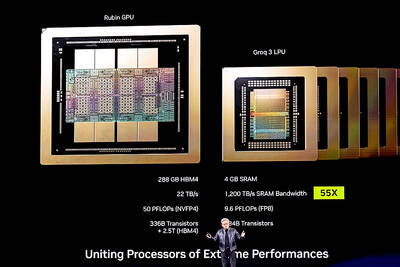
Taiwanese prosecutors suspect that three people successfully smuggled at least one shipment of Nvidia Corp artificial intelligence (AI) chips to China after first exporting them to Japan, people familiar with the matter said. The trio was detained last week by the Keelung District Prosecutors’ Office for allegedly falsifying documents related to exports of Super Micro Computer Inc servers containing advanced Nvidia chips, which the US has barred from sale to China without a license from Washington. The move marked Taiwan’s first public crackdown on AI chip diversion after years of pressure from the US to take a more active role in curtailing


 RSS
RSS