


Lottery firm posts brisk sales
Taiwan Lottery Co (台灣彩券), a subsidiary of Chinatrust Financial Holding Co (中信金控), yesterday reported that sales last year reached NT$73.15 billion (US$2.22 billion), up nearly 14 percent, or NT$9 billion, from 2007.
Taiwan Lottery, which was appointed to operate the Public Welfare Lottery by the Ministry of Finance, said the average monthly income of local computerized lottery ticket distributors rose to NT$76,000 last year from NT$64,000 a year earlier. This also helped lottery retail stations to see an average increase of 18.8 percent in their monthly income.
China to ease credit
The Beijing government will ease lending restrictions to help Taiwanese companies raise capital in China to weather the financial storm, a Chinese government spokesman said.
China will simplify the application process for bank loans, ease lending limits and remove curbs that had been placed on Taiwanese borrowers, Taiwan Affairs Office spokesman Yang Yi (楊毅) said yesterday in a televised press briefing in Beijing.
Chinese banks extended 230 billion yuan (US$33.6 billion) in loans to Taiwanese borrowers in 2007, Yang said.
The nation’s securities regulator also approved plans by 11 Taiwanese firms to sell Class A shares in China to raise equity capital, he said without elaborating.
AUO appoints finance chief
AU Optronics Corp (AUO, 友達光電), the world’s No. 3 liquid-crystal-display (LCD) panel maker, appointed Andy Yang (楊本豫) to succeed Max Cheng (鄭煒順) as financial executive, in line with the company’s long-term efforts to enhance growth.
Cheng, who helped AUO maintain its sound financial structure during two major merger deals, will be promoted to executive vice president. Cheng will be in charge of the company’s long-term business investment strategy, including solar photovoltaic technology and other new business planning and management.
The personnel change will take effect on March 1.
CAL to stop tobacco promo
China Airlines Ltd (CAL, 中華航空), the nation’s largest air carrier, yesterday said it would no longer promote tobacco products in its in-flight duty-free catalogs starting on Sunday to comply with the Tobacco Hazards Prevention and Control Act (菸害防治法).
In line with the new law banning the promotion and advertising of tobacco products, CAL said it would stop displaying tobacco products in its in-flight shopping magazine and duty-free carts.
Passengers who wish to buy tobacco products will have to contact cabin attendants to purchase them.
Lite-On’s sales edge up
Lite-On Technology Corp (光寶科技) yesterday reported that revenues reached NT$7.3 billion (US$221.4 million) last month and NT$25.3 billion last quarter.
The Taiwanese maker of electronic components said that full-year revenue last year totaled NT$142.07 billion, up 4 percent from a year earlier.
The company said that sales of imaging products posted the strongest growth among its core products. Revenue last month rose 14 percent from the year before and 22 percent for the full year, thanks in part to robust sales of camera modules for high-end handsets and notebook computers, which increased by 60 percent.
NT dollar advances
The New Taiwan dollar gained ground against the US dollar on the Taipei Foreign Exchange yesterday, rising NT$0.074 to close at NT$32.980. Turnover was US$908 million.

Cairo’s new monorail slices across the city skyline, running above the familiar chaos of blaring horns and aging buses’ exhaust fumes that mark rush hour below. The US$4.5 billion monorail, opened this month, is among Egypt’s most prominent new transport projects, part of a debt-funded infrastructure drive criticized for sapping state finances while bringing limited benefits to most of the country’s 109 million people. “It feels like you’re in a different country,” said Ramy Sayed, a restaurant manager, aboard a driverless Innovia 300 train. “No noise, no traffic, we’re not used to this.” The eastern line runs 56km from the bustling middle-class

Taiwanese firms have increased investment in the Philippines in recent years as Manila’s ties with Washington deepen and global supply chains continue to shift away from China, an expert at the Chung-Hua Institution for Economic Research (CIER, 中華經濟研究院) said yesterday. The Philippines had not been among Taiwanese investors’ top choices in Southeast Asia, CIER Taiwan ASEAN Studies Center director Kristy Hsu (徐遵慈) said at a seminar in Taipei. However, Taiwan’s investment in the country has grown significantly since the COVID-19 pandemic, reaching US $257 million last year, a high in recent years, she said. Although Taiwan’s total investment in the Philippines still lags
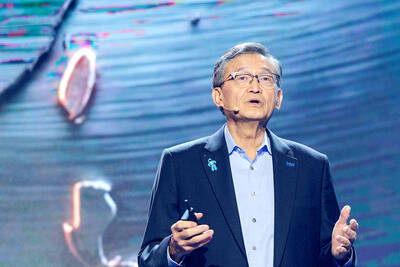
Intel Corp regards Taiwan Semiconductor Manufacturing Co (TSMC, 台積電) as a longstanding partner, as the US chipmaker would continue outsourcing production of advanced chips to TSMC, Intel chief executive officer Lip-Bu Tan (陳立武) said yesterday. “I don’t look at people as competitors. I look at the collaboration... Nvidia is also, you know, a good friend,” Tan told a news conference following his keynote speech at the Computex trade show in Taipei. “It’s a very trusted partnership for us... We are a big, top customer for them, and we’re going to continue doing that,” he said, referring to TSMC, the world’s largest foundry

Artificial intelligence (AI) agents would supplant smartphones as the center of people’s digital lives, fundamentally reshaping personal devices and driving a major computing upgrade cycle, Qualcomm Inc CEO Cristiano Amon said yesterday. In his keynote speech for this year’s Computex trade show in Taipei, Amon said that the rise of "agentic AI" — AI systems capable of reasoning, planning and carrying out tasks autonomously — would transform how people interact with technology across phones, PCs, vehicles and wearable devices. Describing the technology as the next major evolution in computing, Amon said that "2026 is the year of agents.” For decades, smartphones have sat


 RSS
RSS