


Exports, which bolstered the economy in the first half of the year with double-digit growth, show signs of slackening as overseas shipments rose only 8 percent year-on-year last month on moderating demand from major trade partners worldwide, the Ministry of Finance said in a report yesterday.
Meanwhile, imports jumped 12.3 percent on surging crude and raw material costs, creating a trade deficit for the first time since March 2006, the report said.
“The export volume grew 8 percent to reach US$22.87 billion in July from a year earlier,” said Lin Lee-jen (林麗貞), Department of Statistics director. “Imports gained 12.3 percent to hit US$23.28 billion, leaving a trade deficit of US$410 million.”
Lin attributed the modest growth in exports to the US subprime mortgage crisis, which has mitigated demand for information technology and communications products, the mainstay of Taiwan’s export-led economy. Exports expanded 21.3 percent in June while imports picked up 22.5 percent.
Shipments to Hong Kong and China edged up 4 percent to US$8.94 billion last month, compared with 25.5 percent for June, the report said, adding that trade with Europe climbed 5.8 percent to US$2.53 billion, down from 24.2 percent a month earlier.
Meanwhile, shipments to the US declined 6.1 percent last month to US$2.75 billion, compared with 2.6 percent in June, the report said.
Lin said that the statistics, while heading down, indicated that foreign trade could continue to sustain the economy.
“The inflationary pressure is likely to ease in the coming months as crude [oil] costs have dropped considerably since July,” Lin said.
The ministry’s report said the trade surplus between January and July amounted to US$7.58 billion, down US$3.45 billion, or 31.3 percent, from last year.
The ministry’s report drew mixed reactions.
Frank Fan (范維康), a financial analyst at Taiwan Ratings (中華信評), said he expected foreign trade would continue to weaken as the US slowdown appears to have spread to Europe and China.
“Talks of recovery may prove premature as long as crude prices remain volatile,” Fan said in a telephone interview. “The credit crunch may dog the US, the end-market of technology products, till the end of next year, promoting companies to shun expansion plans.”
Fan said rising fuel and raw material prices made its tough for manufacturers to turn a profit.
The ministry report showed oil and metal costs soared 68.7 percent and 22.2 percent respectively.
Thomas Lee (李桐豪), money and banking professor at National Chengchi University, said he was cautiously optimistic about the economic outlook.
Lee said he was not surprised at the slowing growth in foreign trade but believed that exports may regain momentum in the remainder of the year in the wake of falling oil prices and a weakened NT dollar.
“The slowdown in shipments to China is temporary,” Lee said by telephone. “The depreciating local currency will make Taiwanese products more attractive abroad.”
Shares of contract chipmaker Taiwan Semiconductor Manufacturing Co (TSMC, 台積電) came under pressure yesterday after a report that Apple Inc is looking to shift some orders from the Taiwanese company to Intel Corp. TSMC shares fell NT$55, or 2.4 percent, to close at NT$2,235 on the local main board, Taiwan Stock Exchange data showed. Despite the losses, TSMC is expected to continue to benefit from sound fundamentals, as it maintains a lead over its peers in high-end process development, analysts said. “The selling was a knee-jerk reaction to an Intel-Apple report over the weekend,” Mega International Investment Services Corp (兆豐國際投顧) analyst Alex Huang
Taiwan Semiconductor Manufacturing Co (TSMC, 台積電) is expected to remain Apple Inc’s primary chip manufacturing partner despite reports that Apple could shift some orders to Intel Corp, industry experts said yesterday. The comments came after The Wall Street Journal reported on Friday that Apple and Intel had reached a preliminary agreement following more than a year of negotiations for Intel to manufacture some chips for Apple devices. Taiwan Institute of Economic Research (台灣經濟研究院) economist Arisa Liu (劉佩真) said TSMC’s advanced packaging technologies, including integrated fan-out and chip-on-wafer-on-substrate, remain critical to the performance of Apple’s A-series and M-series chips. She said Intel and Samsung
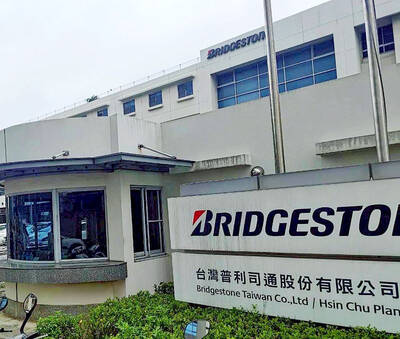
TRANSITION: With the closure, the company would reorganize its Taiwanese unit to a sales and service-focused model, Bridgestone said Bridgestone Corp yesterday announced it would cease manufacturing operations at its tire plant in Hsinchu County’s Hukou Township (湖口), affecting more than 500 workers. Bridgestone Taiwan Co (台灣普利司通) said in a statement that the decision was based on the Tokyo-based tire maker’s adjustments to its global operational strategy and long-term market development considerations. The Taiwanese unit would be reorganized as part of the closure, effective yesterday, and all related production activities would be concluded, the statement said. Under the plan, Bridgestone would continue to deepen its presence in the Taiwanese market, while transitioning to a sales and service-focused business model, it added. The Hsinchu
Taiwan Semiconductor Manufacturing Co (TSMC, 台積電) has approved a capital budget of US$31.28 billion for production expansion to meet long-term development needs during the artificial intelligence (AI) boom. The company’s board meeting yesterday approved the capital appropriation plan for purposes such as the installation of advanced technology capacity and fab construction, the world’s largest contract chipmaker said in a statement. At an earnings conference last month, TSMC forecast that its capital expenditure for this year would be at the higher end of the US$52 billion to US$56 billion range it forecast in January in response to robust demand for 5G, AI and


 RSS
RSS