


General Electric Co, which owns businesses ranging from light bulbs to NBC television, on Friday said it will restructure into four businesses from six, a move that chief executive officer Jeff Immelt says will focus the company on growth.
Immelt has been under pressure to shake up GE since it shocked investors with disappointing first-quarter earnings. GE’s share price has since dropped nearly 22 percent.
Friday’s move follows GE’s recent plan to consider spinning off its iconic lighting and appliance businesses, a brand that has been familiar to Americans for generations.
The new structure includes GE Technology Infrastructure, led by vice chairman John Rice, which includes Healthcare, Aviation, Transportation and Enterprise Solutions.
GE Energy Infrastructure, headed up by John Krenicki, includes Energy, Oil & Gas and Water.
GE Capital, led by vice chairman Mike Neal, brings together all the financial service businesses, including Commercial Finance, GE Money, industry verticals and Corporate Treasury.
NBC Universal, headed by Jeff Zucker, will remain unchanged.
In the reorganization, GE’s Commercial Finance, GE Money, GE Industrial and GE Healthcare are to be folded into new, expanded business segments.
Analyst Nicholas Heymann of Sterne Agee in New York said in an e-mail that GE made the right move, and that the new structure suggested GE would be focusing increasingly on infrastructure and, to a lesser extent, on commercial finance.
The expected sale of GE Money at a favorable price “should further underscore GE’s narrowing focus of its businesses,” Heymann said. Immelt has said GE will consider selling portions of GE Money, which provides banking and credit services.
Analyst Matt Collins of Edward Jones in St Louis said investors will benefit from the reorganization if it helps GE officials focus on key markets and provides more transparency.
In particular, he said organizing GE’s array of financial services into one unit makes it a “little easier to figure out where the financial earnings are coming from,” he said. “That’s overdue.”
The reorganization is GE’s second announcement in a week. On Tuesday, GE said it had formed a joint venture with an Abu Dhabi government investment company that will pump US$4 billion of outside capital into its weakened commercial finance business.
The deal with Mubadala Development Co also will launch or broaden several other ventures with the Persian Gulf investment vehicle, which expects to become one of the top 10 institutional investors in GE.

Cairo’s new monorail slices across the city skyline, running above the familiar chaos of blaring horns and aging buses’ exhaust fumes that mark rush hour below. The US$4.5 billion monorail, opened this month, is among Egypt’s most prominent new transport projects, part of a debt-funded infrastructure drive criticized for sapping state finances while bringing limited benefits to most of the country’s 109 million people. “It feels like you’re in a different country,” said Ramy Sayed, a restaurant manager, aboard a driverless Innovia 300 train. “No noise, no traffic, we’re not used to this.” The eastern line runs 56km from the bustling middle-class

Taiwanese firms have increased investment in the Philippines in recent years as Manila’s ties with Washington deepen and global supply chains continue to shift away from China, an expert at the Chung-Hua Institution for Economic Research (CIER, 中華經濟研究院) said yesterday. The Philippines had not been among Taiwanese investors’ top choices in Southeast Asia, CIER Taiwan ASEAN Studies Center director Kristy Hsu (徐遵慈) said at a seminar in Taipei. However, Taiwan’s investment in the country has grown significantly since the COVID-19 pandemic, reaching US $257 million last year, a high in recent years, she said. Although Taiwan’s total investment in the Philippines still lags

Intel Corp regards Taiwan Semiconductor Manufacturing Co (TSMC, 台積電) as a longstanding partner, as the US chipmaker would continue outsourcing production of advanced chips to TSMC, Intel chief executive officer Lip-Bu Tan (陳立武) said yesterday. “I don’t look at people as competitors. I look at the collaboration... Nvidia is also, you know, a good friend,” Tan told a news conference following his keynote speech at the Computex trade show in Taipei. “It’s a very trusted partnership for us... We are a big, top customer for them, and we’re going to continue doing that,” he said, referring to TSMC, the world’s largest foundry
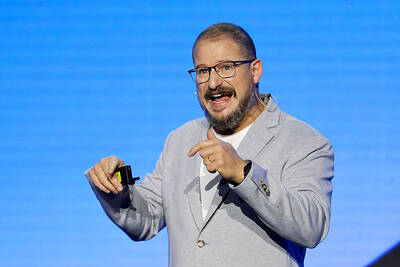
Artificial intelligence (AI) agents would supplant smartphones as the center of people’s digital lives, fundamentally reshaping personal devices and driving a major computing upgrade cycle, Qualcomm Inc CEO Cristiano Amon said yesterday. In his keynote speech for this year’s Computex trade show in Taipei, Amon said that the rise of "agentic AI" — AI systems capable of reasoning, planning and carrying out tasks autonomously — would transform how people interact with technology across phones, PCs, vehicles and wearable devices. Describing the technology as the next major evolution in computing, Amon said that "2026 is the year of agents.” For decades, smartphones have sat


 RSS
RSS