


Home appliance maker Tatung Co (大同) plans to increase investment in the production of glass solar cells, riding on the rosy prospects of the solar energy industry, a top company official said yesterday.
Part of the plan will involve resource integration, with Tatung working with its subsidiaries Green Energy Technology Inc (
Green Energy is the nation's largest manufacturer of solar photovoltaic multicrystalline silicon wafers, while Chunghwa Picture Tubes is the nation's third-largest manufacturer of LCD panels.
Lin, who also doubles as Green Energy's chairman, said that sales of Green Energy are forecast to surpass the NT$10 billion (US$300 million) mark next year, thanks to product diversification from silicon wafers and glass membrane solar cells to solar energy solutions.
Fueled by the red hot solar demand, Green Energy posted sales of NT$2.4 billion last year, a sharp 592 percent rise from NT$352.4 million a year ago. It also posted net profits of NT$506.8 million last year, compared with losses of NT$60.1 million a year earlier.
The company's second production facility will be completed by September, pushing its total output to 200 megawatts this year, Lin said.
The company's shareholders also approved a proposal to distribute NT$3.2 in cash dividends and 8 percent in stock dividends based on last year's results.
Tatung yesterday also dismissed media reports that the company would join hands with Hon Hai Precision Industry Co (鴻海精密) to tap into the glass membrane solar cell business.
"We did not approach Hon Hai over this matter," Lin told shareholders.
Hon Hai, the nation's largest maker of electronics parts, also denied rumors of a partnership in a filing to the Taiwan Stock Exchange yesterday, saying it had never held such discussions with Tatung and had no plans of venturing into glass solar cells.
The Economic Daily News reported yesterday that Hon Hai intended to collaborate with Tatung in producing glass solar cells, through Hon Hai's affiliate Innolux Display Inc (
Shares of contract chipmaker Taiwan Semiconductor Manufacturing Co (TSMC, 台積電) came under pressure yesterday after a report that Apple Inc is looking to shift some orders from the Taiwanese company to Intel Corp. TSMC shares fell NT$55, or 2.4 percent, to close at NT$2,235 on the local main board, Taiwan Stock Exchange data showed. Despite the losses, TSMC is expected to continue to benefit from sound fundamentals, as it maintains a lead over its peers in high-end process development, analysts said. “The selling was a knee-jerk reaction to an Intel-Apple report over the weekend,” Mega International Investment Services Corp (兆豐國際投顧) analyst Alex Huang
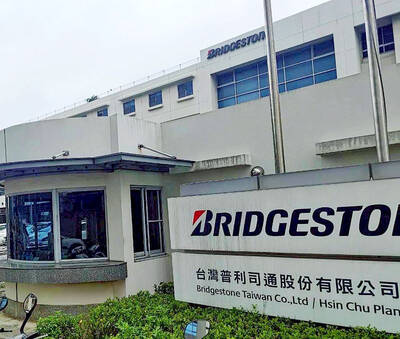
TRANSITION: With the closure, the company would reorganize its Taiwanese unit to a sales and service-focused model, Bridgestone said Bridgestone Corp yesterday announced it would cease manufacturing operations at its tire plant in Hsinchu County’s Hukou Township (湖口), affecting more than 500 workers. Bridgestone Taiwan Co (台灣普利司通) said in a statement that the decision was based on the Tokyo-based tire maker’s adjustments to its global operational strategy and long-term market development considerations. The Taiwanese unit would be reorganized as part of the closure, effective yesterday, and all related production activities would be concluded, the statement said. Under the plan, Bridgestone would continue to deepen its presence in the Taiwanese market, while transitioning to a sales and service-focused business model, it added. The Hsinchu
Taiwan Semiconductor Manufacturing Co (TSMC, 台積電) has approved a capital budget of US$31.28 billion for production expansion to meet long-term development needs during the artificial intelligence (AI) boom. The company’s board meeting yesterday approved the capital appropriation plan for purposes such as the installation of advanced technology capacity and fab construction, the world’s largest contract chipmaker said in a statement. At an earnings conference last month, TSMC forecast that its capital expenditure for this year would be at the higher end of the US$52 billion to US$56 billion range it forecast in January in response to robust demand for 5G, AI and

Taiwan Semiconductor Manufacturing Co’s (TSMC, 台積電) investment project in Arizona has progressed better than expected, but it still faces challenges such as water and labor shortages, National Development Council (NDC) Minister Yeh Chun-hsien (葉俊顯) said yesterday. Speaking with reporters after visiting TSMC’s Arizona hub and attending the SelectUSA Investment Summit in Maryland last week, Yeh said TSMC’s Arizona site turned a profit of NT$16.14 billion (US$514 million) last year in its first full year of mass production. “TSMC told me it was surprised by the smooth trial run of the first fab, which has left the company optimistic about the project’s outlook,”


 RSS
RSS