


Tsann Kuen Group (
"These new home electronics will be able to run on solar power, which will be environmentally friendly," Tsann Kuen PR manager Miki Lai (
Tsann Kuen, whose revenues come mostly from manufacturing home appliances for brand sellers, ventured into solar power research in the past year in a bid to identify higher value-added products, she said.
"Solar power has great potential and is still not commonly used in home appliances. We will have a shot," she said.
These new products could be put on the market within two years, mainly on a contract manufacturing basis for brand firms, Lai said, declining to discuss product details.
Tsann Kuen is setting up its second research center in Taiwan to develop solar products at a cost of more than NT$100 million (US$3 million), Lai said. The center in Tainan will span more than 3,500 ping (11,550m2) and include a store and a showroom, he said, adding that it would be operational in two years.
Tsann Kuen saw sales for the first four months rise 9.4 percent to NT$11.04 billion from the same period last year. Its shares closed up 1.4 percent to NT$29.75 on the Taiwan Stock Exchange yesterday.
Meanwhile, industry watchers were upbeat about the business prospects of Synnex Technology International Corp (聯強國際), Asia's largest IT product distributor, driven by cross-strait demand.
In the first quarter, Synnex saw revenues from China grow 15 percent year-on-year, while operating profits grew 63 percent, helping to offset lower domestic profits.
"Broadened product lines in top-tier cities helped fuel momentum and profit margins in China," Vincent Chen (
These new products include notebooks from brands such as Asustek, Lenovo, Sony and Samsung, and liquid-crystal-display monitors from NEC, AOC and Philips, Chen said, maintaining a "buy" rating on Synnex with a target price of NT$53.1.
Another good sign was Synnex's readiness to roll out handsets for Nokia Corp, one of the leading handset vendors in China, starting in the third quarter, he said.
The company's sales for the first four months dropped 5.2 percent to NT$16.5 billion. Its shares closed up 3.3 percent to NT$43.80 on the local bourse yesterday.

Cairo’s new monorail slices across the city skyline, running above the familiar chaos of blaring horns and aging buses’ exhaust fumes that mark rush hour below. The US$4.5 billion monorail, opened this month, is among Egypt’s most prominent new transport projects, part of a debt-funded infrastructure drive criticized for sapping state finances while bringing limited benefits to most of the country’s 109 million people. “It feels like you’re in a different country,” said Ramy Sayed, a restaurant manager, aboard a driverless Innovia 300 train. “No noise, no traffic, we’re not used to this.” The eastern line runs 56km from the bustling middle-class
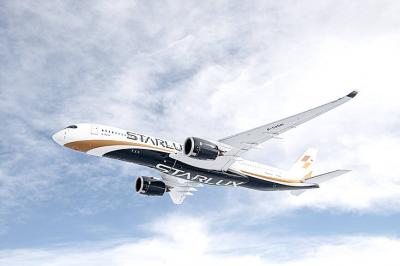
Starlux Airlines Co (星宇航空) today unveiled a long-haul network expansion plan at a shareholders’ meeting in Taipei, including direct flights to Barcelona, Spain, and Zurich, Switzerland, as well as a service connecting Taipei, Sydney and New Zealand. Starlux is to become the first Taiwanese carrier to offer non-stop services to the two European cities, while the inaugural oceanic route is expected to expand transit opportunities within the Australia-New Zealand market, Starlux said. Flight services to Chicago, Dallas, Washington and New York are under evaluation, the airline added. Prior to the shareholders’ meeting, the airline earlier this year announced that it would be
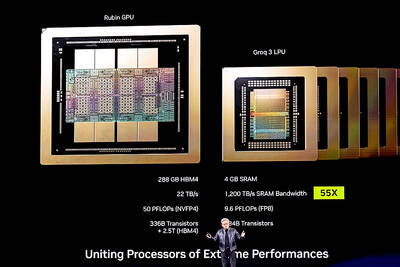
Taiwanese prosecutors suspect that three people successfully smuggled at least one shipment of Nvidia Corp artificial intelligence (AI) chips to China after first exporting them to Japan, people familiar with the matter said. The trio was detained last week by the Keelung District Prosecutors’ Office for allegedly falsifying documents related to exports of Super Micro Computer Inc servers containing advanced Nvidia chips, which the US has barred from sale to China without a license from Washington. The move marked Taiwan’s first public crackdown on AI chip diversion after years of pressure from the US to take a more active role in curtailing
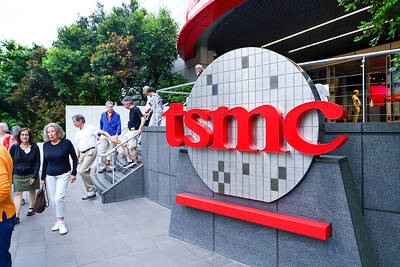
Taiwan Semiconductor Manufacturing Co (TSMC, 台積電) employee bonuses are likely to grow more than 30 percent this year, in line with the past few years as the company’s profits continue to set new records, an anonymous source cited TSMC chairman C.C. Wei (魏哲家) as saying yesterday. TSMC, the world’s largest contract chipmaker, is committed to taking care of its workers, the source said, citing Wei’s meeting with employees yesterday morning. Wei also expressed gratitude to employees for their contribution to the company’s improving bottom line, the source added. Since 2023, TSMC’s employee bonuses have grown at an annual rate of


 RSS
RSS