


■ Chang Hwa back in the black
Chang Hwa Commercial Bank (彰化銀行), Taiwan's seventh-largest bank by assets, returned to profit in the fourth quarter after writing off bad loans a year earlier.
The bank had a profit of NT$3.06 billion (US$92 million), compared with a net loss of NT$25.1 billion a year earlier.
The figures were derived by subtracting nine-month profit from January-December earnings provided by the Taichung-based bank.
For the full year, audited net income was NT$11.4 billion, the company said in a filing to the Taiwan Stock Exchange yesterday.
The company had a net loss of NT$36.5 billion in 2005.
The lender wrote off NT$59.5 billion of bad loans in 2005, the bank said in January last year.
■ Chunghwa Picture boss quits
Chunghwa Picture Tubes Ltd (中華映管), Taiwan's third-largest maker of liquid-crystal-display panels for computers and televisions, yesterday said chairman and chief executive Frank Lin (林鎮弘) had quit his job due to personal reasons, according to a company statement.
Lin's resignation came as the company has been struggling to eke out a profit after posting losses for the past seven quarters.
Board director Lin Wei-shan (林蔚山) would succeed Frank Lin as the new chairman and senior vice president Kay Chiu (邱創儀) would become the acting chief executive, the company said after a special board meeting.
Lin Wei-shan also doubles as chairman of Chunghwa Picture's parent company Tatung Co (大同), a home appliances maker.
Chunghwa Picture said losses increased to NT$13.9 billion last year due to a faster-than-expected price drop because of a supply glut from last year.
■ Bank SinoPac being sued
Taiwan's ninth-largest financial services company by market value, SinoPac Holdings (永豐金控), said its banking unit is being sued by an investor-rights group for misleading reporting.
The Taipei-based Securities and Futures Investors Protection Center is seeking NT$570 million (US$17.2 million) from Bank SinoPac (永豐銀行), the lender's parent reported in a stock exchange filing yesterday. The suit, which relates to alleged damage suffered by investors in one of the banking unit's clients, has been filed to the Taipei District Court.
The group alleges the bank misreported factoring transactions with National Aerospace Fasteners Corp (NAFCO, 宏達科技). which "embellished NAFCO's financial statements and concealed encumbrance on NAFCO's assets," the statement said.
Taoyuan-based NAFCO designs and makes aerospace and industrial fasteners.
Shares of NAFCO have more than doubled this month, to NT$4 at the close in Taipei yesterday. The stock has declined more than 10 fold from a peak of NT$51.56 in January 2003.
■ NT dollar shows quarterly drop
The New Taiwan dollar had a quarterly decline as overseas investors borrowed the currency, taking advantage of its lower interest rates to buy higher-yielding assets elsewhere in the region.
The currency fell 0.3 percent this month to NT$33.089 yesterday, taking a loss for the first three months of this year to 1.5 percent.
"The rate is still low in Taiwan even after yesterday's rate increase and that will continue to weigh on the currency," said Tetsuo Yoshikoshi, a market analyst at the treasury unit of Sumitomo Mitsui Banking Corp in Singapore. "The trend of funds moving out for higher yields will remain. The currency will be an underperformer in the region."
The currency may weaken to NT$34.20 by the end of June, Yoshikoshi said.
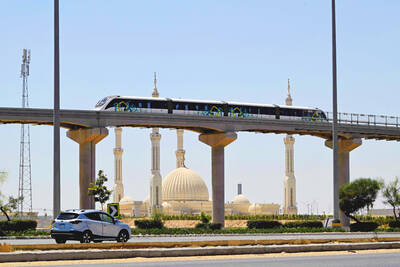
Cairo’s new monorail slices across the city skyline, running above the familiar chaos of blaring horns and aging buses’ exhaust fumes that mark rush hour below. The US$4.5 billion monorail, opened this month, is among Egypt’s most prominent new transport projects, part of a debt-funded infrastructure drive criticized for sapping state finances while bringing limited benefits to most of the country’s 109 million people. “It feels like you’re in a different country,” said Ramy Sayed, a restaurant manager, aboard a driverless Innovia 300 train. “No noise, no traffic, we’re not used to this.” The eastern line runs 56km from the bustling middle-class

Taiwanese firms have increased investment in the Philippines in recent years as Manila’s ties with Washington deepen and global supply chains continue to shift away from China, an expert at the Chung-Hua Institution for Economic Research (CIER, 中華經濟研究院) said yesterday. The Philippines had not been among Taiwanese investors’ top choices in Southeast Asia, CIER Taiwan ASEAN Studies Center director Kristy Hsu (徐遵慈) said at a seminar in Taipei. However, Taiwan’s investment in the country has grown significantly since the COVID-19 pandemic, reaching US $257 million last year, a high in recent years, she said. Although Taiwan’s total investment in the Philippines still lags
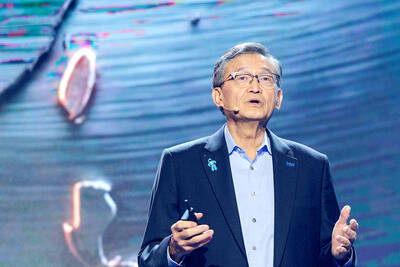
Intel Corp regards Taiwan Semiconductor Manufacturing Co (TSMC, 台積電) as a longstanding partner, as the US chipmaker would continue outsourcing production of advanced chips to TSMC, Intel chief executive officer Lip-Bu Tan (陳立武) said yesterday. “I don’t look at people as competitors. I look at the collaboration... Nvidia is also, you know, a good friend,” Tan told a news conference following his keynote speech at the Computex trade show in Taipei. “It’s a very trusted partnership for us... We are a big, top customer for them, and we’re going to continue doing that,” he said, referring to TSMC, the world’s largest foundry

Artificial intelligence (AI) agents would supplant smartphones as the center of people’s digital lives, fundamentally reshaping personal devices and driving a major computing upgrade cycle, Qualcomm Inc CEO Cristiano Amon said yesterday. In his keynote speech for this year’s Computex trade show in Taipei, Amon said that the rise of "agentic AI" — AI systems capable of reasoning, planning and carrying out tasks autonomously — would transform how people interact with technology across phones, PCs, vehicles and wearable devices. Describing the technology as the next major evolution in computing, Amon said that "2026 is the year of agents.” For decades, smartphones have sat


 RSS
RSS