


South Korea is losing global market share in the liquid-crystal display (LCD) and flat-screen TV sectors, and must innovate to counter increased competition, a market research company said yesterday.
"It is across a fairly wide spectrum of IT product lines that Korea is suffering from competitiveness of other regions" such as Taiwan, China, Europe and North America, said Derek Lidow, president and CEO of iSuppli Corp, which compiles data on various technology industries.
"[South] Korea is battling on many fronts and has unfortunately been forced into a more defensive position. [South] Korea is being outspent and also outmarketed," he said.
Samsung Electronics Co and LG.Philips LCD Co are the world's top makers of LCDs, used in computer screens, cellphones and televisions.
But Lidow said that Taiwan replaced South Korea as the world's largest LCD maker late last year, and in the market for LCD TVs, South Korea has slipped to third place from second, now trailing Japan and "the combination of Taiwanese companies with Chinese production partners."
Lidow spoke to journalists just ahead of this year's Seoul Digital Forum, which brings together leading industry figures including Microsoft Corp CEO Steve Ballmer, Qualcomm Inc CEO Paul Jacobs, Renesas Technology Corp president Satoru Ito and Hwang Chang-gyu, head of Samsung Electronics Co's semiconductor business, over three days through tomorrow.
South Korea has also seen its market share gains in mobile phones slow, he said, last year being "effectively contained by a resurgence in European and North American competitiveness."
For example, the top two global brands last year, Nokia Corp of Finland and Motorola Inc of the US, sold almost US$500 million per handset platform, or major category of phone, he said.
South Korea's top players, Samsung and LG Electronics Inc, meanwhile, sold about US$100 million per platform.
Lidow said that South Korean companies had enjoyed a "remarkable" global emergence beginning in the late 1990s based on "strong investment and also operational efficiency."
What they need now, he said, was more innovation.
"To reverse this trend will require a strong dialogue between government and industry ... with a focus on how to create an environment of investment in riskier ideas across a broad spectrum of product areas," he said.
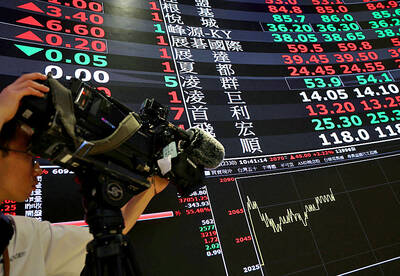
After several years flying high as Asia’s best Nvidia Corp proxy, Taiwan Semiconductor Manufacturing Co (TSMC, 台積電) is increasingly vying with other artificial intelligence (AI) stocks for investor attention. Stock traders are chasing a wider array of beneficiaries as mainstream usage of AI creates demand for hardware beyond the most-advanced chips TSMC makes for Nvidia. Subthemes from the deepening memory crunch to advances in robotics are also luring bids. At the same time, investment caps on single stocks are pushing funds to diversify, while retail investors long familiar with TSMC through its US depositary receipts are being offered a broader set of
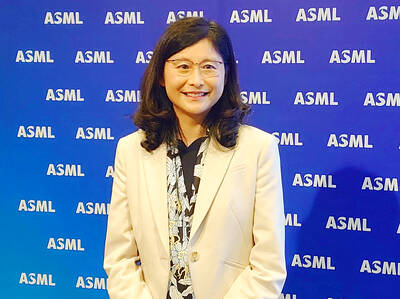
Netherlands-based semiconductor equipment supplier ASML Holding NV yesterday said that it is planning to hire an additional 1,000 people in Taiwan this year in response to growing demand from clients. ASML had previously planned to recruit 600 people this year, but that the plan has been adjusted upward, ASML vice president and ASML Taiwan general manager Grace Wang (汪佳慧) told reporters. ASML has a workforce of more than 4,500 in Taiwan, accounting for about 10 percent of its global total, Wang said. This year’s recruitment campaign would focus on adding people in the customer support, manufacturing and supply chain domains to assist ASML
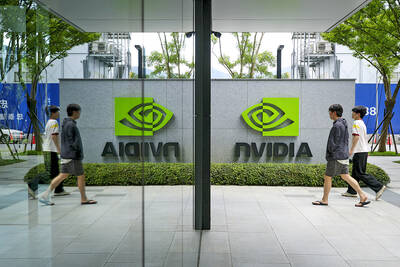
UNDER MICROSCOPE: Taiwan detained three people who allegedly conspired to buy servers in Taiwan and export them using fraudulent documentation, prosecutors said Nvidia Corp chief executive officer Jensen Huang (黃仁勳) on Saturday urged Super Micro Computer Inc to tighten up on compliance after Taiwan detained three people this week for allegedly making fraudulent declarations about artificial intelligence (AI) servers made by its US partner. The development marked the nation’s first crackdown on semiconductor smuggling, which grew after the US slapped restrictions on exports of high-end chips such as Nvidia AI accelerators to China. Nvidia is “rigorous” in explaining regulations to all of its partners, Huang told reporters after arriving in Taipei. “Ultimately Super Micro has to run their own company,” he said in response to
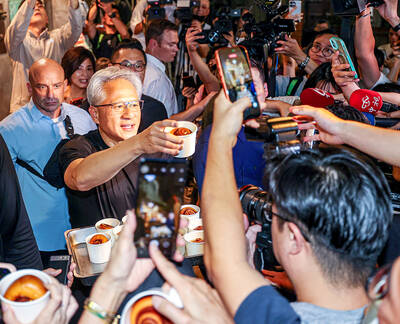
Nvidia Corp yesterday announced that CEO Jensen Huang (黃仁勳) would attend an employee meeting in Taipei tomorrow to celebrate the launch of the company’s Taiwan headquarters project. Huang would attend a gathering at the site of Nvidia’s planned headquarters in Beitou Shilin Technology Park (北投士林科技園區), the company said in a statement. After arriving in Taiwan on Saturday last week, Huang told reporters that he plans to meet with Quanta Computer Inc (廣達) chairman Barry Lam (林百里) and Taiwan Semiconductor Manufacturing Co (TSMC, 台積電) chairman C.C. Wei (魏哲家), and would attend the groundbreaking ceremony for Nvidia’s Taiwan headquarters tomorrow. Nvidia has not yet applied


 RSS
RSS