


Chunghwa Telecom Co (中華電信), Taiwan's top mobile operator, yesterday unveiled its first co-branded smartphone with phone vendor Dopod International Corp (多普達國際) in a bid to increase revenues.
Smartphones integrate the functionality of mobile phones and personal digital assistants.
Chunghwa Telecom is following its global peers in offering phones with operating systems to stimulate data usage on speedy third-generation (3G) networks, an analyst said.
"Cooperation with Dopod will bring us more subscribers and lift our revenue per user," Chunghwa Telecom chairman Hochen Tan (
Chunghwa Telecom, which is the first local mobile carrier to offer a co-branded smartphone, aims to sell 50,000 of the dual-brand phones, which allow users to browse Web pages and process data on its 3G network, by the end of this year, Hochen said.
He did not give a detailed forecast for growth in revenue per user following the launch of the new phone next month.
The revenue per user for Chunghwa Telecom's 3G subscribers is currently NT$1,400, compared with NT$800 for its 2G users, according to the company.
"I don't expect offering smartphones will greatly boost Chunghwa Telecom's data usage initially. The content available is insufficient and unattractive," said Lu Chia-lin (呂家霖), who tracks the telecom industry for Yuanta Core Pacific Securities (元大京華證券).
"However, Chunghwa Telecom needs to test the water, anyway, [to leverage expensive 3G deployment]," Lu said.
Chunghwa Telecom hopes to expand its 3G customer base to 1 million users by year end. Hochen said Chunghwa Telecom is in talks with other handset makers to explore the possibility of more tailor-made phones.
Dopod, which sells phones made by High Tech Computer Inc (
Dopod also supplies customized and co-branded handsets to China Mobile Communications Corp (

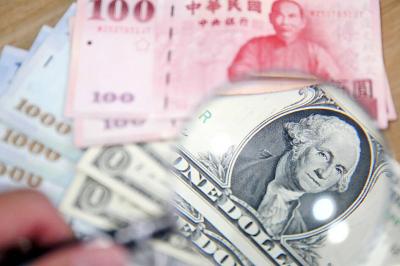
The US dollar was trading at NT$29.7 at 10am today on the Taipei Foreign Exchange, as the New Taiwan dollar gained NT$1.364 from the previous close last week. The NT dollar continued to rise today, after surging 3.07 percent on Friday. After opening at NT$30.91, the NT dollar gained more than NT$1 in just 15 minutes, briefly passing the NT$30 mark. Before the US Department of the Treasury's semi-annual currency report came out, expectations that the NT dollar would keep rising were already building. The NT dollar on Friday closed at NT$31.064, up by NT$0.953 — a 3.07 percent single-day gain. Today,
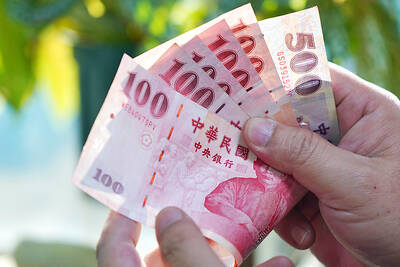
‘SHORT TERM’: The local currency would likely remain strong in the near term, driven by anticipated US trade pressure, capital inflows and expectations of a US Fed rate cut The US dollar is expected to fall below NT$30 in the near term, as traders anticipate increased pressure from Washington for Taiwan to allow the New Taiwan dollar to appreciate, Cathay United Bank (國泰世華銀行) chief economist Lin Chi-chao (林啟超) said. Following a sharp drop in the greenback against the NT dollar on Friday, Lin told the Central News Agency that the local currency is likely to remain strong in the short term, driven in part by market psychology surrounding anticipated US policy pressure. On Friday, the US dollar fell NT$0.953, or 3.07 percent, closing at NT$31.064 — its lowest level since Jan.
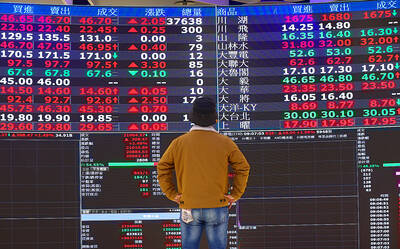
The New Taiwan dollar and Taiwanese stocks surged on signs that trade tensions between the world’s top two economies might start easing and as US tech earnings boosted the outlook of the nation’s semiconductor exports. The NT dollar strengthened as much as 3.8 percent versus the US dollar to 30.815, the biggest intraday gain since January 2011, closing at NT$31.064. The benchmark TAIEX jumped 2.73 percent to outperform the region’s equity gauges. Outlook for global trade improved after China said it is assessing possible trade talks with the US, providing a boost for the nation’s currency and shares. As the NT dollar
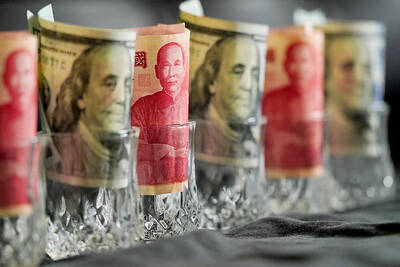
PRESSURE EXPECTED: The appreciation of the NT dollar reflected expectations that Washington would press Taiwan to boost its currency against the US dollar, dealers said Taiwan’s export-oriented semiconductor and auto part manufacturers are expecting their margins to be affected by large foreign exchange losses as the New Taiwan dollar continued to appreciate sharply against the US dollar yesterday. Among major semiconductor manufacturers, ASE Technology Holding Co (日月光), the world’s largest integrated circuit (IC) packaging and testing services provider, said that whenever the NT dollar rises NT$1 against the greenback, its gross margin is cut by about 1.5 percent. The NT dollar traded as strong as NT$29.59 per US dollar before trimming gains to close NT$0.919, or 2.96 percent, higher at NT$30.145 yesterday in Taipei trading


 RSS
RSS