


Computer monitor vendors hit a few bumps in the local market last year, losing out to the rise in notebook sales, according to a study released by International Data Corp (IDC) Taiwan yesterday.
Total sales of PC monitors last year stood at 2.04 million units, up only 0.24 percent from the previous year, the report said.
The figure is below the research firm's earlier projection of 4.5 percent.
Slow fourth quarter
The fourth quarter of last year was extremely sluggish, with vendors selling only 474,279 units, marking a 19.7 percent decline from the previous year, and a 22.3 percent dip from the third quarter, the statistics showed.
"Consumers expected computer vendors to slash notebook computer prices again, just as they did in the third quarter. This pulled down overall buying sentiment for desktop computers and PC monitors in the fourth quarter," IDC's Taiwan analyst Sunny Chen (陳睿聆) said in the report.
The nation's top four brands -- ViewSonic International Corp, Chi Mei Corp (
Chi Mei, affected by a change in its brandname strategy, even reported a sequential plunge in sales of 34 percent, she added.
Chi Mei earlier sold its liquid-crystal-display (LCD) monitors and televisions under the CMV and PolyView brands. To avoid confusion, it began integrating these products under the "Chimei" logo in the beginning of this year.
The report said that sales of cathode-ray-tube monitors continued to fall in the fourth quarter, dipping 36.9 percent from the third quarter, with 15,766 units sold.
Sales of LCD monitors, in contrast, rose to 378,849 units, an increase of 0.9 percentage points over the third quarter, it said.
Looking ahead, Chen said that due to seasonal factors, first-quarter sales would most likely decline from the fourth quarter.
Bigger models
"However, as vendors began to introduce and push wide-screen models in the fourth quarter of last year, coupled with the price drop in large-size panels, we believe the models will show great momentum this year," Chen said.
Alan Chang (張仲英), the Asia-Pacific general manager of ViewSonic, said in a telephone interview that although the market would remain stagnant this year, posting around 3 percent to 5 percent growth, consumers are quickly embracing monitors with larger displays as they become more affordable.
Chang estimated that sales of 19-inch LCD models may surpass mainstream 17-inch models for the first time in the second quarter.
Twenty-inch and wide-screen monitors will enjoy a brisk outlook from the third quarter onward, he added.

Merida Industry Co (美利達) has seen signs of recovery in the US and European markets this year, as customers are gradually depleting their inventories, the bicycle maker told shareholders yesterday. Given robust growth in new orders at its Taiwanese factory, coupled with its subsidiaries’ improving performance, Merida said it remains confident about the bicycle market’s prospects and expects steady growth in its core business this year. CAUTION ON CHINA However, the company must handle the Chinese market with great caution, as sales of road bikes there have declined significantly, affecting its revenue and profitability, Merida said in a statement, adding that it would
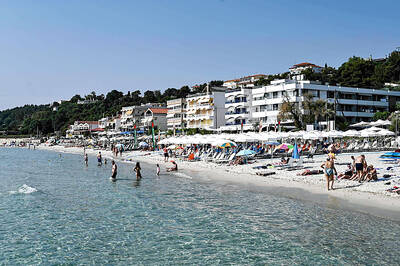
Greek tourism student Katerina quit within a month of starting work at a five-star hotel in Halkidiki, one of the country’s top destinations, because she said conditions were so dire. Beyond the bad pay, the 22-year-old said that her working and living conditions were “miserable and unacceptable.” Millions holiday in Greece every year, but its vital tourism industry is finding it harder and harder to recruit Greeks to look after them. “I was asked to work in any department of the hotel where there was a need, from service to cleaning,” said Katerina, a tourism and marketing student, who would
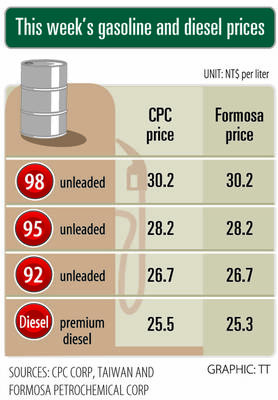
i Gasoline and diesel prices at fuel stations are this week to rise NT$0.1 per liter, as tensions in the Middle East pushed crude oil prices higher last week, CPC Corp, Taiwan (台灣中油) and Formosa Petrochemical Corp (台塑石化) said yesterday. International crude oil prices last week rose for the third consecutive week due to an escalating conflict between Israel and Iran, as the market is concerned that the situation in the Middle East might affect crude oil supply, CPC and Formosa said in separate statements. Front-month Brent crude oil futures — the international oil benchmark — rose 3.75 percent to settle at US$77.01
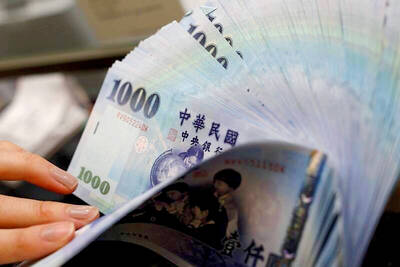
RISING: Strong exports, and life insurance companies’ efforts to manage currency risks indicates the NT dollar would eventually pass the 29 level, an expert said The New Taiwan dollar yesterday rallied to its strongest in three years amid inflows to the nation’s stock market and broad-based weakness in the US dollar. Exporter sales of the US currency and a repatriation of funds from local asset managers also played a role, said two traders, who asked not to be identified as they were not authorized to speak publicly. State-owned banks were seen buying the greenback yesterday, but only at a moderate scale, the traders said. The local currency gained 0.77 percent, outperforming almost all of its Asian peers, to close at NT$29.165 per US dollar in Taipei trading yesterday. The


 RSS
RSS