


As department stores report declining sales due to the high level of consumer bad loans, Uni-President Group (
Its first project with Hankyu Department Stores Inc, which runs 11 stores in Japan, will be the 6,000 ping (19,800m2) retail area inside the Dream Mall (
"This is the first time Hankyu has tapped into international markets outside Japan. We do not rule out extending bilateral cooperation north to other areas of Taiwan, such as Taipei, and even entering China together," said Jason Lin (林蒼生), chief executive officer of Uni-President Group, at a press conference in Taipei yesterday.
Before the partnership took shape early this month, Uni-President Group formed Uni-President Department Stores Corp (統一百華) with initial capital of NT$500 million (US$15.4 million).
The new entity is 30 percent-owned by Uni-President Enterprises Corp (統一企業), the nation's largest food conglomerate. The remainder is controlled by President Chain Store Corp (統一超商), owner of the 7-Eleven franchise.
Although some question the time that Uni-President is choosing to enter the competitive market, Lin said that he was optimistic about the strong purchasing power of women aged between 24 and 32, the firm's target customers.
Shinya Yamanaka, general manager of the planning and development department at Hankyu Department Stores, said at least 10 new brands of women's clothes would be introduced from Japan to showcase latest fashion trends and carve out a market segment.
The new department store is scheduled to open in the second quarter of next year, while the Dream Mall is expected to launch at the end of this year.
Mara Wang (王香完), head of retail services at Jones Lang LaSalle Taiwan, was upbeat on Uni-President Group's move, considering its partner's strong performance in Japan's Kansai region.
"As long as they respect professionalism, they stand a chance of delivering success," she said in a telephone interview.
Rival Shin Kong Mitsukoshi Department Store (新光三越) said there remained great potential in the Kaohsiung retail market, which is still in the development stage and requires more giveaway activities to boost sales.

Taiwanese firms have increased investment in the Philippines in recent years as Manila’s ties with Washington deepen and global supply chains continue to shift away from China, an expert at the Chung-Hua Institution for Economic Research (CIER, 中華經濟研究院) said yesterday. The Philippines had not been among Taiwanese investors’ top choices in Southeast Asia, CIER Taiwan ASEAN Studies Center director Kristy Hsu (徐遵慈) said at a seminar in Taipei. However, Taiwan’s investment in the country has grown significantly since the COVID-19 pandemic, reaching US $257 million last year, a high in recent years, she said. Although Taiwan’s total investment in the Philippines still lags

Intel Corp regards Taiwan Semiconductor Manufacturing Co (TSMC, 台積電) as a longstanding partner, as the US chipmaker would continue outsourcing production of advanced chips to TSMC, Intel chief executive officer Lip-Bu Tan (陳立武) said yesterday. “I don’t look at people as competitors. I look at the collaboration... Nvidia is also, you know, a good friend,” Tan told a news conference following his keynote speech at the Computex trade show in Taipei. “It’s a very trusted partnership for us... We are a big, top customer for them, and we’re going to continue doing that,” he said, referring to TSMC, the world’s largest foundry

Artificial intelligence (AI) agents would supplant smartphones as the center of people’s digital lives, fundamentally reshaping personal devices and driving a major computing upgrade cycle, Qualcomm Inc CEO Cristiano Amon said yesterday. In his keynote speech for this year’s Computex trade show in Taipei, Amon said that the rise of "agentic AI" — AI systems capable of reasoning, planning and carrying out tasks autonomously — would transform how people interact with technology across phones, PCs, vehicles and wearable devices. Describing the technology as the next major evolution in computing, Amon said that "2026 is the year of agents.” For decades, smartphones have sat
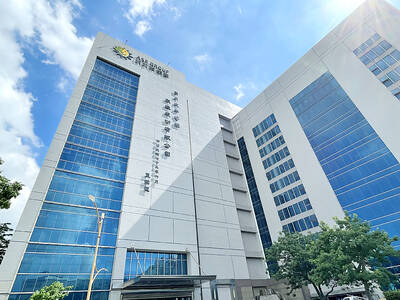
The average pay to employees by ASE Technology Holding Co (日月光投控) was the highest among the companies listed on the local main board last year, while contract chipmaker Taiwan Semiconductor Manufacturing Co (TSMC, 台積電) ranked seventh, the Taiwan Stock Exchange (TWSE) said on Monday. Data compiled by the exchange showed ASE Technology, the world’s largest chip packaging and testing services provider, paid its employees an average of NT$6.28 million (US$199,746) last year, up 40 percent from a year earlier. TSMC, the world’s largest contract chipmaker and the most profitable company in Taiwan, paid its employees NT$4.09 million on average, up


 RSS
RSS