


Days before a Chinese firm announced a US$2.3 billion investment in a Nigerian oil field last month, Chinese President Hu Jintao (
China must create an "energy-efficient, environmentally friendly society," Hu said in a New Year's Day speech at a Communist Party reception, according to state media.
The twin announcements highlight the dual tracks of Beijing's energy policy as it tries to secure foreign oil and gas to fuel sizzling economic growth of more than 9 percent a year while struggling to limit its soaring reliance on them by increasing use of nuclear and hydroelectric power.
Of course, China is not alone in this predicament -- witness US President George W. Bush's plea to cut the US dependence on Mideast oil. But the voracious appetite for energy by China and other nations with fast developing economies, notably neighbor India, also is one factor propelling the upward trend in oil prices.
And some of China's energy deals are causing bumps on the world's political landscape. Its investments in Iran and Sudan have prompted complaints it is abetting pariah nations, and Chinese pursuit of deals in Canada and other US allies have been met with unease in Washington.
Last year, China's state-controlled CNOOC Ltd (
The energy buying spree has taken Chinese firms as far afield as Venezuela and Australia. In the past six months, these companies have signed deals totaling US$7 billion for stakes in oil fields in Kazakhstan, Nigeria and Syria. A state-controlled company is reportedly considering a US$2 billion bid for yet another Kazakh property.
"There is a strategic element to it," said Kevin Norrish, an energy analyst for Barclays Capital in London. "It's something that we've seen before. Japan was doing the same thing about 10 to 15 years ago, with a lot of its natural resource companies, including oil companies, buying into foreign projects."
China's oil firms began investing abroad in the late 1990s, after double-digit economic growth outstripped supplies from domestic fields that had met its needs for decades. Rising family incomes have led to an explosion in private car sales, while industry demands for plastics and other petrochemical products have soared.
Growing traffic has worsened eye-searing smog in Beijing and other cities, while Chinese leaders fret about depending on Middle Eastern oil that arrives by sea routes that they don't control.
In the latest round of deals, the biggest state-owned oil company, China National Petroleum Corp (
In a sign that Beijing plans still more acquisitions, it signed an agreement with India last month to share information on what they pay for foreign assets in an effort to avoid costly bidding wars.
Such purchases have prompted suggestions that Beijing is using its state companies to lock up foreign supplies. But industry analysts say the oil market is too complex for most deals to work that way.
"This is definitely not about buying up oil resources in order to ship the oil into China," Norrish said.
"Basically, China's interest is in ensuring growth in energy supplies," he said.
By buying stakes in foreign projects, "it can assist in ensuring that investments take place and projects go ahead," he said.
And deals currently being signed by oil-producing countries only give foreign investors a share in output for a limited time, rather than control of the oil field, said Leo Drollas, chief economist for the Center for Global Energy Studies in London.
"If they think that by investing in Sudan and Venezuela and elsewhere they've secured oil somehow, I'm not so sure of that, from a strategic standpoint," he said.
Drollas said that in some cases, it might be cheaper and safer for China to sign long-term contracts to buy oil on the open market.
"Given the volatility of some regions, who is to guarantee that your assets might not be worthless one day?" he said.
China suffered just such a setback when a US$1.2 billion deal signed by a state firm to develop an oil field in Saddam Hussein's Iraq became worthless after his government was toppled.
Beijing has tried to curb oil imports by raising output from its own wells.
The government reported modest success last month, announcing that imports last year fell by 5 percent to 953.2 million barrels, while output from domestic wells rose 3.7 percent to 1.27 billion barrels.
China's booming oil needs have pushed up average long-term prices on world markets, according to financial analysts. But they say other factors are to blame for the recent price spike, noting that China's consumption stayed nearly flat last year.
"You can't blame China for US$70-a-barrel oil," Norrish said.
Beijing launched a Cabinet-level commission last year headed by Premier Wen Jiabao (溫家寶) to coordinate energy policy.
It has announced plans to start building a petroleum reserve to cushion against interruptions in foreign supplies. Similar to one operated by the US, it is to stockpile 100 million barrels of fuel -- the equivalent of almost a month's consumption -- in four tank farms scattered throughout the country.
The government also is pushing conservation measures and more use of nuclear power, wind turbines, hydroelectric dams and other alternative sources. Plans call for building 30 nuclear plants by 2020.
But its goals are modest, calling for nuclear power to supply 4 percent of the country's needs by 2010, with another 5 percent from wind and solar generators.
And with economic growth forecast above 9 percent in coming years, China's total oil and gas imports are expected to rise sharply.
Shares of contract chipmaker Taiwan Semiconductor Manufacturing Co (TSMC, 台積電) came under pressure yesterday after a report that Apple Inc is looking to shift some orders from the Taiwanese company to Intel Corp. TSMC shares fell NT$55, or 2.4 percent, to close at NT$2,235 on the local main board, Taiwan Stock Exchange data showed. Despite the losses, TSMC is expected to continue to benefit from sound fundamentals, as it maintains a lead over its peers in high-end process development, analysts said. “The selling was a knee-jerk reaction to an Intel-Apple report over the weekend,” Mega International Investment Services Corp (兆豐國際投顧) analyst Alex Huang
Taiwan Semiconductor Manufacturing Co (TSMC, 台積電) is expected to remain Apple Inc’s primary chip manufacturing partner despite reports that Apple could shift some orders to Intel Corp, industry experts said yesterday. The comments came after The Wall Street Journal reported on Friday that Apple and Intel had reached a preliminary agreement following more than a year of negotiations for Intel to manufacture some chips for Apple devices. Taiwan Institute of Economic Research (台灣經濟研究院) economist Arisa Liu (劉佩真) said TSMC’s advanced packaging technologies, including integrated fan-out and chip-on-wafer-on-substrate, remain critical to the performance of Apple’s A-series and M-series chips. She said Intel and Samsung
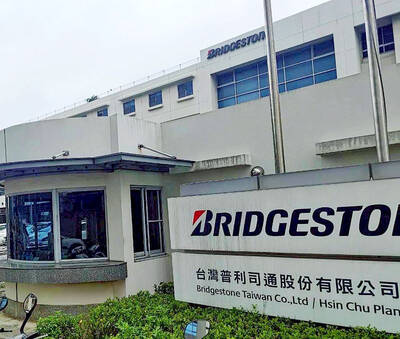
TRANSITION: With the closure, the company would reorganize its Taiwanese unit to a sales and service-focused model, Bridgestone said Bridgestone Corp yesterday announced it would cease manufacturing operations at its tire plant in Hsinchu County’s Hukou Township (湖口), affecting more than 500 workers. Bridgestone Taiwan Co (台灣普利司通) said in a statement that the decision was based on the Tokyo-based tire maker’s adjustments to its global operational strategy and long-term market development considerations. The Taiwanese unit would be reorganized as part of the closure, effective yesterday, and all related production activities would be concluded, the statement said. Under the plan, Bridgestone would continue to deepen its presence in the Taiwanese market, while transitioning to a sales and service-focused business model, it added. The Hsinchu
Taiwan Semiconductor Manufacturing Co (TSMC, 台積電) has approved a capital budget of US$31.28 billion for production expansion to meet long-term development needs during the artificial intelligence (AI) boom. The company’s board meeting yesterday approved the capital appropriation plan for purposes such as the installation of advanced technology capacity and fab construction, the world’s largest contract chipmaker said in a statement. At an earnings conference last month, TSMC forecast that its capital expenditure for this year would be at the higher end of the US$52 billion to US$56 billion range it forecast in January in response to robust demand for 5G, AI and


 RSS
RSS