


Targeting the advent of third generation telecommunications era, Autotools Group Co (
The cross-carrier platform is sponsored by the Industrial Development Bureau, which funded NT$50 million (US$1.57 million), or 40 percent of the costs, as part of the plan to boost the nation's telecom industry, Jason Huang (黃啟瑞), president of Autotools, said at a press conference yesterday.
SLOW GROWTH IN MMS
Even though local telecom operators launched a Multimedia Messaging Service (MMS) -- messages that include longer text, graphics, photos, audio clips or video clips -- in 2002, the service has not proved popular with users due to complicated settings, high charges and system incompatibility among carriers, Huang said.
With the prevalence of color-screen camera phones that support the General Packet Radio Service (GPRS) network, as well as the pending introduction of 3G telecom service here, the demand and market for MMS is expected to boom, Huang said.
Citing statistics from Merrill Lynch & Co, Huang said global MMS traffic will surge from 39 messages per user per month at present, to 249 messages per user per month this year.
TESTING UNDER WAY
Four major mobile carriers -- Chunghwa Telecom Co (
Costs will depend on the size of the message being sent. For example, a 50KB MMS will probably cost senders NT$10 to NT$15, Huang said.
The service also creates huge business opportunities for enterprises to market their products, he added.
Huang expects the service to produce NT$400 million to NT$500 million in output value for the industry in the first year after launching.
Autotools' service will be available in 20 other countries including the US, Japan and China, allowing users here to send MMS data abroad, he said.
HANDSET DEVELOPMENT STILL KEY
The business, however, hinges on the development of 3G-capable handsets and it may take some time for cellphone makers to solve various technical obstacles, said Shih Mu-piao (
"It took almost 10 years to make 2G phones, and it will be even harder to integrate chips used on 3G phones," Shih said.
There are few 3G phones or smartphones available to consumers so far, Shih said.
Nokia Oyj has produced the Nokia 6630. Motorola Inc, Sony Ericsson Mobile Communications AB, BenQ Corp (
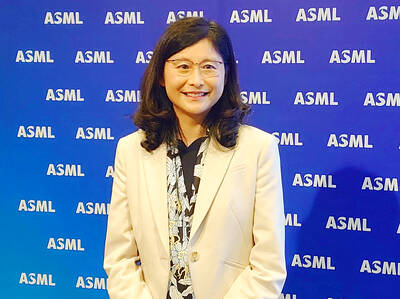
Netherlands-based semiconductor equipment supplier ASML Holding NV yesterday said that it is planning to hire an additional 1,000 people in Taiwan this year in response to growing demand from clients. ASML had previously planned to recruit 600 people this year, but that the plan has been adjusted upward, ASML vice president and ASML Taiwan general manager Grace Wang (汪佳慧) told reporters. ASML has a workforce of more than 4,500 in Taiwan, accounting for about 10 percent of its global total, Wang said. This year’s recruitment campaign would focus on adding people in the customer support, manufacturing and supply chain domains to assist ASML
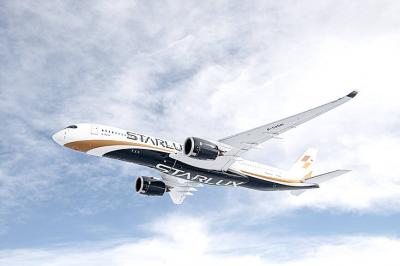
Starlux Airlines Co (星宇航空) today unveiled a long-haul network expansion plan at a shareholders’ meeting in Taipei, including direct flights to Barcelona, Spain, and Zurich, Switzerland, as well as a service connecting Taipei, Sydney and New Zealand. Starlux is to become the first Taiwanese carrier to offer non-stop services to the two European cities, while the inaugural oceanic route is expected to expand transit opportunities within the Australia-New Zealand market, Starlux said. Flight services to Chicago, Dallas, Washington and New York are under evaluation, the airline added. Prior to the shareholders’ meeting, the airline earlier this year announced that it would be
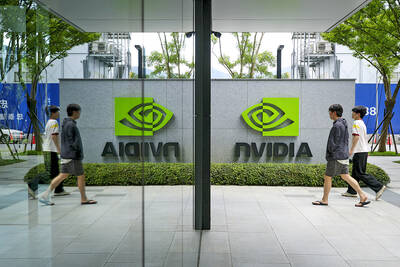
UNDER MICROSCOPE: Taiwan detained three people who allegedly conspired to buy servers in Taiwan and export them using fraudulent documentation, prosecutors said Nvidia Corp chief executive officer Jensen Huang (黃仁勳) on Saturday urged Super Micro Computer Inc to tighten up on compliance after Taiwan detained three people this week for allegedly making fraudulent declarations about artificial intelligence (AI) servers made by its US partner. The development marked the nation’s first crackdown on semiconductor smuggling, which grew after the US slapped restrictions on exports of high-end chips such as Nvidia AI accelerators to China. Nvidia is “rigorous” in explaining regulations to all of its partners, Huang told reporters after arriving in Taipei. “Ultimately Super Micro has to run their own company,” he said in response to

Nvidia Corp yesterday announced that CEO Jensen Huang (黃仁勳) would attend an employee meeting in Taipei tomorrow to celebrate the launch of the company’s Taiwan headquarters project. Huang would attend a gathering at the site of Nvidia’s planned headquarters in Beitou Shilin Technology Park (北投士林科技園區), the company said in a statement. After arriving in Taiwan on Saturday last week, Huang told reporters that he plans to meet with Quanta Computer Inc (廣達) chairman Barry Lam (林百里) and Taiwan Semiconductor Manufacturing Co (TSMC, 台積電) chairman C.C. Wei (魏哲家), and would attend the groundbreaking ceremony for Nvidia’s Taiwan headquarters tomorrow. Nvidia has not yet applied


 RSS
RSS