


European stocks were lower on Friday with pharmaceuticals and semiconductor makers leading the way down.
The expiration of December derivatives contracts known as triple witching was less volatile than expected. Traders described the rollover of stock index options, stock index futures and individual stock options across the region as a "quiet affair."
Investors were also reacting negatively to higher oil prices, which act as a tax on corporate profits. Crude futures edged up to US$46 on Friday as traders braced for higher home-heating usage as winter chills spread across the US. Fears over supply disruptions from Russia and Nigeria also re-emerged.
The Dow Jones STOXX 600 Index, which tracks Europe's 600 largest listed companies, was down 0.7 percent at 249.24.
The Dow Jones Euro STOXX Index, which tracks companies in countries that joined the common currency, was 1.0 percent lower at 239.10.
At the close of trading, London's FTSE-100 Share Index was 0.8 percent lower at 4,696.8, while in Paris the CAC-40 Index was 1.7 percent lower at 3,744.92. Frankfurt's Xetra DAX Index was down 1.2 percent at 4,182.27.
An unexpectedly strong German IFO business sentiment survey failed to spark buying interest. The IFO index rose to 96.2 this month from last month's 94.1, its highest level since April this year and well above analysts' forecasts of 93.8.
"This is an environment that can sometimes contribute to sharp movements in market prices," strategist Anais Faraj said.
Drug stocks were the main focus of the session.
Shares in AstraZeneca tumbled 8.3 percent to ?18.86 in London on news its lung-cancer drug Iressa failed to show significant survival rates. Goldman Sachs downgraded the stock to in-line from outperform following the update.
The news leaves the field open for rival drug Tarceva developed jointly by Roche, Genentech and OSI Pharmaceuticals. Shares in Roche ended up 1.3 percent at 127 Swiss francs in Zurich.
The sector was also hit by bearish news from US drug giant Pfizer. It said a study of its arthritis drug Celebrex in cancer prevention found a significant risk of cardiovascular problems.
Shares in European microchip manufacturers slid, following release of a report by Gartner that said worldwide semiconductor spending next year was projected to decline 15 percent. Infineon Tech shed 3.0 percent to 7.97 euro (US$10.57) in Frankfurt. ASML fell 2.4 percent to 11.73 euro (US$15.56), leading decliners in Amsterdam.
Oil and gas company Cairn Energy also had a bad day, falling 18.14 percent to ?11.15 and leading decliners in London. Cairn upgraded production targets at two major Indian oil fields, but news that part of the Rajasthan development area had proven disappointing sent the company's shares tumbling.
Adding to Cairn's woes was news the Indian government may impose a tax on crude-oil production. Cairn Energy said the tax, effectively a royalty payment, amounts to around US$3 a barrel.
In Paris, shares in EADS proved a market bright spot.
Shares climbed 1.1 percent to 21.15 euro (US$28.05), following the announcement of management changes at the aerospace giant. After weeks of boardroom wrangling, co-chief executive officer Philippe Camus confirmed he is leaving EADS, making room for Noel Forgeard, who now runs EADS subsidiary Airbus.

The EU and US are nearing an agreement to coordinate on producing and securing critical minerals, part of a push to break reliance on Chinese supplies. The potential deal would create incentives, such as minimum prices, that could advantage non-Chinese suppliers, according to a draft of an “action plan” seen by Bloomberg. The EU and US would also cooperate on standards, investments and joint projects, as well as coordinate on any supply disruptions by countries like China. The two sides are additionally seeking other “like-minded partners” to join a multicountry accord to help create these new critical mineral supply chains, which feed into
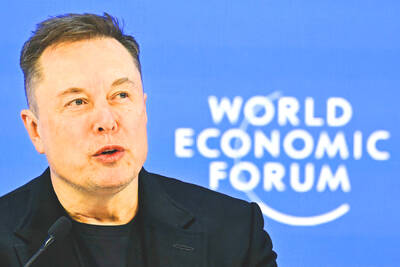
Elon Musk’s lieutenants have reached out to chip industry suppliers, including Applied Materials Inc, Tokyo Electron Ltd and Lam Research Corp, for his envisioned Terafab, early steps in an audacious and likely arduous attempt to break into the production of cutting-edge chips. Staff working for the joint venture between Tesla Inc and Space Exploration Technologies Corp (SpaceX) have sought price quotes and delivery times for an array of chipmaking gear, people familiar with the matter said. In past weeks, they’ve contacted makers of photomasks, substrates, etchers, depositors, cleaning devices, testers and other tools, according to the people, who asked not to

Japan approved ¥631.5 billion (US$3.97 billion) in additional subsidies to hasten Rapidus Corp’s entry into the high-stakes artificial intelligence (AI) chipmaking arena, ramping up support for a project widely regarded as a long shot. The capital is intended to bankroll Rapidus’ work for information technology firm Fujitsu Ltd, one of the initial customers that Tokyo hopes would get the signature endeavor off the ground. The new money raises the fees and investments that the government is injecting into the start-up to ¥2.6 trillion by the end of the current fiscal year to March next year, the Japanese Ministry of Economy, Trade and
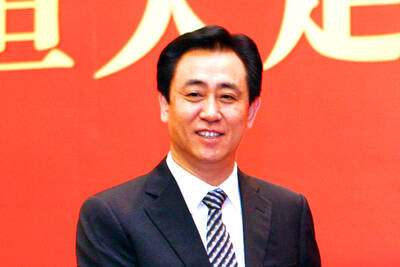
The founder of Chinese property giant Evergrande Group (恆大集團) has pleaded guilty to charges of fraud and bribery, a court said yesterday, the latest blow for what was once the country’s leading developer. Evergrande’s rise was propelled by decades of rapid urbanization and rising living standards, but in 2020, its access to credit dramatically narrowed when the government introduced curbs on excessive borrowing and speculation. The company defaulted in 2021 after struggling to repay creditors. Founder Xu Jiayin (許家印), 67, known as Hui Ka Yan in Cantonese, was reportedly held by police in 2023, with Evergrande saying he had been subjected to


 RSS
RSS