


No matter who wins the presidential election on Saturday, the new government should accelerate efforts to help enhance Taiwanese high-tech companies' competitiveness and ease its grip on cross-strait trade, industry representatives said yesterday.
"The government should focus on improving the investment environment, including bettering the nation's infrastructure," said Matthew Miao (
The decades-long ban on transportation links across the Taiwan Strait has already resulted in the migration of Taiwanese companies and engineers to China, because their international customers find it more convenient to meet in China, he said.
Miao made the remarks on the sidelines of the launch of a book on Taiwan's high-tech industry development, and stressed that he had no political position.
Another industry leader said Taiwan needed the China market, and labor migration to China helped boost Taiwan's competitiveness.
"China is a marketplace that has a voracious appetite for everything, including chips, and it also can offer cheap labor to help lower costs," said John Hsuan (
Hsuan refrained from talking about political issues, but he suggested that the new government should first look carefully at Taiwan's industries and then prioritize where the government's resources should go.
"We don't have much time to waste on waiting," he warned. He did not elaborate.
UMC has told investors that the company is in no hurry to build foundries in China, as the company has been keeping close ties with Chinese chipmaker He Jian Technology (Suzhou) Co (和艦科技).
To help the nation's semiconductor industry tap the expanding Chinese market, Chen Shui-bian's (陳水扁) administration announced in 2002 that the government would allow domestic chipmakers to open up to three eight-inch wafer plants in China by the end of next year, but only if they use equipment that has been phased out in Taiwan and expand investments in their domestic 12-inch plants.
Taiwan Semiconductor Manufacturing Co (TSMC,
Shares of contract chipmaker Taiwan Semiconductor Manufacturing Co (TSMC, 台積電) came under pressure yesterday after a report that Apple Inc is looking to shift some orders from the Taiwanese company to Intel Corp. TSMC shares fell NT$55, or 2.4 percent, to close at NT$2,235 on the local main board, Taiwan Stock Exchange data showed. Despite the losses, TSMC is expected to continue to benefit from sound fundamentals, as it maintains a lead over its peers in high-end process development, analysts said. “The selling was a knee-jerk reaction to an Intel-Apple report over the weekend,” Mega International Investment Services Corp (兆豐國際投顧) analyst Alex Huang
Taiwan Semiconductor Manufacturing Co (TSMC, 台積電) is expected to remain Apple Inc’s primary chip manufacturing partner despite reports that Apple could shift some orders to Intel Corp, industry experts said yesterday. The comments came after The Wall Street Journal reported on Friday that Apple and Intel had reached a preliminary agreement following more than a year of negotiations for Intel to manufacture some chips for Apple devices. Taiwan Institute of Economic Research (台灣經濟研究院) economist Arisa Liu (劉佩真) said TSMC’s advanced packaging technologies, including integrated fan-out and chip-on-wafer-on-substrate, remain critical to the performance of Apple’s A-series and M-series chips. She said Intel and Samsung
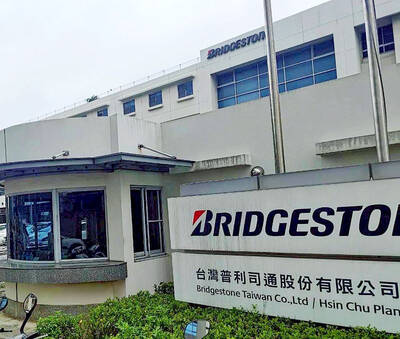
TRANSITION: With the closure, the company would reorganize its Taiwanese unit to a sales and service-focused model, Bridgestone said Bridgestone Corp yesterday announced it would cease manufacturing operations at its tire plant in Hsinchu County’s Hukou Township (湖口), affecting more than 500 workers. Bridgestone Taiwan Co (台灣普利司通) said in a statement that the decision was based on the Tokyo-based tire maker’s adjustments to its global operational strategy and long-term market development considerations. The Taiwanese unit would be reorganized as part of the closure, effective yesterday, and all related production activities would be concluded, the statement said. Under the plan, Bridgestone would continue to deepen its presence in the Taiwanese market, while transitioning to a sales and service-focused business model, it added. The Hsinchu
Taiwan Semiconductor Manufacturing Co (TSMC, 台積電) has approved a capital budget of US$31.28 billion for production expansion to meet long-term development needs during the artificial intelligence (AI) boom. The company’s board meeting yesterday approved the capital appropriation plan for purposes such as the installation of advanced technology capacity and fab construction, the world’s largest contract chipmaker said in a statement. At an earnings conference last month, TSMC forecast that its capital expenditure for this year would be at the higher end of the US$52 billion to US$56 billion range it forecast in January in response to robust demand for 5G, AI and


 RSS
RSS