


The top science adviser to the British government yesterday lauded cooperation between the UK and Taiwan, saying he hoped the two nations could co-operate more closely on research projects in the future.
"The two countries have similar strengths," David King told the Taipei Times during his visit to Taiwan yesterday. "The UK has enormous strength in science and technology and we have some great strengths in our industry such as pharmaceuticals and aerospace.
"Taiwan has developed in areas related to IT [information technology] and extremely efficient production processes. We obviously can learn from each other," he said.
Since 1999, UK research institutes have signed nine agreements with counterparts in Taiwan, and a further two are pending, senior National Science Council officials said yesterday.
The agreements include 19 research projects between the two nations, in areas as diverse as nanotechnology -- the science of creating molecule-sized machines -- biotechnology, environmental science, political science, social sciences and linguistics.
"We welcome this co-operation as it helps us to keep our research at a world level," said Wei Che-ho (
King's visit comes as fewer Taiwanese students hone their research skills overseas, according to statistics from the National Science Council.
In 1999, the council funded 252 research students on short-term projects overseas, of which only 21 went to the UK. This year the council funded just 199 students overseas, 18 in Britain.
Full-time post-doctorate research overseas funded by the council fell from 12 in 2001 to 10 last year, according to the council's most recent figures. None of the post-doctorate researchers chose to do their work in the UK, a fact King lamented yesterday afternoon.
"I would like to see more top-level PhD students from Taiwan going to research institutes in the UK," he said.
An added benefit of exchanges with the UK is that Taiwan can share the experiences of a more advanced economy's development in science, Wei said.
"When we talked with Sir David today, we shared experiences on science and technology policy-making," Wei said yesterday. "We got some good ideas."
One area in which the UK has seen rapid progress recently is turning research discoveries into viable businesses, according to King.
In the region around Cambridge, Oxford and London where the UK's most advanced scientific research takes place, there are 150,000 people employed in small and medium-sized high-technology enterprises, King said.
In 1997, there were only 27 spin-off companies in the three cities. That figure rose to 234 by 2001, the most recent year for which statistics are available.
The UK government has also assigned huge funds for science research. In 1997, the British budgeted ?1.45 billion (NT$89.61 billion) for research projects. This year, King and his department have ?2.4 billion to play with, and can expect a further half billion pounds by 2006.
"The message is the British government is paying for what it believes in," King said.
Taiwan has set aside NT$2 billion over the next 10 years to fund research in the two key areas of nanotechnology and biotechnology.
In addition to meeting with National Science Council officials, King was scheduled to meet with Academia Sinica President Lee Yuan-tseh (
Chen's university is already conducting joint research with Cambridge University and Newcastle University, King said.

Taiwanese firms have increased investment in the Philippines in recent years as Manila’s ties with Washington deepen and global supply chains continue to shift away from China, an expert at the Chung-Hua Institution for Economic Research (CIER, 中華經濟研究院) said yesterday. The Philippines had not been among Taiwanese investors’ top choices in Southeast Asia, CIER Taiwan ASEAN Studies Center director Kristy Hsu (徐遵慈) said at a seminar in Taipei. However, Taiwan’s investment in the country has grown significantly since the COVID-19 pandemic, reaching US $257 million last year, a high in recent years, she said. Although Taiwan’s total investment in the Philippines still lags
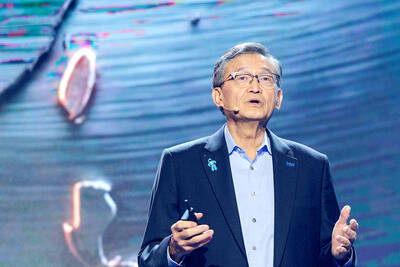
Intel Corp regards Taiwan Semiconductor Manufacturing Co (TSMC, 台積電) as a longstanding partner, as the US chipmaker would continue outsourcing production of advanced chips to TSMC, Intel chief executive officer Lip-Bu Tan (陳立武) said yesterday. “I don’t look at people as competitors. I look at the collaboration... Nvidia is also, you know, a good friend,” Tan told a news conference following his keynote speech at the Computex trade show in Taipei. “It’s a very trusted partnership for us... We are a big, top customer for them, and we’re going to continue doing that,” he said, referring to TSMC, the world’s largest foundry
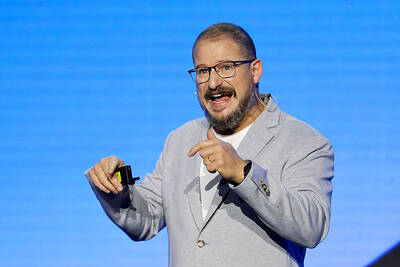
Artificial intelligence (AI) agents would supplant smartphones as the center of people’s digital lives, fundamentally reshaping personal devices and driving a major computing upgrade cycle, Qualcomm Inc CEO Cristiano Amon said yesterday. In his keynote speech for this year’s Computex trade show in Taipei, Amon said that the rise of "agentic AI" — AI systems capable of reasoning, planning and carrying out tasks autonomously — would transform how people interact with technology across phones, PCs, vehicles and wearable devices. Describing the technology as the next major evolution in computing, Amon said that "2026 is the year of agents.” For decades, smartphones have sat
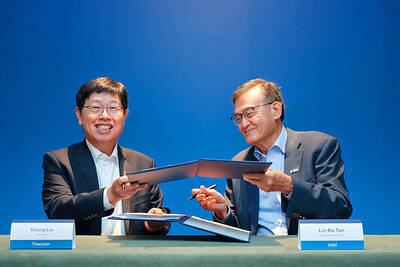
Hon Hai Precision Industry Co (鴻海精密) yesterday said it would work with US chipmaker Intel Corp to jointly develop and deploy next-generation artificial intelligence (AI) infrastructure and intelligent computing platforms in a move to capture booming demand for AI computing systems. Hon Hai, also known as Foxconn Technology Group (富士康), said in a statement that the partnership would combine its global manufacturing scale, system integration expertise and AI data center deployment capabilities with Intel’s strengths in processor architecture, silicon technologies and software ecosystem. The companies said they plan to work on equipment used in AI data centers, including server racks powered by


 RSS
RSS