


As Italian revenue guards searched through Bank of America's (BoA) offices in Milan for clues to the fate of billions of euros missing from the global food group Parmalat, the head of a subsidiary at the root of the scandal returned to Italy on Friday and was put in jail.
On a day of hectic developments, Stefano Tanzi, the son of Parmalat founder Calisto Tanzi, also resigned from the chairmanship of Parma football club, which is 99 percent owned by the food group.
Giovanni Bonici, who returned to Italy yesterday, ran another subsidiary, Bonlat, registered in the Cayman Islands. The first solid indication of something hugely wrong with Parmalat's accounts came last month, when it admitted Bonlat did not have 4 billion euros it had claimed was deposited with Bank of America. The bank said a letter guaranteeing the money had been forged.
Bonici, who is also head of Parmalat's Venezuelan subsidiary, has been wanted by police since New Year's Eve. His lawyers said his failure to return immediately to Italy was because of a lack of available flights. He got back to Parma after a journey that took him to Paris and Nice. On Thursday, Venezuela's trade minister, Wilmar Castro, said he had first flown to the Cayman Islands.
The search of Bank of America's Italian headquarters was led by one of the three Milanese prosecutors investigating Parmalat's affairs for evidence of market rigging and other fraud.
On Thursday, a former BoA employee was formally made a suspect. Nobody has yet been charged in relation to either of the two investigations.
Tanzi's departure, along with that of the entire board of Parma football club, will clear the way for measures to keep the club afloat.
The Serie A (Italy's top soccer league) side had losses of 77 million euros even before the scandal broke.
Executives of the club had been hoping for a fresh capital injection, but on Thursday Italy's industry minister, Antonio Marzano, revealed that he had given Parmalat's new management the go-ahead to sell up to three players instead.
It is hoped a new buyer can be found. But already three Italian industrial groups, Barrilla, Smeg, and the Parma ham producers' consortium have said they are not in the market.

Cairo’s new monorail slices across the city skyline, running above the familiar chaos of blaring horns and aging buses’ exhaust fumes that mark rush hour below. The US$4.5 billion monorail, opened this month, is among Egypt’s most prominent new transport projects, part of a debt-funded infrastructure drive criticized for sapping state finances while bringing limited benefits to most of the country’s 109 million people. “It feels like you’re in a different country,” said Ramy Sayed, a restaurant manager, aboard a driverless Innovia 300 train. “No noise, no traffic, we’re not used to this.” The eastern line runs 56km from the bustling middle-class
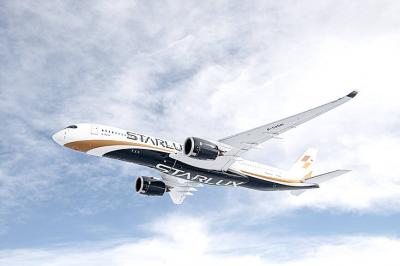
Starlux Airlines Co (星宇航空) today unveiled a long-haul network expansion plan at a shareholders’ meeting in Taipei, including direct flights to Barcelona, Spain, and Zurich, Switzerland, as well as a service connecting Taipei, Sydney and New Zealand. Starlux is to become the first Taiwanese carrier to offer non-stop services to the two European cities, while the inaugural oceanic route is expected to expand transit opportunities within the Australia-New Zealand market, Starlux said. Flight services to Chicago, Dallas, Washington and New York are under evaluation, the airline added. Prior to the shareholders’ meeting, the airline earlier this year announced that it would be

Taiwanese prosecutors suspect that three people successfully smuggled at least one shipment of Nvidia Corp artificial intelligence (AI) chips to China after first exporting them to Japan, people familiar with the matter said. The trio was detained last week by the Keelung District Prosecutors’ Office for allegedly falsifying documents related to exports of Super Micro Computer Inc servers containing advanced Nvidia chips, which the US has barred from sale to China without a license from Washington. The move marked Taiwan’s first public crackdown on AI chip diversion after years of pressure from the US to take a more active role in curtailing
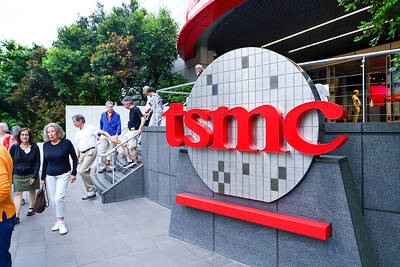
Taiwan Semiconductor Manufacturing Co (TSMC, 台積電) employee bonuses are likely to grow more than 30 percent this year, in line with the past few years as the company’s profits continue to set new records, an anonymous source cited TSMC chairman C.C. Wei (魏哲家) as saying yesterday. TSMC, the world’s largest contract chipmaker, is committed to taking care of its workers, the source said, citing Wei’s meeting with employees yesterday morning. Wei also expressed gratitude to employees for their contribution to the company’s improving bottom line, the source added. Since 2023, TSMC’s employee bonuses have grown at an annual rate of


 RSS
RSS