


Local computer makers and retailers complained yesterday that a measure requiring all white-box computers to be inspected by the government is unreasonable, saying that the inspection fee is too high while the process is very time-consuming.
In the white-box market, a dealer puts together computer parts to make and sell customized machines or resell generic computers.
"I don't see the necessity of checking every white-box computer, since each component we use has already passed a government examination," said Huang Chuang-wei (
"Besides, I don't think any consumer wants to buy a white-box computer if he or she has to pay an extra inspection fee," Huang said.
Currently, the Bureau of Standards, Metrology and Inspection under the Ministry of Economic Affairs charges an NT$36,000 inspection fee on manufacturers for each different type of computer they apply to have inspected.
Another computer retailer also said that even if consumers were willing to pay the inspection fee, the logistics of carrying out inspections would also be a problem, since there are over 1 million generic computers sold each year.
"The government usually takes from three weeks to a month to inspect a computer. How are they going to be able to check 1 million custom-built computers a year?" asked Lo Ching-hsiang (
Officials fromthe Bureau of Standards, Metrology and Inspection, which carries out the inspections, explained that the requirement exists to protect consumers' safety in terms of radiation exposure.
"Regardless of all components having passed an inspection, the measure is designed to determine whether the computer case provides adequate shielding from the radiation generated by the components," said Wu Ming-teh (吳明德), section director of the bureau. "Besides, we only require one sample of each model to be checked, not every single computer."
The bureau announced the measure five years ago, but few retailers comply with the regulation. Therefore, the bureau kicked off a campaign last month to remind retailers not to violate the regulation.
According to Wu, retailers failing to have white-box computers put on display for sale inspected by the bureau will be fined NT$200,000 to NT$2 million. Generic computers assembled by consumers themselves, however, are not covered by the regulation, Wu said.
Wu added the bureau will launch investigations based on reports from consumers or other sources with concrete evidence.
Computer sellers were not content with Wu's explanation, saying they or their customers would need to pay considerable amounts for inspection fees, because retailers continually develop new types of custom-made computers with different combinations of components.
Despite the growing concern among retailers, one small-sized computer retailer at Taipei's Kuanghwa Market (
"For example, I can remove the products subject to the regulation from the shelf and sell them privately to my customers, which is not against the regulation," said the retailer, who asked not to be named.
Shares of contract chipmaker Taiwan Semiconductor Manufacturing Co (TSMC, 台積電) came under pressure yesterday after a report that Apple Inc is looking to shift some orders from the Taiwanese company to Intel Corp. TSMC shares fell NT$55, or 2.4 percent, to close at NT$2,235 on the local main board, Taiwan Stock Exchange data showed. Despite the losses, TSMC is expected to continue to benefit from sound fundamentals, as it maintains a lead over its peers in high-end process development, analysts said. “The selling was a knee-jerk reaction to an Intel-Apple report over the weekend,” Mega International Investment Services Corp (兆豐國際投顧) analyst Alex Huang
Taiwan Semiconductor Manufacturing Co (TSMC, 台積電) is expected to remain Apple Inc’s primary chip manufacturing partner despite reports that Apple could shift some orders to Intel Corp, industry experts said yesterday. The comments came after The Wall Street Journal reported on Friday that Apple and Intel had reached a preliminary agreement following more than a year of negotiations for Intel to manufacture some chips for Apple devices. Taiwan Institute of Economic Research (台灣經濟研究院) economist Arisa Liu (劉佩真) said TSMC’s advanced packaging technologies, including integrated fan-out and chip-on-wafer-on-substrate, remain critical to the performance of Apple’s A-series and M-series chips. She said Intel and Samsung
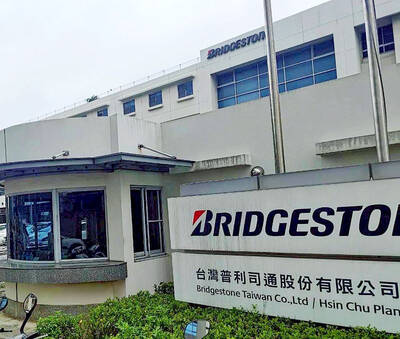
TRANSITION: With the closure, the company would reorganize its Taiwanese unit to a sales and service-focused model, Bridgestone said Bridgestone Corp yesterday announced it would cease manufacturing operations at its tire plant in Hsinchu County’s Hukou Township (湖口), affecting more than 500 workers. Bridgestone Taiwan Co (台灣普利司通) said in a statement that the decision was based on the Tokyo-based tire maker’s adjustments to its global operational strategy and long-term market development considerations. The Taiwanese unit would be reorganized as part of the closure, effective yesterday, and all related production activities would be concluded, the statement said. Under the plan, Bridgestone would continue to deepen its presence in the Taiwanese market, while transitioning to a sales and service-focused business model, it added. The Hsinchu
Taiwan Semiconductor Manufacturing Co (TSMC, 台積電) has approved a capital budget of US$31.28 billion for production expansion to meet long-term development needs during the artificial intelligence (AI) boom. The company’s board meeting yesterday approved the capital appropriation plan for purposes such as the installation of advanced technology capacity and fab construction, the world’s largest contract chipmaker said in a statement. At an earnings conference last month, TSMC forecast that its capital expenditure for this year would be at the higher end of the US$52 billion to US$56 billion range it forecast in January in response to robust demand for 5G, AI and


 RSS
RSS