


Microsoft Corp, the world's biggest software maker, said it will offer a two-month free trial for its Xbox Live online service in Japan and new game titles as it attempts to woo subscribers and expand a "small" customer base in the country.
"The success of Xbox Live in Japan is the key to our future going forward," Peter Moore, a vice president of Microsoft's home and entertainment division said at a press briefing in Tokyo.
Moore quit his job as head of Sega Corp's US business in January to help Microsoft bolster Xbox sales in Japan and Europe.
Microsoft last month cut the price of its Xbox video-game console to US$179 in Asia excluding Japan in a bid to gain on rival Sony Corp's PlayStation 2.
In Japan, where it launched an interactive game service in January, the US company has so far failed to win game players from its larger rival.
Microsoft provides no Xbox Live subscriber numbers for Japan.
Globally, there are 500,000 subscribers to the service.
The company also said yesterday it will offer monthly subscriptions in Japan to Xbox Live. Subscribers can choose to pay ?680 (US$6) a month when their yearly subscriptions expire or renew for 12 months for ?4,980, the company said in a press release. The service began in January with yearly subscriptions only.
"Nobody will be able to say `I can't afford Xbox Live,'" Moore said.
Sony's PlayStation 2 has outsold Microsoft's Xbox by almost six to one.
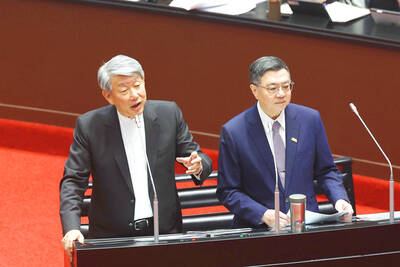
Taiwanese suppliers to Taiwan Semiconductor Manufacturing Co. (TSMC, 台積電) are expected to follow the contract chipmaker’s step to invest in the US, but their relocation may be seven to eight years away, Minister of Economic Affairs J.W. Kuo (郭智輝) said yesterday. When asked by opposition Chinese Nationalist Party (KMT) Legislator Niu Hsu-ting (牛煦庭) in the legislature about growing concerns that TSMC’s huge investments in the US will prompt its suppliers to follow suit, Kuo said based on the chipmaker’s current limited production volume, it is unlikely to lead its supply chain to go there for now. “Unless TSMC completes its planned six

Intel Corp has named Tasha Chuang (莊蓓瑜) to lead Intel Taiwan in a bid to reinforce relations between the company and its Taiwanese partners. The appointment of Chuang as general manager for Intel Taiwan takes effect on Thursday, the firm said in a statement yesterday. Chuang is to lead her team in Taiwan to pursue product development and sales growth in an effort to reinforce the company’s ties with its partners and clients, Intel said. Chuang was previously in charge of managing Intel’s ties with leading Taiwanese PC brand Asustek Computer Inc (華碩), which included helping Asustek strengthen its global businesses, the company
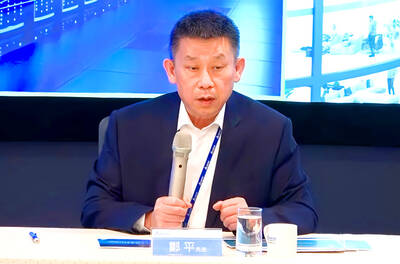
Power supply and electronic components maker Delta Electronics Inc (台達電) yesterday said second-quarter revenue is expected to surpass the first quarter, which rose 30 percent year-on-year to NT$118.92 billion (US$3.71 billion). Revenue this quarter is likely to grow, as US clients have front-loaded orders ahead of US President Donald Trump’s planned tariffs on Taiwanese goods, Delta chairman Ping Cheng (鄭平) said at an earnings conference in Taipei, referring to the 90-day pause in tariff implementation Trump announced on April 9. While situations in the third and fourth quarters remain unclear, “We will not halt our long-term deployments and do not plan to
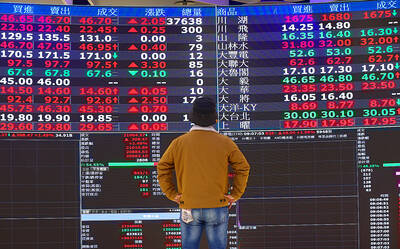
The New Taiwan dollar and Taiwanese stocks surged on signs that trade tensions between the world’s top two economies might start easing and as US tech earnings boosted the outlook of the nation’s semiconductor exports. The NT dollar strengthened as much as 3.8 percent versus the US dollar to 30.815, the biggest intraday gain since January 2011, closing at NT$31.064. The benchmark TAIEX jumped 2.73 percent to outperform the region’s equity gauges. Outlook for global trade improved after China said it is assessing possible trade talks with the US, providing a boost for the nation’s currency and shares. As the NT dollar


 RSS
RSS